

In the modern age of home design, we are often sold a dream of perfection. We scroll through social media feeds filled with “oneliner” rooms—spaces that are instantly recognizable, easily categorized, and ultimately sterile. But as interior designer David Netto suggests in his recent reflections with Architectural Digest, a truly successful home isn’t about following a template. It is about a series of high-stakes negotiations between the past and the present, the “ugly” and the “chic,” and the clinical and the seductive.
I. The Psychological Rabbit Hole: The Seduction of Eye-Level Light
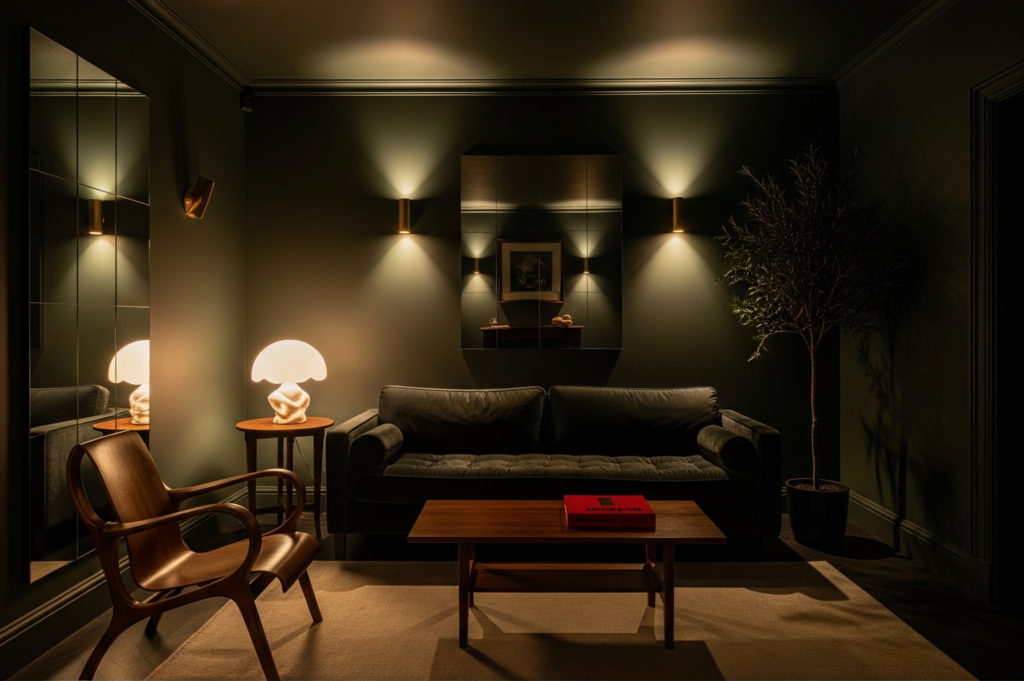
If architecture is the skeleton of a home, lighting is its nervous system. Most people treat lighting as a utility—something to help them see. But Netto argues that lighting is actually an emotional tool designed to “seduce” the inhabitant.
1. The “VD Clinic” Warning
Netto famously warns against relying on overhead lighting. When a room is lit primarily from the ceiling, it creates a flat, harsh environment. He compares this to the sterile, uninviting atmosphere of a police station or a “VD clinic waiting room.” It reveals everything but explains nothing. There is no mystery, no depth, and no “story.”
2. The Commandment of Eye Height
For a room to feel “sexy” or “successful,” the primary light sources must be pulled down to eye height.
-
The Layering Principle: Successful lighting is never a “oneliner.” It requires layering: sconces on the walls to provide a soft ambient glow, and table lamps to create pools of warmth.
-
The “Gravy” Rule: Anything in the ceiling—recessed cans or track lighting—should be treated as “gravy.” It’s an extra, and it should almost always be dimmed way down.
-
Intimacy through Shadow: By placing light at eye height, you create shadows. In design, what you don’t see is often as important as what you do. Shadows create a sense of privacy and intimacy that a brightly lit ceiling simply cannot provide.
II. The Material Rabbit Hole: The Case for the “Beaten-Up” Kitchen
One of the most persistent myths in home design is that a “good” kitchen must look pristine. We are taught to fear the first scratch on a countertop or the first wine ring on a table. Netto flips this script, advocating for materials that age with the family.
1. Vermont Soapstone: The Eternal Surface
For a kitchen that gets “a ton of use” (the kind with real cooks and active kids), Netto’s top recommendation is Vermont Soapstone.
-
The Patina Factor: Unlike marble, which can look “ruined” by an acid stain, or granite, which can look dated, soapstone “beats up evenly.” The first scuff or wine stain might be upsetting, but after a few months, the entire surface develops a uniform, matte patina.
-
The 19th Century Connection: Soapstone was the material of choice for laboratory counters before modern composites were invented. It has a historical, industrial weight to it that feels grounded and permanent.
-
Resilience through Wear: Much like a high-quality leather jacket, soapstone looks better the more it is used. It turns the kitchen into a space that invites life rather than one that polices it.
III. The Aesthetic Rabbit Hole: Embracing the “Ugly”
To evolve your taste, you must lose your fear of the “ugly.” This is perhaps the most challenging paradox for a homeowner to accept.
1. Chic vs. Pretty
“Pretty” is easy. “Pretty” is a room where everything matches and nothing is out of place. But “Chic” is something different—it’s a successful composition. Netto argues that many chic things are, in isolation, actually quite “ugly.”
-
The Tension of Objects: A successful room is built on tension. When you place a super-modern piece next to something medieval, or a 1960s wicker chair next to an 18th-century Italian table, you create a “conversation.”
-
The “Character” Chair: Netto views chairs as “characters in a play.” A sculptural, strange, or even “ugly” chair can set the entire DNA for a room. It does the talking until the rest of the furniture catches up.
-
The Emotional Response: Instead of asking “is this pretty?”, Netto suggests asking “am I excited to look at this?” If a vintage piece from a Maine flea market (like a decoy duck) or an Italian market (like a dusty Venetian mirror) says something to you personally, it belongs in the home.
IV. The Color Rabbit Hole: Hot Sauce and Risk
Color is often where homeowners become the most “wimpy.” We default to neutrals because we are afraid of making a mistake. But Netto argues that mistakes are the only way to learn.
1. The Red Rule
Netto’s “rule” is simple: Every room needs a little bit of red if it’s going to be exciting. * The Tabasco Hit: He compares color to hot sauce. You don’t want the red to be dominant—that would be overwhelming. Instead, you create a neutral backdrop (white or off-white) and then “hit it hard” with a pop of red. It’s the “two shakes of Tabasco” that makes the whole dish Get Out Alive.
-
Unexpected Pairings: To find exciting combinations, look at fashion or history. Netto points to the work of Jacques Garcia or the “Technicolor” combinations of 18th-century French chateaus. Pairings like dark green and brown or dark green and dark blue create a depth that “light blue and white” simply cannot match.
2. Overcoming Fear through “Tricks”
If you are afraid of color, use psychological cues. Ask yourself: “What is my favorite color sweater?” If you feel comfortable wearing a color, you will likely feel comfortable living with it. Even a small “pop”—like an Hermes-orange blanket over the back of a chair—can trick the mind into relaxing into a bolder palette.
V. The Budget Rabbit Hole: The Power of Editing
Great decorating is not about spending money; it is about creativity and the willingness to edit.
1. The “Billy Baldwin” Trick
If you can’t afford a full house of new furniture, Netto suggests a classic “high-low” maneuver:
-
The Mirror Wall: Turn one wall into an architectural mirrored wall. It doubles the light from your windows (which costs nothing) and reflects the few pieces of furniture you did invest in.
-
The Big Tree: Go to a flower market and get the biggest Black Olive tree you can fit.
-
The Uplight: Go to a hardware store, buy a cheap uplight, and hide it in the corner next to the tree and the mirror. Suddenly, for relatively little expense, you have a room that feels “hip” and glamorous.
2. The Beauty of Removal
Most people don’t need more “decorating”—they need an editor. The quickest way to refresh a house is to start taking things away. By removing the “wimpy” items that don’t have a strong point of view, you allow the “successful” pieces to finally be seen.
VI. Conclusion: The Fireplace as the Holy Grail
Perhaps Netto’s most famous stance is his refusal to mount a TV over a fireplace. “Hell no,” he says.
The fireplace is the “Holy Grail” of the house. It is the one place where we are supposed to stop and watch the fire—not the news or a sitcom. When we mount a TV over the mantle, we destroy the soul of the room. If convenience wins out, he suggests the Frame TV as a “blessing” because it can be disguised within a “salon hang” of other framed art.
Ultimately, a house is for the people (and the dogs) living in it. “You’re lucky to have the dogs,” Netto concludes. “Who cares about the furniture?” A successful home is one where you are comfortable being alone, comfortable with your friends, and surrounded by objects that make you feel like everything you ever dreamed would happen in your life is possible.
