
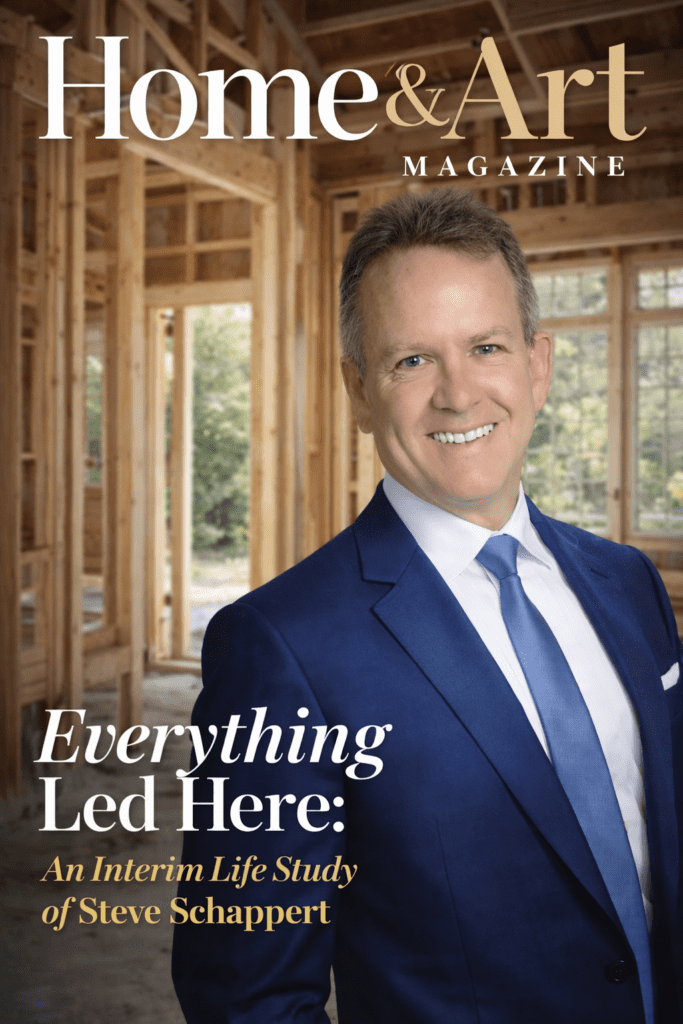
Origins, Interruption, and the Education of Attention
A Life That Began With Survival
Steve Schappert’s life did not begin with ambition. It began with survival.
At eighteen months old, he spent nearly a month in the hospital with an unidentified virus. So small he was fed through an IV in his ankle. The medical record is sparse—clinical language, worried adults, machines intervening where bodies sometimes cannot. There are no memories of pain or fear. But survival at that age leaves an imprint all the same. It establishes a tone. Some lives begin with confidence; others begin with fragility. His began with continuation.
That distinction would matter later.
Early Intelligence, Early Questions
From the outside, his early childhood appeared ordinary. Inside, something was already forming—an attentiveness to structure, to how things fit together, to the difference between what people said and what systems actually did. He read constantly. He tested with the highest reading comprehension in his school. Language came easily. Patterns revealed themselves without strain.
Teachers recognized a mind that moved ahead of the material, comfortable with abstraction, capable of grasping complexity long before it was demanded.
But what interested him was not praise.
It was coherence.
He noticed how adults talked around problems instead of through them. How inefficiencies were tolerated as normal. How inconvenience became institutionalized when no one questioned the arrangement beneath it. Even then, outcomes mattered less to him than frameworks—why things were arranged the way they were, and who benefited from those arrangements.
The City That Appeared Before the Language for It
 At twelve, without having the vocabulary for it, he sat down with graph paper and drew a city from the image in his mind.
It resembled an indoor–outdoor shopping mall—something between a marketplace and a neighborhood. Four residential towers anchored the corners. At the center were daily services: education, safety, commerce, recreation. The people were not customers passing through; they were residents whose presence created continuity.
Proximity reduced friction.
Density supported resilience.
Life was organized around use rather than movement.
He did not know the terms mixed-use development or urban planning. He knew only that separation creates inefficiency, and inefficiency eventually breaks systems.
The drawing was never presented.
It wasn’t praised.
It wasn’t explained.
It simply existed—an intuitive response to a problem he did not yet know the world would one day struggle to solve.
The Foundation of a Construction Education
At fourteen, Steve Schappert was handed the plans, the tools, and the responsibility. His father showed him each step—then left him to finish. The reward wasn’t praise. It was trust.
In the basement of his parents’ home, Steve added 352 square feet to the house.
He framed walls. Ran electrical. Installed insulation. Hung drywall. Taped. Painted. Laid carpet. and helped install the wood burning stove that had a vent to the living room and master bedroom on the second floor.
There was no abstraction in the work.
No audience. No applause.
Just process, precision, and purpose.
It was construction in its rawest form—and it taught him more than any classroom.
That basement became his first teacher.
It taught him sequence.
It taught him preparation.
It taught him cause and effect.
It was the moment he started building—structures, skill, and a future.
Interruption
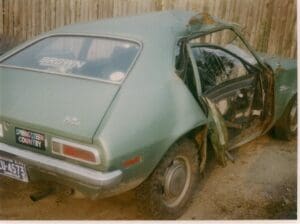 The impact was sudden and violent. Think knocking down telephone pole with your head at 45 mile per hour.
At fifteen, a car accident caused a traumatic brain injury that placed Steve’s life at immediate risk. Surgeons installed a pressure-relief valve in his skull to save his life as swelling threatened catastrophic damage.
When the crisis passed, the injury remained.
Subsequent imaging would show an area of brain tissue larger than a golf ball that was no longer functioning—an expanse not surgically removed, but rendered silent. The damage was permanent. Doctors spoke carefully. Survival was the objective. Prediction was not offered.
What followed was not recovery in the conventional sense.
It was adaptation.
What Changed After the Injury
Steve did not return to the mind he had before the accident.
Comprehension slowed. Coordination became unreliable. Cognitive effort that once felt effortless now required deliberate concentration. Tasks that others performed automatically demanded planning, rehearsal, and persistence.
For the next forty-six years, he would train himself—patiently, relentlessly—to adapt.
This was not a single rehabilitation arc, but a lifelong process of recalibration. He learned to compensate for reduced processing speed, to work around lapses in coordination, to build systems that supported cognition where instinct once sufficed. Intelligence did not disappear. It reorganized under constraint.
Speed gave way to depth.
Impulse gave way to deliberation.
Assumption gave way to verification.
Thought no longer raced ahead of the body; it negotiated with it. Ideas demanded proof. Abstraction required grounding. Understanding became something earned through repetition rather than granted by instinct.
It would take years to recognize this shift for what it truly was. Not loss—but reorganization under pressure.
While Others Went Forward, He Went Deeper
When high school ended, the divergence became visible.
His friends left for college. They packed books, expectations, and social permission to move forward. Steve went somewhere else entirely.
He took a job cleaning toilets at the Greenwich office park.
It was not a symbolic low point.
It was simply where he landed.
Night after night, he moved through office buildings after hours. Bathrooms emptied of people but full of evidence—the residue of long days, rushed mornings, neglect, and fatigue. He scrubbed what others left behind and learned something few future developers ever learn.
He learned how buildings are actually used.
Not how they are described in brochures.
Not how they are imagined by architects.
How they are inhabited.
He noticed where wear accumulated first. What broke quietly. What was ignored until it became expensive. He learned that dignity has nothing to do with status and everything to do with responsibility.
But the work was not only physical.
Those years were lived close to the edge. Pain—physical and otherwise—was managed imperfectly. Alcohol and medication became ways of quieting a nervous system that had not yet learned how to rest. “The anger and depression were overwhelming, yet I was still optimistic about the future for a few hours each days and it was enough to get me through.”
He does not romanticize that period.
He does not frame it as rebellion or rite of passage.
It was survival, undertaken without ceremony.
There were nights when the future felt thin, when mornings arrived without assurance. And yet, each day, something small intervened: a task completed, a room restored to order, a reason—sometimes barely articulate—to stay.
The work was humbling.
It was also clarifying.
“I didn’t fall behind,” he would later say. “I went deeper.”
At the time, it felt like isolation—like watching life move forward from the outside, like standing still while others accelerated. But something else was happening beneath the surface.
His intelligence was becoming embodied.
He was learning how systems fail at the lowest level—not in theory, but in consequence. He was learning that every design decision eventually meets a human body. Someone cleans it. Someone maintains it. Someone lives with it.
That lesson never left him.
Where Buildings Tell the Truth
 From the office park, Steve moved into painting—not because it was glamorous, but because it was honest. Painting exposes preparation. It punishes laziness. It reveals everything beneath the surface.
Painting led naturally into renovation.
Renovation became an education unlike any other.
Across hundreds, then thousands of projects, he learned how moisture migrates through walls, how air carries toxins invisibly, how materials age under stress, and how design decisions echo years later in the bodies of occupants.
Renovation is not creative in the romantic sense.
It is corrective.
It forces accountability.
“You inherit other people’s choices,” Steve would later say, “and you live with their consequences.”
During these years, the childhood drawing resurfaced—not as nostalgia, but as context.
He began to understand why cities failed when they separated living from working, people from services, responsibility from consequence. He saw how sprawl drained communities of connection. How retail without residents hollowed out. How residents without proximity isolated.
The world, he realized, was trying to retrofit what he had sketched intuitively decades earlier.
He wasn’t early for recognition.
He was early for necessity.
But he was not ready to build it yet.
There were more systems to understand.
More failure to witness.
More humility to earn.
And so he kept going.
He did not rush upward.
He did not chase shortcuts.
He let intelligence finish its descent into reality.
Because something inside him already understood what survival had been asking all along:
If you are still here, there is work left to do.
Learning to See Systems Where Others Saw Transactions

Real Estate as a Question, Not an Ambition
By the time Steve Schappert entered real estate professionally, he had already navigated ownership firsthand.
At twenty-one, he purchased his first condominium. In the years that followed, he owned two houses in Arizona and later a small home in a country club community. These were not speculative acquisitions; they were early lessons in responsibility—mortgages, maintenance, and the quiet realities of ownership that rarely appear in listings.
Long before representing buyers or designing systems, he had already lived the decisions that others were just beginning to contemplate.
He had painted them, repaired them, cleaned them, and inherited the consequences of decisions made by people who would never meet the occupants who lived with those decisions. What others saw as properties, he understood as agreements—between materials and climate, intention and time, design and consequence.
Real estate did not arrive in his life as an ambition.
It arrived as a question.
Why do people move when they do?
Why do they hesitate when clarity would serve them?
Why do they trust systems that repeatedly work against their own interests?
Most people in the industry learned scripts.
Steve studied behavior.
Why Buyer Representation Was Structurally Weak
He noticed early that buyers were operating inside systems designed primarily to benefit sellers. Information moved unevenly. Incentives were misaligned. Urgency was manufactured. Trust was assumed rather than engineered.
People were making the largest financial decisions of their lives while under emotional pressure, incomplete information, and subtle manipulation.
What troubled Steve was not the ethics.
It was the inefficiency.
The system itself was unstable.
Designing Infrastructure Instead of Selling Houses
In 1996, Steve founded Buyer’s Trust Real Estate Inc., not as a conventional brokerage, but as infrastructure.
The premise was simple and quietly radical: buyer representation should be structurally real, not symbolic. It should be supported by systems, not personality. Outcomes should be repeatable, not dependent on charisma.
Over the next eight years, Steve invested roughly five hundred thousand dollars building a buyer-advocacy and relocation platform capable of supporting up to 550 buyers per month. This was not marketing spend. It was engineering—databases, workflows, education protocols, redundancy.
The goal was not volume.
It was reliability.
When Structure Replaces Effort
Buyers slowed down.
Decisions stabilized.
Errors decreased.
Trust stopped being a promise and became an outcome.
National media eventually took notice. Woman’s Day Magazine told readers across the country to call Steve’s 800 number for help navigating home purchases. For twelve consecutive years, Buyerstrust.com ranked number one on Google for the term Exclusive Buyer’s Agent, even ahead of national trade organizations.
Steve did not celebrate the ranking.
He studied why it held.
“Effort doesn’t scale,” he would later say. “Structure does.”
Negotiation Beyond Real Estate
 As Buyer’s Trust matured, Steve’s role shifted. He spent less time closing transactions and more time diagnosing failure. Why did deals collapse at predictable moments? Why did buyers freeze when clarity would have helped them move forward?
The answers were consistent.
Most failures were not personal.
They were systemic.
This understanding brought him into contact with negotiation frameworks far beyond real estate. Through an arrangement facilitated by then–Attorney General Richard Blumenthal, Steve worked with United States Secret Service agents and was exposed to federal-level negotiation methodologies. The details remain intentionally private to protect those involved.
What he learned had little to do with dominance and everything to do with alignment.
Real leverage, he discovered, is rarely loud.
Timing often matters more than force.
Silence can be strategic.
Information, properly sequenced, can change outcomes without confrontation.
From Buildings to Public Space
Steve’s work expanded beyond buildings and vehicles into land and shared space.
In Brookfield, Connecticut, he led a group of forty-five volunteers to clear the first two miles of what would become a river walk. He authored the first grant proposal for a pedestrian bridge over the Still River, understanding that infrastructure is not merely functional—it is relational.
It either invites participation.
Or it quietly discourages it.
Commercial Construction Aspirations
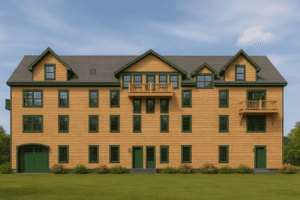 After building trust with buyers and establishing a reputation for quality and integrity, I expanded into panelized building systems — a method that combined precision, efficiency, and a deeper understanding of how homes go together from the inside out. Over time, I built 12 homes, shipped one complete home all the way to Germany, and took on larger design challenges, including a 16,000‑square‑foot corporate office and a 28,000‑square‑foot congregate living facility.
The timing of the office project was both perfect and cruel: by the time we broke ground, the world’s economy had crashed, reshaping opportunities and forcing a shift in focus toward sustainability and energy efficiency. This pivot led directly into work that emphasized green systems and forward‑thinking building methods.
One of the most meaningful expressions of that shift was the redevelopment of the Button Factory site in New Milford — a historic industrial address where, in the mid‑2000s, plans were underway to convert the vacant lot into a five‑story structure called The BIOS Center, combining commercial green building innovation with residential condominiums atop.
Around the same time, a growing movement in Connecticut toward more intentional living environments — often called congregate living — began to take shape, with organizations like the CT Congregate Housing Coalition and BIOS Ministries International advocating for communities that support intergenerational connection and accessibility.
Through these experiences — from panelized homes to large‑scale facilities — I learned that construction education isn’t just about building walls or roofs. It’s about understanding sequence, systems, and purpose: how framing informs airflow, how electrical pathways define flow, how efficiency becomes a design imperative, and how timing — from market forces to energy priorities — shapes what we build for tomorrow.
Seeing the Invisible Systems in Buildings
As his understanding deepened, Steve’s attention moved beneath the visible surfaces of buildings.
He began conducting residential energy audits, followed by commercial inspections. Over time, he completed more than one hundred residential energy audits and forty-six commercial inspections on properties totaling approximately twenty-six million dollars in value.
Patterns emerged quickly.
Air leakage paths that undermined comfort.
Moisture migration that rotted structures invisibly.
Thermal bridging that punished occupants year after year.
Toxic materials off-gassing quietly into daily life.
Buildings that appeared solid were failing internally. Comfort was often an illusion. Efficiency was frequently accidental.
“If people can’t see the system,” Steve often said, “they can’t fix it.”
Teaching People to See Their Own Homes
To make those systems visible, Steve partnered with Inhabitat and The Home Depot on an educational video designed to teach homeowners how to conduct basic energy audits themselves.
The goal was not to create experts.
It was to change perception.
Homes, he believed, should be understood as dynamic systems rather than static shells.
Breaking Systems to Understand Them
When one efficiency model reached a plateau, Steve did what he had always done.
He broke it.
By questioning assumptions inside a system he had helped build, he discovered a method that increased gas mileage by twenty-eight percent. The improvement was not incremental. It was structural.
That inquiry led to conversations with one of the original designers of the Ford Mustang—not about vehicles as products, but about inefficiency as a design outcome.
From that line of inquiry emerged the BIOS Watercar.
Over the years Schappert trained his brain to dummy down information as it came in. A process he taught at a master’s class in elementary eduction at Yale Peabody when he was 47. It’s been a long painful process. If you see him quiet in the corner he is still most likely thinking of some aspect of that day. His guidance couselor told him he was the only learning disabled genious she ever met. She just didn’t know what to do with me. The hard part is the 2 voices lol, your a genious, your an idiot.”
The BIOS Watercar as Proof, Not Product
The Watercar was never intended as a consumer vehicle. It was an experiment—a rolling argument against complacency. It explored integrated efficiency and challenged assumptions widely accepted as fixed.
The project appeared multiple times on regional and national television, including major broadcast outlets. But publicity was never the objective.
Proof was.
“Most people don’t realize how many systems they live inside,” Steve would say, “and how few of them were designed intentionally.”
The Watercar could have become a brand.
It could have been commercialized.
Instead, it became evidence.
From Fixing Pieces to Building Coherence
By now, the pattern was unmistakable.
The basement build.
The renovations.
The brokerage.
The negotiations.
The audits.
The experiments.
The public spaces.
Steve was not collecting accomplishments.
He was assembling understanding.
He began to see housing not as units, but as infrastructure for human life. Land not as commodity, but as context. Communities not as markets, but as organisms capable of health or decay depending on how their systems were arranged.
The ideas he had carried quietly for decades were no longer fringe. The world was beginning to catch up—unevenly, imperfectly, often too late.
Resilience.
Sustainability.
Integrated living.
Energy performance.
Community proximity.
These were not trends to him.
They were unfinished responsibilities.
He was no longer interested in fixing isolated pieces.
He wanted to build coherence.
And so, without fanfare, another phase began.
He did not announce it.
He did not brand it yet.
He simply began asking a different question:
What would it look like to design housing, land, and community as one continuous system—built from the start to support human life rather than react to its breakdowns?
What Couldn’t Be Engineered
Not every system responds to design.
Some resist optimization.
Some fail without spectacle.
Some losses do not announce themselves at all—they simply persist.
Fatherhood was the first system Steve Schappert encountered that did not behave the way he expected.
He approached it with the same seriousness he brought to everything else. He believed in showing up. In providing. In modeling endurance. He believed that integrity, over time, would make itself legible. That if he built a life rooted in coherence and responsibility, his children would eventually understand why he worked the way he did, why he never chose the easier version of himself.
What he did not understand—at least not at first—was how easily complexity can be mistaken for absence.
Distance did not arrive suddenly. It accumulated. Conversations shortened. Explanations grew thinner. Time filled with work and silence in uneven proportions. There was no single moment of rupture, no dramatic exit. Only the slow normalization of quiet.
For more than a decade now, Steve’s sons have not spoken to him.
The absence is not loud. It does not demand attention. It occupies space—steady, unresolved, and heavy. He does not litigate the reasons publicly. He does not assign blame. He does not convert the pain into narrative leverage. He carries it inward, where it reshapes how he understands endurance.
There was one moment that clarified the cost.
It was a Friday night when Steve appeared on NBC’s Going Green segment. The feature itself mattered—not because of television, but because it represented something he had worked toward for years: proof that ideas about sustainability, resilience, and systems thinking could matter beyond theory.
His sons did not see it.
They were not allowed to watch.
The realization did not erupt into anger. It settled into something quieter and more permanent. A recognition that presence does not always translate. That effort does not guarantee understanding. That being visible to the world does not mean being visible to the people who matter most.
Steve did what he had always done when confronted with something he could not resolve directly.
He kept working.
But the work changed.
For the first time, it turned inward.
In the depths of that silence, Steve began to write poetry. Not for publication. Not for performance. Not for explanation. But as a way to remain intact—to give shape to something that refused structure.
The poem that emerged did not ask for sympathy. It did not seek vindication. It named love without guarantee and endurance without applause. “I did the best I could with what I had at the time. God willing, hopefully someday that will be accepted as enough.”
Everything That Remains in Motion
BIOS did not arrive as a business plan.

It emerged slowly, as convergence.
By the time the idea took recognizable shape, Steve Schappert had spent decades moving through parallel disciplines that rarely spoke to one another: construction and art, real estate and ethics, efficiency and meaning. What once appeared fragmented now revealed itself as cumulative. Each path had been teaching a different aspect of the same lesson.
Homes are not products.
Land is not inventory.
Communities are not markets.
They are systems that either support human life—or quietly erode it.
BIOS Homes came first, not as a brand but as a response. High-performance, toxin-aware, energy-efficient housing designed for real conditions rather than idealized ones. Homes meant to function under stress, not just photograph well in calm. The emphasis was not novelty. It was resilience—structures that protected both the people inside them and the investments they represented.
But homes alone were not enough.
The childhood drawing returned again, no longer as intuition but as responsibility. The separation of living, working, learning, and gathering had proven costly—not only environmentally, but socially. BIOS Village emerged from that recognition: integrated places where proximity reduced friction, where residents were participants rather than passersby, and where daily life did not require constant displacement.
Education, safety, commerce, and shared space were not amenities. They were infrastructure.
From there, BIOS Center followed out of necessity. Systems that depend on a single person eventually fail. Knowledge had to be transferable. Training had to be deliberate. Replication had to be ethical. BIOS Center was conceived as a place for continuity—a way to ensure that principles survived beyond any one project or personality.
And finally, BIOS Ministries International Inc.—values-driven rather than doctrinal. A framework for stewardship, education, and ethical grounding that did not impose belief, but embedded meaning. Not faith as architecture, but conscience as structure.
These were not separate ventures.
They were one idea expressed at different scales.
Steve did not arrive at BIOS through optimism. He arrived through interruption, failure, and sustained attention. Through watching what breaks when no one is responsible for the whole. Through understanding that systems do not fail because people are careless, but because responsibility is diffused until no one feels it fully.
Art became essential at this stage—not as decoration, but as orientation. Through the founding of Home & Art Magazine and The Connecticut Art Gallery, Steve created space for reflection alongside function. Art slows people down. It trains perception. It allows the nervous system to rest long enough to care.
“Function keeps things standing,” he would say. “Meaning keeps people caring.”
By now, Steve no longer speaks about the future in terms of ambition. He speaks in terms of responsibility. About what it means to build things that do not borrow from the future in order to function in the present. About designing systems that hold up under real life—not ideal circumstances.
He knows reconciliation cannot be engineered.
He knows love cannot be optimized.
He knows some bridges may never be crossed.
But he also knows this:
Stopping would mean abandoning the belief that meaning outlasts misunderstanding.
And he is unwilling to do that.
Everything in his life—survival, interruption, descent, mastery, and loss—has brought him to this posture. Not certainty. Not closure. But coherence.
The twelve-year-old who drew a city did not know what it would cost to build it.
The fourteen-year-old who built a basement did not know how long the lesson would echo.
The young man who cleaned toilets did not know he was learning the most important part.
But the man who stands here now understands something clearly.
If you are still here, there is work left to do.
Not work that guarantees reward.
Work that remains open to care.
Steve Schappert is not chasing legacy.
He is honoring survival—and the responsibility that comes with it.
He believes that if BIOS, in all its forms, can help people live safer, healthier, more connected lives, then the years make sense. That if the work remains honest and unfinished, the door remains unlocked.
Everything led here.
Not because it was easy.
But because he never stopped walking toward coherence.
Steve Schappert’s work continues to evolve. For readers holding homes, land, or decisions that feel too complex for haste, Home & Art offers a place to learn more.
→ Learn how Steve can help you
