
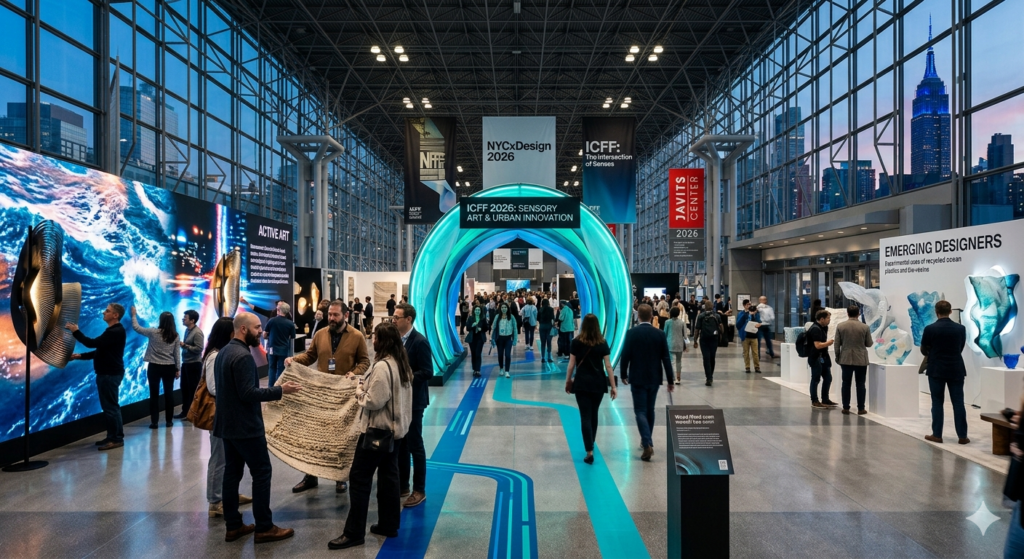
The global design community has descended upon New York City this week for NYCxDesign, and the atmosphere at the Jacob K. Javits Center is nothing short of electric. As the ICFF kicks off, the industry is pivoting toward a new era of Sensory Design—a movement that values the tactile and experiential over the purely visual.
For Home & Art Magazine readers, this week marks the reveal of materials and concepts that will define the luxury market for the next two years. The exhibition is intentionally moving away from a single curatorial statement in favor of material-led exploration, emphasizing the “residue of labor” and the hand of the maker.
The Concept of “Contamination” and Hybrid Design
One of the most discussed themes at the 2026 festival is the blurring of lines between high fashion, fine art, and interior architecture. We are seeing a move toward hybridity, where objects are expected to carry narrative, emotion, and digital logic simultaneously.
-
Total Design Environment: Designers are returning to “total design”—a holistic approach where residential projects are treated as complete environments rather than collections of isolated elements.
-
Residential Staging as Culture: Private domestic environments, such as the TOWNHOUSE x Costantini collaboration, are being reframed as active cultural platforms where design is experienced with intimacy.
-
Functional Sculpture: There is a fascination with ancient materials deployed through modern techniques, creating pieces that blur boundaries between art and everyday utility.
Spotlight: Local Craftsmanship and the “New Industrial”
While the fair attracts international powerhouses, the real energy is found in independent designer galleries in Soho and Tribeca. These creators are at the forefront of the “New Industrial” movement, reclaiming manufacturing heritage to create high-end, tactile pieces.
-
Precision-Forged Metals: Unlacquered brass and antique finishes are being used to turn architectural details into focal points.
-
Bespoke Textiles: Rugs and fabrics are becoming “living heirlooms,” designed to soften, mellow, and gain luster over time.
-
Material Innovation: Designers are using bio-resins and recycled plastics in experimental ways within the “Emerging Designers” wing at ICFF.
Sensory Experience: Art You Can Feel
The 2026 showcase highlights a major shift toward “Active Art” and “High-Touch” minimalism. These pieces are designed to engage all five senses, providing emotional relief from everyday pressures.
-
Sound as a Primary Building Material: Acoustics are being treated as a building material rather than a finish. Integrated sound treatments, such as digitally printed wood and stone textures, are both functional and expressive.
-
Haptic Interaction: The “High-Touch” exhibition reexamines minimalist interiors through lived, hands-on practices, using objects like wicker chairs to emphasize tactility.
-
Immersive Urban Encounters: Projects like the Dumbo Projection Project transform urban infrastructure into shifting fields of digital reflection, collapsing the distance between public space and artistic intervention.
Wellness Built Into Everyday Living
Sensory design is no longer an optional flourish; it is now considered the foundation of inclusive environments. This approach is evolving from a luxury concept to a practical necessity for mental health and emotional comfort in 2026.
-
Neuroinclusion: Sensory design is critical for neuroinclusion, impacting how grounded and oriented people feel in a space by engaging their sense of body position (proprioception).
-
Biophilic Approach: Beyond just plants, sophisticated biophilic design uses layered lighting and nature-inspired textures to reduce stress.
-
Design for Choice: True inclusivity in the modern home means offering variety—from quiet zones for relaxation to collaborative spaces for creative dynamism.
What This Means for Your Next Project
For developers and investors, NYCxDesign is a preview of the “amenity wars”. As luxury buyers seek more meaningful living spaces, projects that prioritize sensory layers and “layered lighting” become primary differentiators. The trend has shifted from merely decorating to making intentional choices so that every space evokes a specific feeling.
The future of interior design lies in orchestrating emotional journeys through advanced technology, sustainable materials, and adaptive spaces that engage human complexity.
NYCxDesign 2026 Guide:
-
The Hub: Jacob K. Javits Center for ICFF.
-
The Trend: “Material Honesty”—celebrating the handcraft mastery and the residue of labor in a digital world.
-
The Colors: Deep blues and teals, representing both creative dynamism and profound calm.
