
Here is the complete, expanded guide with real, clickable markdown links you can easily copy and paste. All resources are verified and ready to use.
How Can Parents Integrate Art And Music At Home With Their Children?
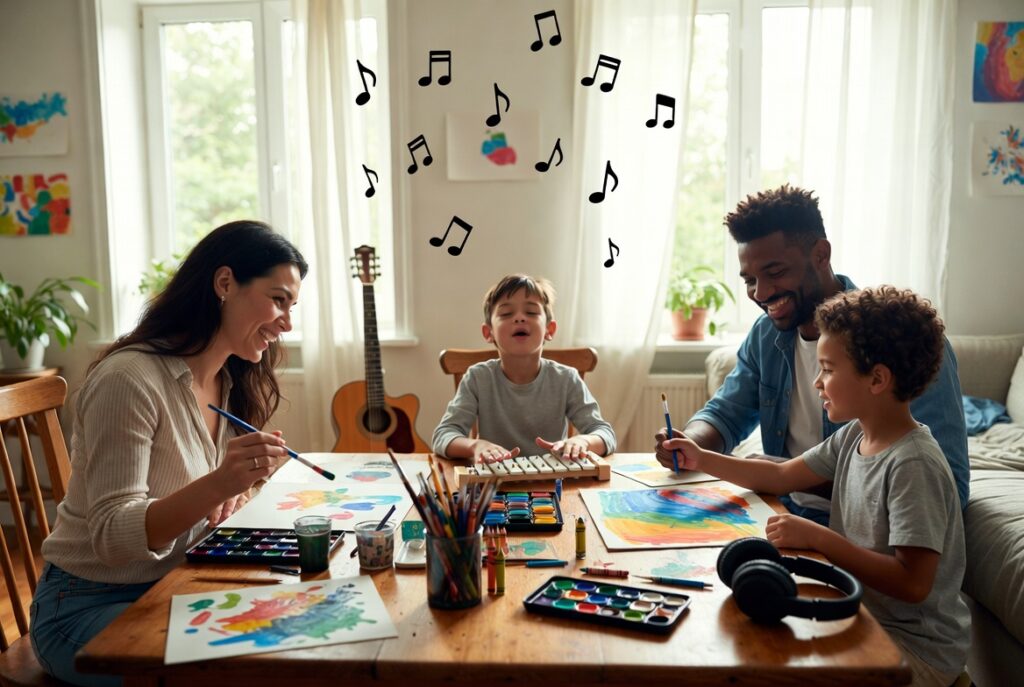
Integrating art and music at home with your children is one of the most rewarding, low-pressure ways to nurture creativity, cognitive skills, emotional intelligence, and family bonds. You don’t need expensive lessons, perfect skills, or a dedicated studio—just intention, accessibility, and a playful mindset.
The foundation comes from practical guides like this one: How Can Parents Integrate Art And Music At Home? (Aspiring Teacher Guide video)
Here’s a complete, expanded roadmap you can start today.
1. Why It Matters: The Science-Backed Benefits
Regular exposure to art and music supports brain development powerfully. Music strengthens auditory processing, memory, language, and executive functions like focus and impulse control. Art builds fine motor skills, spatial reasoning, observation, and creative problem-solving. Together, they enhance emotional regulation, empathy, and social skills.
Key Research Links:
- USC Study on Musical Training and Brain Development
- Benefits of Art and Music in Early Childhood
- More Arts = More Benefits for Kids (Wallace Foundation)
Children involved in the arts often show better academic performance, stronger writing skills, and higher school engagement. Parents benefit too — it’s relaxing and creates joyful memories.
2. Set Up an Inviting, Accessible Creativity Space
Make art and music part of the everyday environment.
- Choose a low shelf or corner in the living room, play area, or kitchen.
- Use clear bins or open baskets so supplies are visible and reachable.
- Art Supplies (start cheap): Crayons, markers, washable paints, brushes, plain + construction paper, child-safe scissors, glue sticks, tape, and recyclables (cardboard boxes, egg cartons, fabric scraps).
- Music Tools: Shakers (rice/beans in containers), tambourines, xylophones, harmonicas, a simple keyboard, or pots and spoons + a Bluetooth speaker.
Tips: Rotate supplies every 2–4 weeks. Use washable materials and display artwork on a “family gallery” wall or fridge. More ideas: Easy Arts Activities for Parents and Children at Home
3. Weave Music into Daily Routines
Play music during normal moments to build natural exposure.
- Morning: Upbeat folk, rock, or children’s songs.
- Meals: Classical or jazz.
- Bedtime: Calming ambient or lullabies.
- Car rides / chores: World music, movie scores, or cultural playlists.
While music plays, ask: “What colors or shapes does this sound like?” or “What story is the music telling?” Great starting playlists: Search YouTube for “kids classical playlist” or “world music for children”.
4. Hands-On Art Activities for All Ages
Focus on process, not perfect results.
- Toddlers: Finger painting with pudding/shaving cream, sensory collages with leaves.
- Preschool/School-age: Marble painting, tape-resist designs, nature collages, recycled sculptures (robots from boxes), emotion paintings.
- Low-mess options: Coffee-filter watercolors or sidewalk chalk outdoors.
Free project ideas:
- Crayola At-Home Art Projects (search their site for free videos)
- 50 Online Art and Music Resources
5. Synergistic Art + Music Activities (The Magic Connection)
Pair listening with creating for deeper learning:
- Play instrumental music and draw/paint what you hear (lines following melody, colors for mood).
- “Dance Painting”: Tape large paper to the floor and move brushes to the beat.
- Music-inspired themes: Listen to Carnival of the Animals and draw creatures.
- Mood matching: Happy vs. spooky songs → choose colors/shapes.
These activities build cross-sensory connections. Try composer stories on YouTube while drawing.
6. Family Bonding Activities
Make it shared and fun:
- Family Music Nights: Sing, play homemade instruments, dance, or do freeze-dance games.
- Group Art Projects: Collaborative murals or story illustrations.
- Mini Talent Shows: Living-room performances with art displays.
- Themed nights: “Music from Around the World” + corresponding art.
More inspiration: Integrating the Arts with At-Home Learning
7. Integrate with Academic Subjects
Use creativity as a learning multiplier:
- Math: Clap rhythms for patterns/fractions; draw geometric designs to music.
- Science: Explore sound (pitch with tubes); paint nature observations with ambient music.
- History: Listen to era-specific music while drawing related art.
- Language: Illustrate stories or rewrite song lyrics.
8. Age-Appropriate Adaptations
- 0–3: Sensory singing, soft instruments, finger painting.
- 3–5: Freeze dance, color mixing, simple games.
- 6–11: Composer studies, more complex projects.
- Teens: Songwriting, digital art, independent playlists.
9. Encourage Sharing and Overcome Challenges
- Hold weekly “Show & Share” circles. Ask: “What inspired this?” or “How did the music feel?”
- Common Fixes:
- “I’m not good at this” → Praise effort and model trying.
- Mess → Washables + quick routines.
- Time → 10–20 minute micro-activities.
- Budget → Libraries, recyclables, free YouTube/apps.
10. Best Free and Low-Cost Resources
- The Ultimate Guide to Art and Music Appreciation (free sample available)
- Spark! Creativity at Home
- Free apps: GarageBand (music), drawing apps like Procreate Pocket or free alternatives.
- Library books/CDs and local programs.
- YouTube channels: Search “homeschool art and music” for dozens of free videos.
Start small this week: Clear one shelf, queue a playlist from the original Aspiring Teacher Guide video, and try one music-inspired drawing activity together.
Your home can become a vibrant space of discovery, creativity, and connection—one song and one brushstroke at a time. The giggles, pride, and growth will follow naturally.
Child Development Benefits of Integrating Art and Music at Home
Integrating art and music into daily home life offers profound, evidence-based benefits across cognitive, emotional, social, physical, and academic domains. These activities are accessible, low-cost, and highly effective when done playfully and consistently—especially in the early years when the brain is most plastic.
1. Cognitive Development and Brain Architecture
Art and music actively build and strengthen neural connections. Music training enhances auditory processing, memory, attention, and executive functions (EF) like working memory, cognitive flexibility, and impulse control. A landmark randomized controlled trial (Orchestra in Class) showed that after two years of group music practice, 10-year-olds exhibited broad improvements in working memory, processing speed, attention, and even sensorimotor coordination compared to an active control group.
Visual arts boost spatial reasoning, pattern recognition, observation skills, and problem-solving. Children who regularly engage in drawing, painting, or sculpting develop stronger visual-spatial skills that transfer to math, science, and reading.
Combined effect: Cross-sensory activities (e.g., drawing while listening to music) create richer neural pathways, supporting overall brain development and making abstract concepts more concrete.
2. Language, Literacy, and Mathematical Skills
- Music: Songs and rhythms build phonological awareness, vocabulary, and sequencing skills. Singing exposes children to new words, rhyme, and rhythm—foundational for reading. Studies link early music exposure to stronger language skills and even better foreign-language learning potential.
- Art: Describing artwork or illustrating stories enhances expressive language and narrative skills.
- Math connections: Patterns in music (beats, rhythms) and art (shapes, symmetry) make fractions, counting, and geometry tangible and memorable.
Early arts engagement at home correlates with higher scores in reading, math, and language assessments.
3. Emotional Regulation and Mental Health
Art and music provide healthy outlets for expressing complex feelings.
- Infants in active music groups (singing + dancing) show better emotional regulation than those in passive listening groups.
- Creating art helps children name and process emotions, reducing anxiety and building resilience.
- Music boosts mood, self-esteem, and emotional intelligence. Group music-making fosters empathy and emotional stability.
Long-term, regular arts participation supports better mental health, hopefulness about the future, and lower stress—benefits that start young and compound.
4. Social Skills and Empathy
Shared art and music activities teach turn-taking, collaboration, sharing, and listening—key social competencies.
- Parents singing regularly with young children report stronger social skills in their kids.
- Group music or collaborative art projects build teamwork, communication, and a sense of belonging.
- Arts experiences increase empathy by encouraging children to consider others’ perspectives through stories, moods in music, or interpretations of artwork.
5. Fine and Gross Motor Skills + Physical Coordination
- Art: Grasping crayons, brushes, or scissors strengthens fine motor control needed for writing.
- Music: Playing instruments, dancing, or clapping improves coordination, rhythm, and gross motor skills.
These physical benefits support school readiness and overall confidence in movement.
6. Creativity, Critical Thinking, and Problem-Solving
Open-ended art encourages experimentation, risk-taking, and flexible thinking (“What if I mix these colors?”). Music improvisation builds divergent thinking. Research shows arts-engaged children score higher on measures of creativity, fluency of ideas, and critical thinking.
These “21st-century skills” transfer to academics and life challenges.
7. Long-Term and Academic Outcomes
Early consistent exposure (not necessarily formal lessons) links to:
- Higher academic achievement and school engagement.
- Better attendance and recognition for accomplishments.
- Lifelong appreciation for culture and creative pursuits.
- Even slower biological aging indicators in adulthood from regular arts engagement.
Note: While some studies show strong correlations, benefits are clearest with active, joyful participation rather than forced practice. Home environments amplify gains because they feel safe and relational.
Practical Takeaway for Parents
The most powerful benefits emerge from regular, low-pressure integration—10–20 minutes a few times a week of music-inspired drawing, family jam sessions, or process art. Consistency and enjoyment matter more than perfection.
These activities don’t just prepare children for school—they nurture happier, more resilient, creative humans. Your living room can become one of the most effective “classrooms” for whole-child development.
