
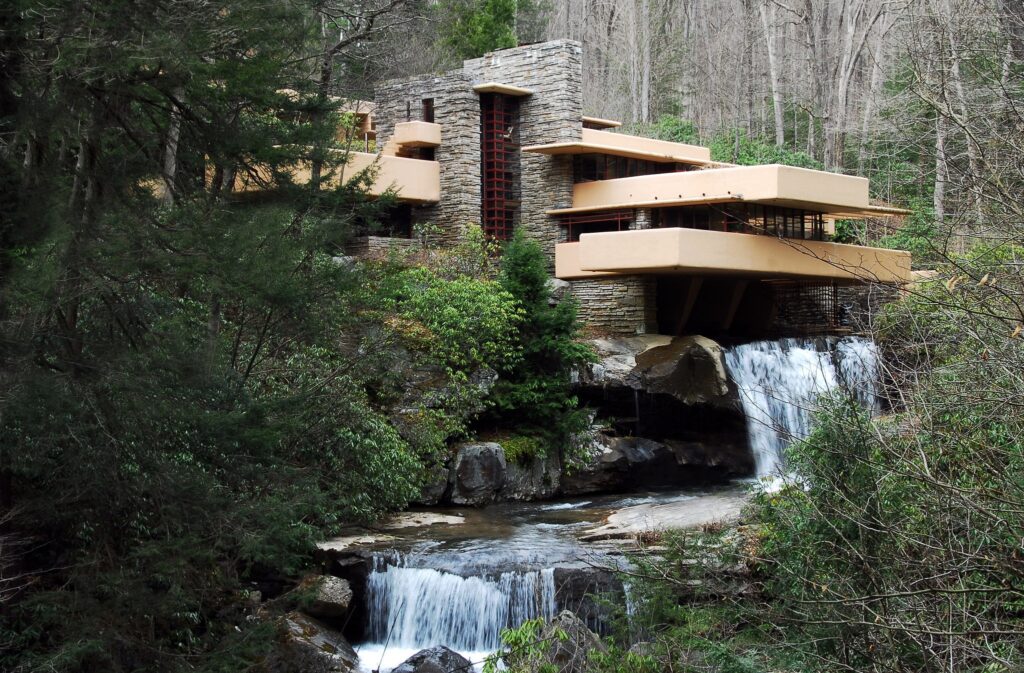
That philosophy—what he called organic architecture—continues to guide how architects think about sustainability, human experience, materials, and the relationship between buildings and the natural world. In an era defined by climate change, urban density, and technological innovation, Wright’s ideas feel less like relics and more like a blueprint for the future.
Organic Architecture: A Living Philosophy
At the heart of Wright’s influence is his concept of organic architecture, the idea that buildings should exist in harmony with their environment rather than dominate it.
This meant:
- Designing structures that respond to the landscape
- Using natural materials
- Creating continuity between interior and exterior spaces
- Prioritizing human comfort and psychological well-being
In 2026, these principles are no longer radical—they are foundational. Modern architects routinely integrate buildings into their surroundings, blur indoor-outdoor boundaries, and emphasize natural light and ventilation. What was once Wright’s personal philosophy is now embedded in global architectural practice.
Sustainability and Green Building
One of the clearest ways Wright influences architecture today is through sustainable design.
Long before sustainability became a global priority, Wright was already experimenting with:
- Passive heating and cooling
- Local materials
- Energy-efficient layouts
Today, these ideas are central to green architecture. Modern buildings incorporate solar orientation, natural ventilation, and environmental integration—strategies that mirror Wright’s approach decades earlier.
Contemporary sustainable architecture, from eco-homes to large commercial developments, often reflects Wright’s belief that buildings should reduce their environmental impact while enhancing human life. His work is frequently described as a precursor to modern green building practices.
The Open Floor Plan and Modern Living
Wright helped pioneer one of the most common features of modern homes: the open floor plan.
His designs eliminated rigid, box-like rooms and instead created flowing, interconnected spaces. This approach:
- Increased natural light
- Improved movement within the home
- Encouraged social interaction
Today, open-concept living is standard in residential design—from suburban homes to luxury apartments. Features such as:
- Large windows
- Connected living/dining spaces
- Indoor-outdoor transitions
can all be traced back to Wright’s innovations.
Even everyday elements like attached garages, picture windows, and split-level layouts—now common in housing—were popularized through his work.
Human-Centered Design
Another major aspect of Wright’s influence is his focus on the human experience.
Rather than treating buildings as purely functional structures, Wright designed spaces to:
- Inspire
- Comfort
- Guide movement
- Shape emotional experience
Modern architecture increasingly emphasizes this same idea, often referred to as human-centered design. In offices, schools, and public buildings, architects now prioritize:
- Natural light
- Spatial flow
- Psychological comfort
Wright’s belief that buildings should serve human needs—not just structural efficiency—continues to shape both residential and commercial architecture.
Integration of Architecture and Interior Design
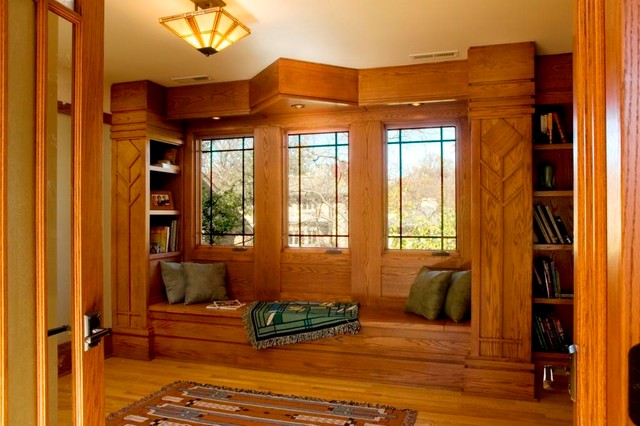
This concept, often called “total design,” treated architecture, furniture, lighting, and decoration as a unified whole. Recent restoration projects, like the Martin House in 2026, highlight how deeply Wright integrated every element of a space.
Today, this approach is widely adopted in:
- High-end residential design
- Boutique hotels
- Modern office spaces
Architects and designers increasingly collaborate to create cohesive environments, reflecting Wright’s belief that a building should function as a complete artistic system.
Influence on Modern and Global Architecture
Wright’s impact extends far beyond the United States. His work helped inspire key figures in modern architecture, including:
- Le Corbusier
- Ludwig Mies van der Rohe
- Walter Gropius
These architects, in turn, shaped global modernism—meaning Wright’s influence is embedded in architecture worldwide.
Even today, architects across continents draw on his ideas. Contemporary projects—from Scandinavian timber buildings to desert modernist homes—reflect his emphasis on:
- Environmental responsiveness
- Material honesty
- Spatial innovation
Materials, Technology, and Innovation
Wright was also a technical innovator. He experimented with materials like reinforced concrete and steel in ways that expanded architectural possibilities.
Buildings like Unity Temple demonstrated early use of exposed concrete, influencing modern construction techniques.
Today, architects continue to push materials in similar ways:
- Cross-laminated timber (CLT)
- Advanced concrete systems
- Glass-heavy structures
Wright’s willingness to experiment—and to merge engineering with artistic vision—remains a model for innovation in architecture.
Urban Design and Community Planning
Wright’s ideas weren’t limited to individual buildings—he also imagined entire communities.
His concept of Usonian homes aimed to create affordable, well-designed housing for middle-class Americans. These ideas influenced postwar suburban development and continue to resonate in modern housing design.
Communities inspired by Wright’s principles still exist today, demonstrating how his ideas about:
- Simplicity
- Affordability
- Integration with nature
can be applied at scale.
In 2026, as cities grapple with housing shortages and sustainability challenges, Wright’s vision of thoughtful, human-centered communities feels increasingly relevant.
Preservation and Continued Relevance
Wright’s influence is not only theoretical—it is actively maintained through preservation and restoration.
Iconic buildings like Fallingwater continue to be restored and studied, drawing hundreds of thousands of visitors and serving as living laboratories of architectural ideas.
Organizations like the Frank Lloyd Wright Building Conservancy ensure that his work remains accessible and influential for future generations.
These efforts are not just about preserving history—they are about keeping Wright’s ideas alive in contemporary practice.
Architecture in 2026: Why Wright Still Matters
In 2026, architecture faces major challenges:
- Climate change
- Urban density
- Resource scarcity
- The need for healthier living environments
Wright’s ideas directly address these issues. His emphasis on:
- Sustainability
- Harmony with nature
- Human well-being
aligns closely with the priorities of modern architecture.
What makes his influence remarkable is not just its longevity, but its adaptability. His philosophy continues to evolve, informing new materials, technologies, and cultural contexts.
Conclusion
Frank Lloyd Wright’s influence on architecture in 2026 is not simply a matter of legacy—it is a matter of relevance. His ideas have moved from the margins to the mainstream, shaping how architects think about space, environment, and human experience.
From sustainable design to open floor plans, from material innovation to holistic environments, Wright’s fingerprints are everywhere. He did not just design buildings; he redefined what architecture could be.
And more than 60 years after his death, the world is still catching up.
📚 Sources
- https://www.e-architect.com/articles/the-organic-architecture-of-frank-lloyd-wright
- https://rsisinternational.org/journals/ijriss/articles/frank-lloyd-wrights-vision-of-organic-architecture/
- https://riot.nyc/frank-lloyd-wright-architecture-revolutionized-creativity/
- https://gg-architect.com/frank-lloyd-wrights-impact-on-commercial-architecture/
- https://wrightinwisconsin.org/principles-practice-organic-architecture-today-featuring-ken-dahlin
- https://medium.com/@Architects_Blog/natures-systems-thinker-how-frank-lloyd-wright-merged-organic-design-with-modernist-innovation-325995c92171
- https://en.wikipedia.org/wiki/Robie_House
- https://en.wikipedia.org/wiki/Unity_Temple
- https://en.wikipedia.org/wiki/Frank_Lloyd_Wright_Home_and_Studio
- https://en.wikipedia.org/wiki/Rush_Creek_Village
- https://en.wikipedia.org/wiki/Frank_Lloyd_Wright_Building_Conservancy
- https://wrightsociety.com/issues/508
- https://www.wallpaper.com/design-interiors/design-events/frank-lloyd-wright-martin-house-collecting-ourselves
