
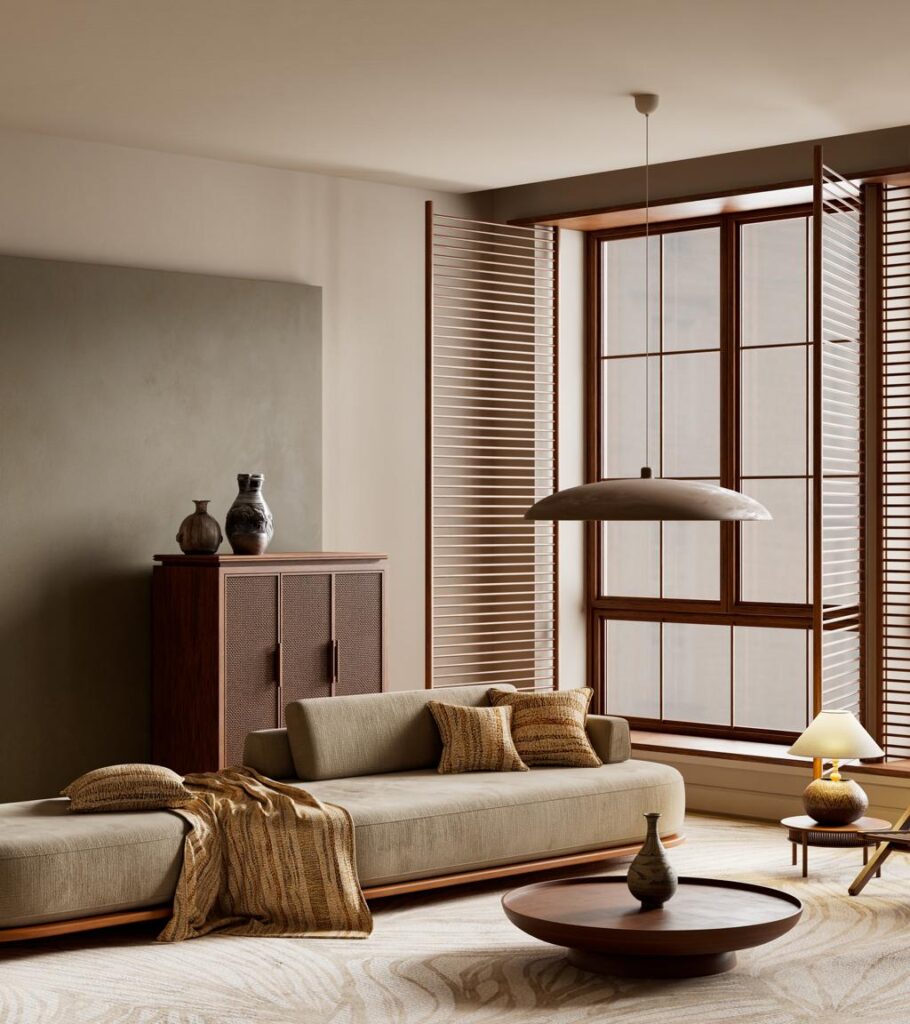
In March 2026, one clear trend is reshaping both home design and the art world: warm minimalism. It is not a sudden invention, but rather a cultural shift that has been building for years—now fully arriving as the dominant aesthetic in how people design their homes and choose the art within them.
For decades, minimalism meant stark white walls, cold lighting, and a kind of visual austerity that often felt more like a showroom than a place to live. But today’s version is different. It is softer, more human, and deeply connected to both craft and comfort. In 2026, the most compelling homes are no longer defined by how little they contain, but by how thoughtfully each element is chosen.
This shift is not just about furniture or color palettes. It reflects a broader change in how people want to live—and how they want to feel inside their spaces.
From Cold Minimalism to Human-Centered Design
Minimalism dominated the early 2000s and 2010s, influenced by modernist architecture and Scandinavian design. Clean lines, open spaces, and neutral palettes became the standard for “good taste.” But over time, that aesthetic began to feel impersonal.
By the early 2020s, a reaction had already begun. People wanted homes that felt lived-in rather than staged. The global pandemic accelerated this shift, forcing individuals to spend more time at home and reconsider what comfort really meant.
By March 2026, that evolution has matured into warm minimalism—a style that keeps the clarity of minimalism but replaces its coldness with texture, warmth, and emotional resonance.
What Defines Warm Minimalism in 2026
Warm minimalism is less about strict rules and more about balance. It blends simplicity with softness, restraint with personality. The defining characteristics include:
- Natural materials: wood, stone, linen, clay, and wool
- Muted, earthy palettes: creams, tans, browns, soft greens, and warm grays
- Textural layering: plaster walls, woven fabrics, handmade ceramics
- Soft lighting: diffused, ambient light instead of harsh overhead fixtures
- Intentional emptiness: space is still important, but it feels calm rather than empty
Unlike earlier minimalism, which often erased personality, this approach allows for subtle expression. A room might contain only a few objects, but each one carries weight—visually and emotionally.
The Role of Art: Fewer Pieces, Greater Impact
One of the most important aspects of this trend is how it has changed the way people display art in their homes.
Instead of gallery walls filled with many small pieces, homeowners in 2026 are choosing:
- One or two large works per room
- Textural or material-based art (plaster, textile, wood)
- Neutral or tonal compositions that complement the space
Art is no longer used to fill space—it is used to anchor it.
This has led to a surge in demand for artists working in:
- Abstract minimalism
- Sculptural wall pieces
- Handmade and imperfect forms
Collectors are increasingly drawn to works that feel quiet but powerful, aligning with the atmosphere of the home itself.
The Influence of Global Design Traditions
Warm minimalism in 2026 is also shaped by a blend of global influences. Two of the most significant are Scandinavian design and Japanese aesthetics.
From Scandinavia comes:
- Simplicity
- Functionality
- Light-filled spaces
From Japan comes:
- Wabi-sabi (the beauty of imperfection)
- A deep respect for materials
- A sense of calm and restraint
The fusion of these ideas—often called “Japandi”—has evolved into something broader and more flexible. Designers are no longer copying a style; they are adopting a mindset that values quiet beauty and intentional living.
Why This Trend Is Dominating Now
The rise of warm minimalism is not just about aesthetics—it reflects deeper cultural and psychological shifts.
1. Overstimulation and Digital Fatigue
In a world filled with screens, notifications, and constant noise, people are craving environments that feel calm and grounding. Homes are becoming places of recovery, not just activity.
2. Sustainability and Conscious Consumption
There is growing awareness around sustainability and overconsumption. Warm minimalism encourages buying fewer, better things—often handmade or long-lasting.
3. Emotional Connection to Space
People want homes that feel personal and meaningful. Instead of following trends blindly, they are curating spaces that reflect their values and experiences.
The Market Impact: Art, Furniture, and Real Estate
This shift is influencing entire industries.
Art Market
Artists working in subtle, material-driven styles are seeing increased demand. Galleries are highlighting:
- Neutral abstract works
- Sculptural pieces
- Textile and fiber art
Collectors are prioritizing quality over quantity, often investing in fewer but more significant works.
Furniture and Design
Furniture brands are moving toward:
- Solid wood construction
- Organic shapes
- Neutral upholstery
Mass-produced items are being replaced by pieces that feel crafted and enduring.
Real Estate
Homes that embody this aesthetic—natural light, clean lines, and warm materials—are increasingly desirable. Buyers are not just looking for square footage; they are looking for atmosphere.
A Shift Away from Perfection
One of the most interesting aspects of warm minimalism is its rejection of perfection.
Earlier minimalist spaces often felt rigid and controlled. In contrast, today’s interiors embrace:
- Slight irregularities
- Handmade imperfections
- Natural aging and patina
This reflects a broader cultural move away from polished, curated perfection—especially in an era shaped by social media. Authenticity, even in design, has become more valuable than flawlessness.
What Comes Next
As of March 2026, warm minimalism shows no signs of fading. If anything, it is becoming more nuanced.
Future directions may include:
- Greater integration of technology that remains visually unobtrusive
- Increased use of sustainable and recycled materials
- More personalized interpretations of minimalism
Rather than being replaced, the trend is likely to evolve—becoming less of a “style” and more of a default approach to living.
Conclusion
The best home and art story of March 2026 is not about a single designer, artist, or product. It is about a collective shift in how people think about space, objects, and meaning.
Warm minimalism represents a turning point. It moves away from excess without sacrificing comfort, and away from coldness without losing clarity. It asks not “how little can we live with?” but “what truly matters in the spaces we inhabit?”
In that question lies its lasting power.
📚 Sources
- “Interior Design Trends 2026” — https://www.architecturaldigest.com
- “The Rise of Warm Minimalism” — https://www.dezeen.com
- “Japandi and Modern Interiors” — https://www.dwell.com
- “Minimalism and Material Culture” — https://www.tate.org.uk
- “Home Design Trends Report 2025–2026” — https://www.houzz.com
- “Sustainable Interior Design Practices” — https://www.elledecor.com
- “The Psychology of Home Spaces” — https://www.psychologytoday.com
- “Art Market Trends 2026” — https://www.artsy.net
- “Wabi-Sabi in Modern Design” — https://www.nippon.com
