
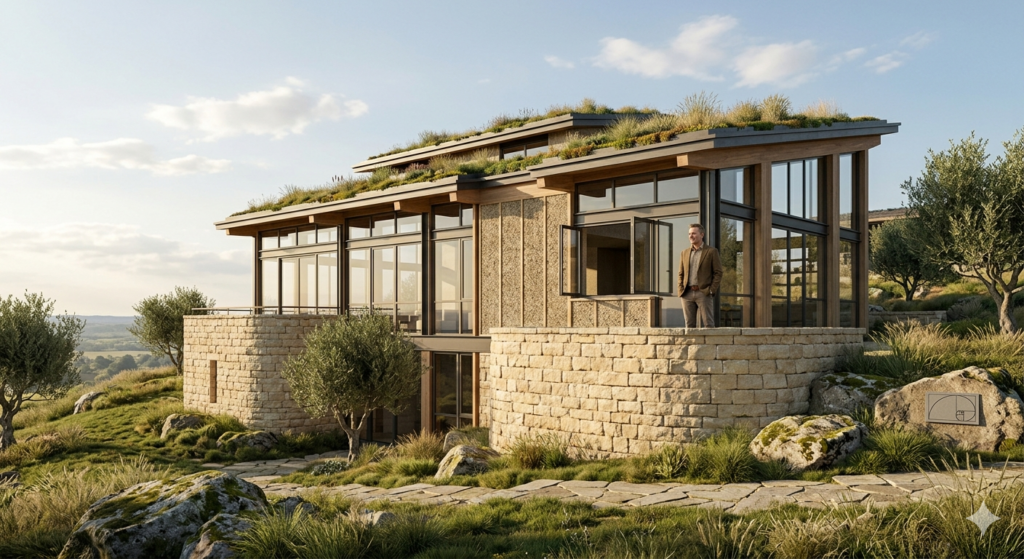
In the modern quest for sustainable luxury, the most advanced technology on the market isn’t a smart thermostat or a high-tech HVAC system. It is a material that has been around for millennia: Hempcrete. While the construction industry has spent decades perfecting synthetic fiberglass and petroleum-based foam insulation, a growing movement of builders and architects is looking back to the earth to find a solution that is carbon-negative, fire-resistant, and—most importantly—breathable.
Beyond the “Bio-Plastic” Facade
For too long, “green building” has been synonymous with adding energy-efficient gadgets to traditional, often toxic, structures. Real sustainability requires a fundamental shift in the materials we use for the literal bones of our homes. Hempcrete is a composite material made from the inner woody core of the industrial hemp plant (the “hurd”) mixed with a lime-based binder and water.
Unlike traditional concrete, which is a massive contributor to global CO2 emissions, hempcrete is carbon-negative. As the hemp plant grows, it absorbs large amounts of carbon dioxide. Once it is processed into hempcrete, that carbon is permanently sequestered within the walls of the home. Furthermore, the lime binder continues to absorb CO2 through a process called carbonation over the life of the building.
The Science of Breathability: Thermal Mass vs. Insulation
Modern homes are often built like plastic bags—sealed tight to prevent air leakage. While this helps with energy ratings, it creates a “sick building” syndrome where moisture is trapped, leading to mold and poor indoor air quality.
Hempcrete offers a radical alternative. It is a hygroscopic material, meaning it naturally regulates indoor humidity. When the air is damp, the walls absorb excess moisture; when the air is dry, they release it back into the room. This “breathability” prevents the buildup of mold and creates a living environment that feels fundamentally different from a standard drywall-and-stud house.
Furthermore, hempcrete provides a unique combination of insulation and thermal mass.
-
Thermal Mass: The material stores heat from the sun during the day and slowly releases it at night, leveling out temperature swings.
-
Insulation: The porous nature of the hemp hurd creates millions of tiny air pockets that resist the flow of heat.
Sustainable Luxury: The New Aesthetic
Luxury in 2026 is defined by wellness and longevity. A hempcrete home isn’t just a shelter; it’s an heirloom. Because of the lime binder, hempcrete walls are naturally fire-resistant and pest-proof. There is no need for toxic chemical retardants or pesticides. Over time, the material continues to petrify, essentially turning back into stone, meaning the building gets stronger as it ages.
In the luxury market, this material allows for stunning architectural freedom. It can be cast into thick, monolithic walls that provide a sense of permanence and quiet that lightweight modern materials simply cannot match. When finished with natural lime plasters, the walls have a soft, organic texture that reflects light beautifully and connects the occupants to the natural world.
Logistics and the Global Shift
The transition from “stick-built” paradigms to hemp-based solutions is part of a larger global logistics protocol for human shelter. As supply chains for traditional lumber and synthetic materials become more volatile, industrial hemp offers a crop that can be grown locally in a matter of months, processed with minimal energy, and shipped as lightweight hurd or pre-cast panels.
We are seeing a rise in modular hempcrete panels, which allow for the precision of factory-built housing combined with the environmental benefits of bio-materials. This is the future of sustainable development: homes that are manufactured for efficiency but built to breathe.
Conclusion: A Legacy of Health
Choosing hempcrete is an investment in the health of the planet and the health of the inhabitants. It moves us away from the “disposable” architecture of the last century and toward a future where our homes are part of the carbon solution, not the problem. In the world of Home and Art, luxury is no longer just about what you see—it’s about the air you breathe and the legacy you leave behind.
Learn More & Get Involved:
-
Hemp Building Institute: Research and Standards for Bio-Builders
-
Carbon Sequestration in Housing: The Role of Bio-Materials in Climate Goals
-
The Future of Hemp Construction: Advancements in Hempcrete Modular Panels
