A Boating Family’s Long Bet: How the Christophs Turned a Toxic Brownfield into Bridgeport’s Emerging Superyacht Harbor — and a Blueprint for Post-Industrial Revival
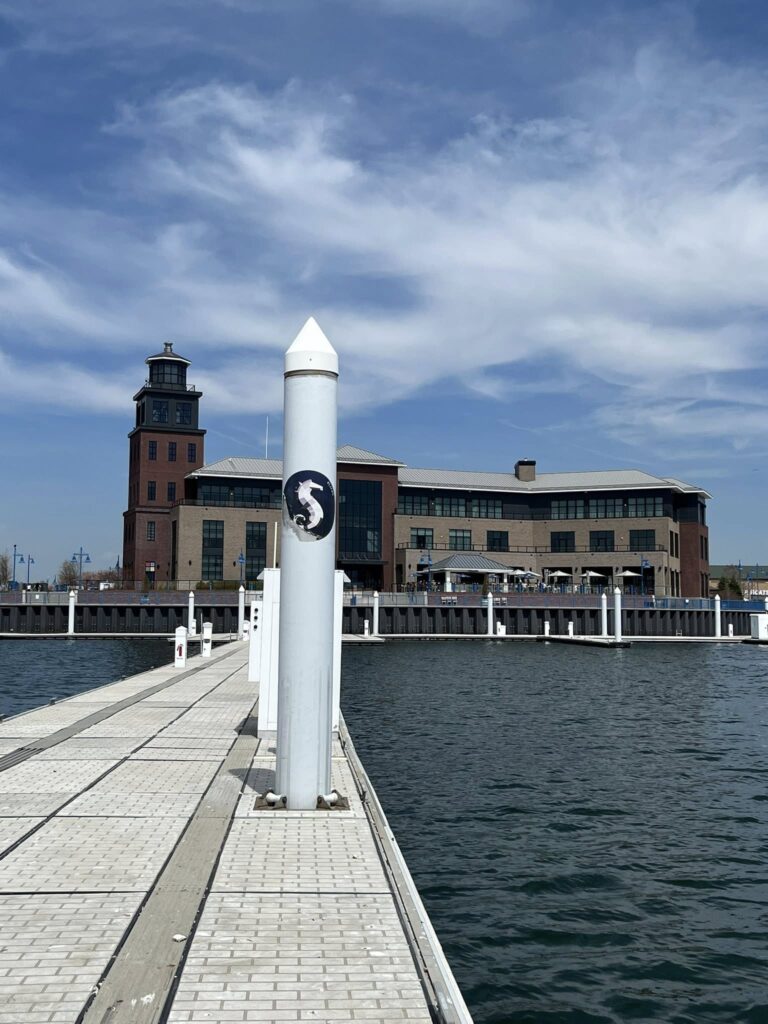
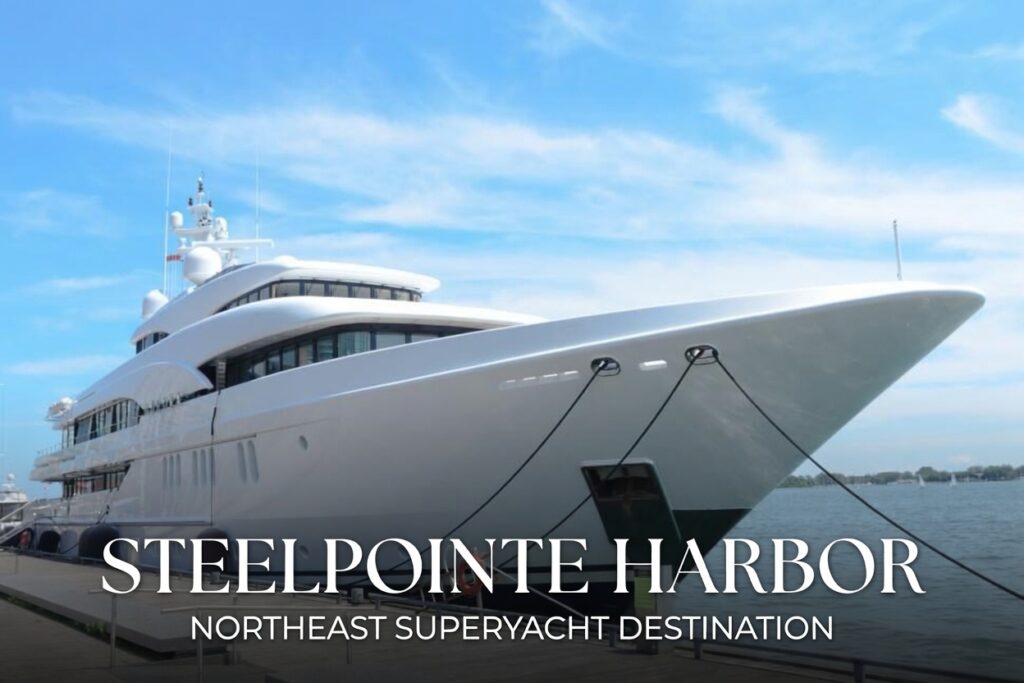
BRIDGEPORT, Conn. — At first light on a recent April morning, a sleek 280-foot superyacht glided into Bridgeport Harbor Marina without passing under a single bridge. The vessel, deep-draft and foreign-flagged, eased alongside one of the marina’s wide concrete floating docks. The pontoons—hybrid concrete-and-aluminum systems custom-stenciled to match the upland harbor walk—barely stirred under the weight. A few hundred yards away, construction crews were putting the finishing touches on The August, a 420-unit waterfront apartment building scheduled to welcome its first residents on June 17. At Boca Oyster Bar, staff arranged tables overlooking the slips where, just a generation ago, the hulking remains of a coal-fired power plant loomed over polluted waters.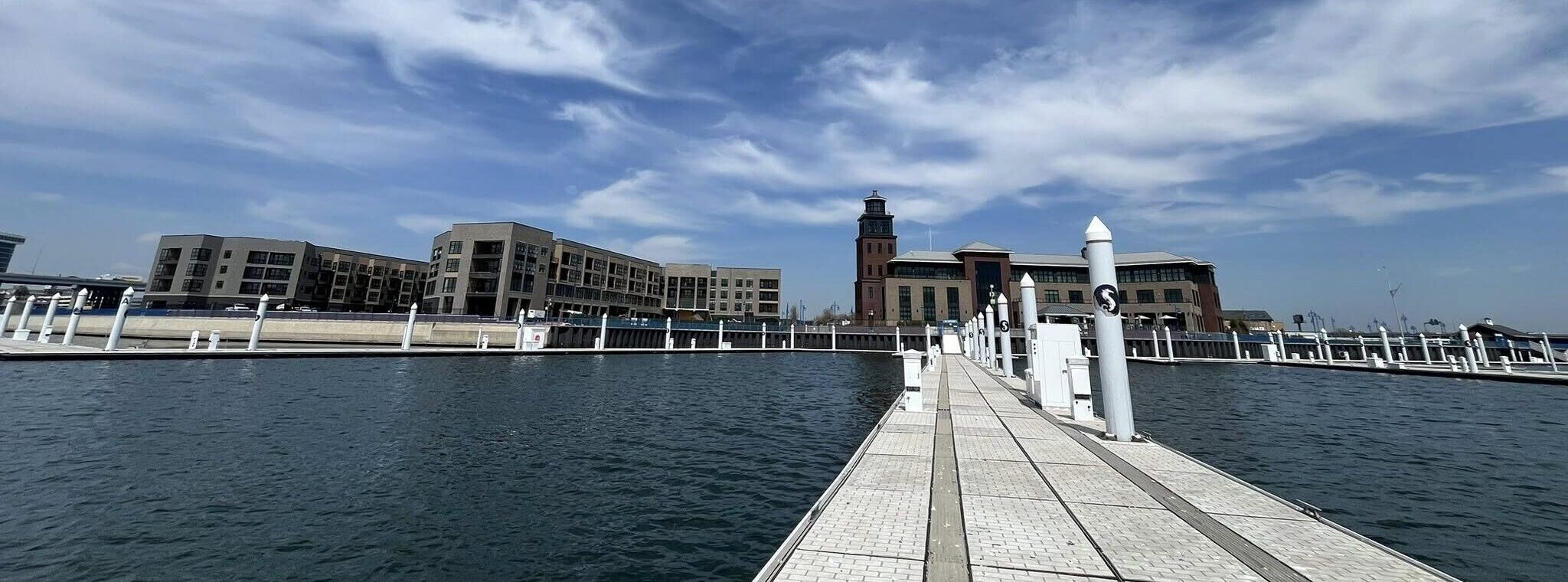
The transformation is striking. For more than 18 years, the Christoph family—Robert W. Christoph Sr. and his son Robert W. Christoph Jr., principals of RCI Group—have pursued a patient, privately financed vision on this 52-acre peninsula in Bridgeport. What was once an industrial brownfield is becoming a modern mixed-use waterfront district with superyacht capabilities, luxury and workforce housing, retail anchors, and a full-service shipyard. When complete, the project could encompass up to 2.8 million square feet of development, including more than 1,000 residential units, significant retail and office space, and hotel capacity.
15 years Ago
The story of Steelpointe Harbor is more than a local real-estate tale. It is a test of whether long-horizon private capital, guided by genuine waterfront expertise, can revive a struggling post-industrial city and create a viable Northeast stopover for superyachts. In an era when many waterfront projects rely on heavy public subsidies or falter amid economic cycles, the Christophs have self-financed large portions of the work while layering in partners for residential and hotel phases. Their approach draws on decades of boating knowledge, from the Great Lakes to a successful marina transformation in Miami Beach.
Bridgeport, long one of Connecticut’s most challenged cities, now finds itself with one of the state’s most ambitious private waterfront developments. The marina already offers more than 200 slips capable of handling vessels up to 300 feet, with a 35-foot approach depth and 17-foot dockage at low water. Adjacent, the expanding Hornblower Steelpointe Shipyard provides haul-out and refit services rare in the region. Retail tenants such as Bass Pro Shops and restaurants like Boca Oyster Bar are drawing daily visitors, while The August introduces a mix of market-rate and workforce housing under Connecticut’s Build for Connecticut program.
Yet the project remains a work in progress. Leasing at The August is active, a 142-room Residence Inn by Marriott is advancing, and broader phases are still to come. For the Christophs, Steelpointe represents the culmination of a multigenerational commitment to waterfront development. For Bridgeport and the Northeast, it raises a larger question: Can a family’s long bet on a former power-plant site help redefine what successful urban revival looks like in the 21st century?
12 Years Ago
The Christoph Family’s Waterfront DNA
The driving force behind Steelpointe Harbor is not a large institutional developer or a private-equity fund chasing quick returns. It is a father-and-son team whose approach to waterfront development was shaped by decades of hands-on experience with boats and marinas.
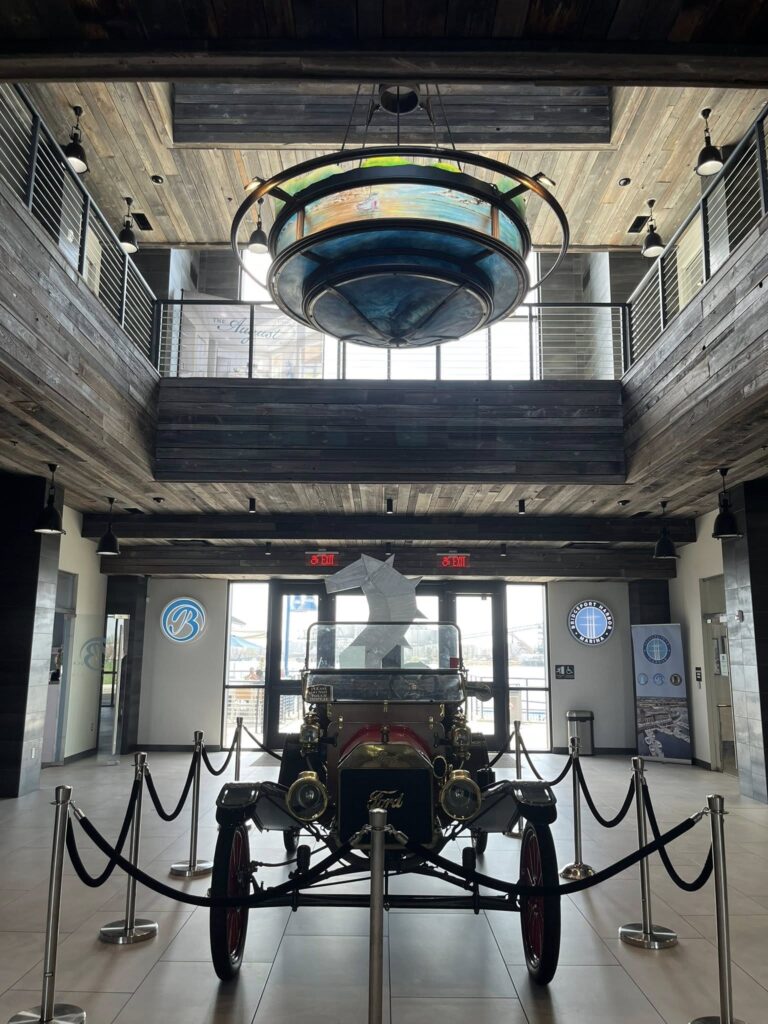
Robert W. Christoph Sr. grew up boating on the Great Lakes, where sudden weather changes, shifting currents and the practical demands of docking taught him what boaters actually value. That early exposure set the course for a career that began in 1969 and eventually spanned multifamily housing, commercial properties and marina developments across the Midwest and Southeast. Over the years, Sr. navigated economic turbulence — the energy crisis of the 1970s, sky-high interest rates and the savings-and-loan crisis — by acquiring and repositioning distressed waterfront assets.
One of his signature projects came in Miami Beach, where he transformed a polluted refuse-transfer station filled with old tanks into a thriving destination marina. The project demonstrated his core philosophy: successful waterfront development must serve both the vessels that arrive by water and the people who live, work and visit on land. RCI Group, the family company he founded, has always operated with that dual focus.
Robert W. Christoph Jr., known as Bobby, joined the business in 2000 after earning an accounting degree from Central Michigan University and an M.B.A. from the University of Miami. For more than 25 years he has handled day-to-day strategy, financing, operations and partnerships. The father-son dynamic is central to the Steelpointe story. Sr. brings the long-view vision honed over five decades; Jr. provides operational discipline and modern market insight.
In public remarks over the years, Christoph Jr. has repeatedly emphasized patience. “We are here for the long haul,” he said in one early interview about Steelpointe. “It’s all positive. We are excited where we are and for the future.” That mindset stands in contrast to many real-estate projects that prioritize speed and exit strategies. The Christophs treat Steelpointe as a multigenerational legacy asset rather than a single-phase transaction.
Their boating background influences nearly every design choice at Steelpointe. From the layout of the harbor walk to the placement of fuel docks and the decision to install wide, stable concrete floating pontoons, the family draws on practical knowledge of what captains, crews and residents want from a waterfront destination. Jr. has noted that the Bridgeport opportunity first came to the family’s attention through a boater who frequented their Miami marina — a reminder that their network remains rooted in the maritime community.
This “boating family” identity also explains their willingness to tackle a challenging brownfield site in Bridgeport when many other developers looked elsewhere. They saw not only the environmental and regulatory hurdles but also the strategic location: the first deep-water harbor north of Manhattan with unobstructed access to Long Island Sound. For the Christophs, that combination of location, scale and long-term potential outweighed the risks that had deterred others for years.
As Steelpointe moves from remediation and infrastructure into residential leasing and hotel development, the family’s long-horizon approach is being tested in real time. The next several years will show whether their patient capital and waterfront expertise can deliver the kind of vibrant, mixed-use district they envision — and whether that model can offer lessons for other struggling waterfront cities.
11 Years Ago
From Industrial Scar to Remediated Asset
The peninsula that is now Steelpointe Harbor was, for much of the 20th century, defined by heavy industry. The site housed Bridgeport Harbor Station, a coal-fired power plant operated by United Illuminating that once supplied electricity to the city’s brass factories, munitions plants and bustling port. At its peak, the facility and surrounding industrial corridor embodied Bridgeport’s manufacturing might. By the late 20th century, however, the plant had become a symbol of the city’s long decline. Decommissioned and largely abandoned, the property sat as a contaminated brownfield, its smokestacks and rusting infrastructure a daily reminder of lost jobs and environmental neglect.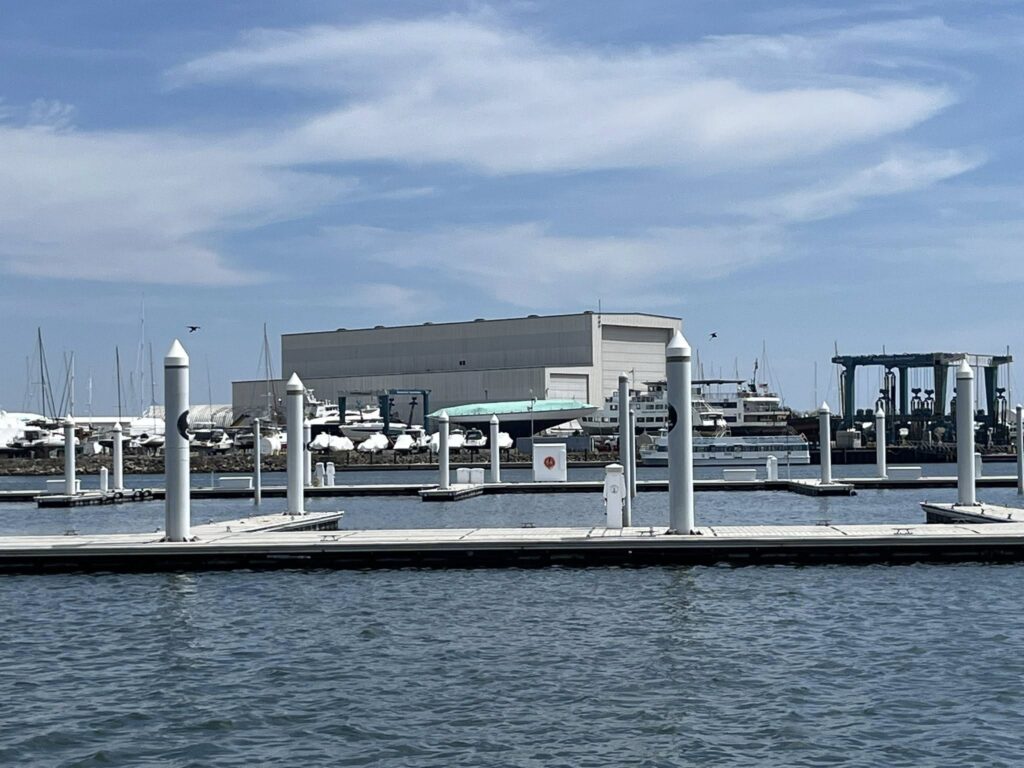
When the Christophs first began exploring the site more than 18 years ago, many observers considered the location nearly unbuildable. Decades of industrial use had left behind contaminated soil, polluted groundwater and structural challenges. Financing such a project in Bridgeport — a city with high poverty rates, elevated crime statistics and a reputation that deterred many investors — added another layer of difficulty. Permitting, environmental approvals and community concerns stretched the timeline.
Yet the Christoph’s saw opportunity where others saw obstacles. They acquired the property and began the painstaking work of remediation. Contaminated soil was excavated or capped. Millions of gallons of groundwater were treated and properly disposed of. Thousands of tons of concrete from the old power-plant foundations were crushed and reused on site, reducing both waste and the need for new materials. The scale of the cleanup was substantial, involving coordination with state and federal environmental agencies over many years.
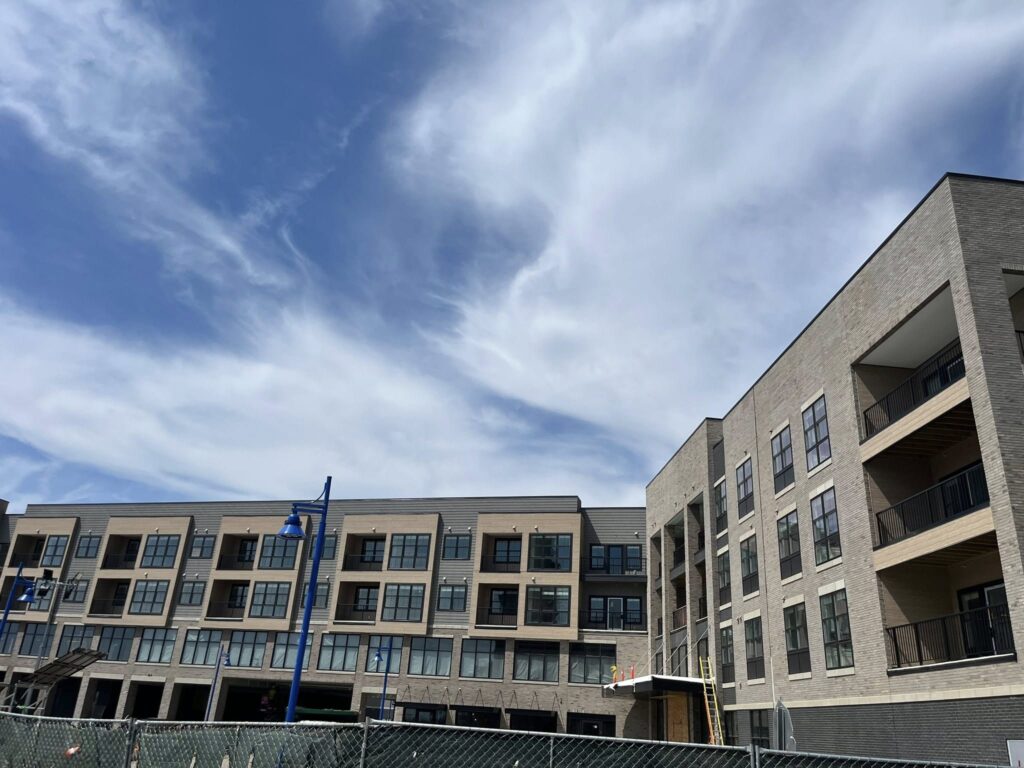
One tangible result of that effort is the public harbor walk, now open daily, that has reconnected Bridgeport residents to Long Island Sound for the first time in decades. What was once an inaccessible industrial zone is gradually becoming a shared waterfront amenity. Mayor Joe Ganim, who has supported the project through multiple administrations, has described Steelpointe as one of the most significant private investments in Bridgeport in a generation. At various groundbreakings and public events, he has praised the Christophs’ persistence, noting that the project is already among the city’s largest taxpayers and has generated millions in annual revenue along with hundreds of construction and service jobs.
The remediation phase also highlighted the Christophs’ phased approach. Rather than attempting to build everything at once, they tackled infrastructure first — bulkheads, utilities, the marina basin and the harbor walk — before moving into residential and retail development. This methodical strategy helped manage risk and allowed the project to adapt to shifting market conditions and financing realities.
Still, challenges remain visible. Some East Side residents have expressed concern about gentrification and whether the benefits of new development will reach longtime neighborhood families. Christoph Jr. has addressed these issues in community meetings by emphasizing local hiring, training programs and the inclusion of workforce housing. The project’s mixed-income model at The August, which reserves a significant portion of units for middle-income renters under Connecticut’s Build for Connecticut program, is part of that response.
Today, the former power-plant site bears little resemblance to its industrial past. The smokestacks are gone. In their place stand modern docks, new buildings and open public space. The environmental transformation is not just cosmetic; it has created the foundation for everything that follows — a working marina, residential buildings with Sound views, and the potential for a true live-work-play waterfront district.
For the Christophs, the remediation work was never just about clearing contamination. It was about proving that a long-abandoned industrial parcel could become economically productive again. That bet is now entering its most visible phase, as residential leasing begins and the broader master plan moves forward.
10 Years Ago
The Marina: Concrete Docks, Deep Water and Northeast Superyacht Strategy
The most visible success at Steelpointe Harbor so far is the marina itself. More than 200 slips are now operational, served by wide concrete floating docks that provide a stable, low-maintenance platform rarely found in older Northeast facilities. Manufactured by Golden Marine Systems using a hybrid concrete-and-aluminum design, the pontoons are engineered to handle heavy loads and resist the ice, waves and corrosion typical of Long Island Sound. Their surface has been custom-stenciled to blend seamlessly with the upland harbor walk, giving the entire waterfront a cohesive, finished feel.
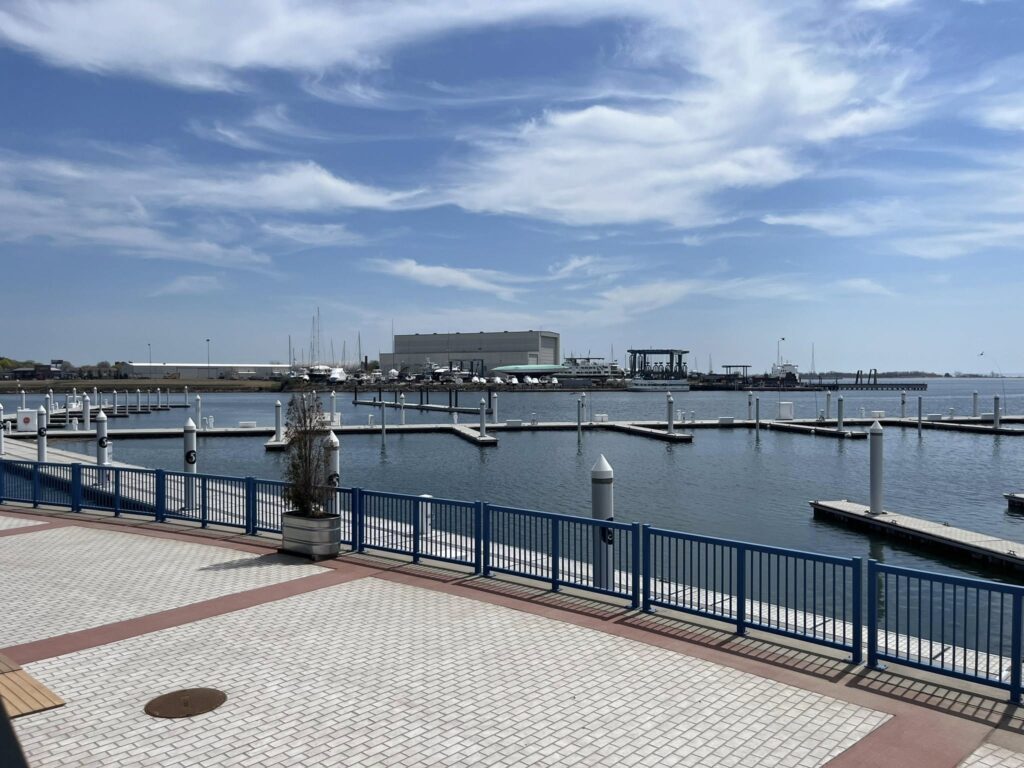
The engineering goes beyond aesthetics. The marina offers a 35-foot approach depth and 17-foot dockage at low water — specifications that allow vessels up to 300 feet to enter without restriction. Crucially, there are no bridges between the harbor and Long Island Sound, a rarity on the Connecticut coast. High-speed, high-volume fuel docks, multi-phase electrical service capable of supporting megayachts, pump-out stations and 24-hour security are already in place.
Adjacent to the marina sits the 17-acre Hornblower Steelpointe Shipyard, which has been expanded with enclosed sheds, a 220-foot service dock and Travelifts rated for 700 tons. The yard can handle haul-outs, painting, mechanical work and refits for yachts ranging from 50 to 200-plus feet — services that many Northeast harbors lack or must outsource. This combination of berthing and full-service repair capability is one of Steelpointe’s strongest practical advantages.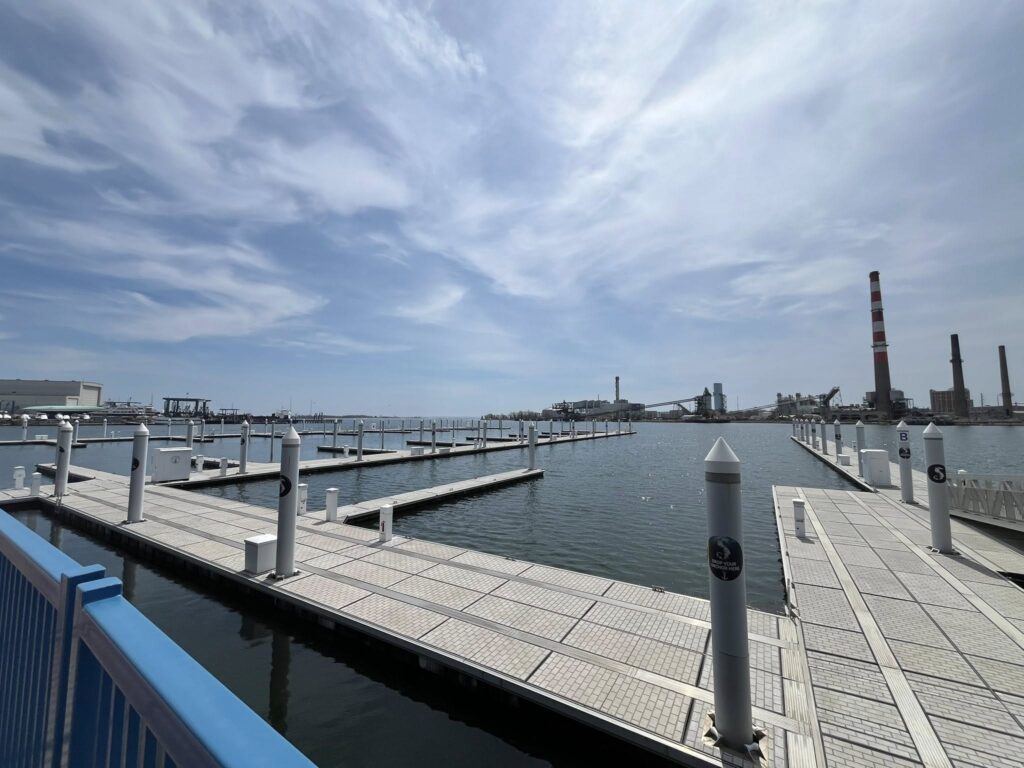
In the competitive Northeast superyacht market, Steelpointe is carving out a distinct niche. Newport, Rhode Island, remains the region’s prestige address, with its historic wharves, Gilded Age mansions and crowded calendar of regattas and boat shows. Safe Harbor Newport Shipyard and other facilities there can accommodate vessels up to 350 feet and offer concierge-level services in a setting rich with sailing heritage. But Newport’s appeal comes with trade-offs: high seasonal demand, premium dockage rates and occasional congestion or tidal constraints.
Steelpointe offers a more modern, efficient alternative. Located just 60 miles from Manhattan and 120 miles from Newport, it functions as a convenient mid-point stopover for yachts routing between Florida or Caribbean wintering grounds and New England summer cruising. Captains can refuel, provision, perform maintenance and reach New York City by car in roughly an hour — all without fighting bridges or battling peak-season crowds. The concrete floating docks provide a noticeably solid walking surface, a detail appreciated by owners and crews stepping off large vessels.
Christoph Jr. has described the marina’s ambitions clearly. “People will come into this harbor and marina, dine, shop, get your boat worked on, as well as go see a first-class show,” he said in a recent interview. “We’re going to continue to grow Steelpointe Harbor into a maritime destination.”
7 Years Ago
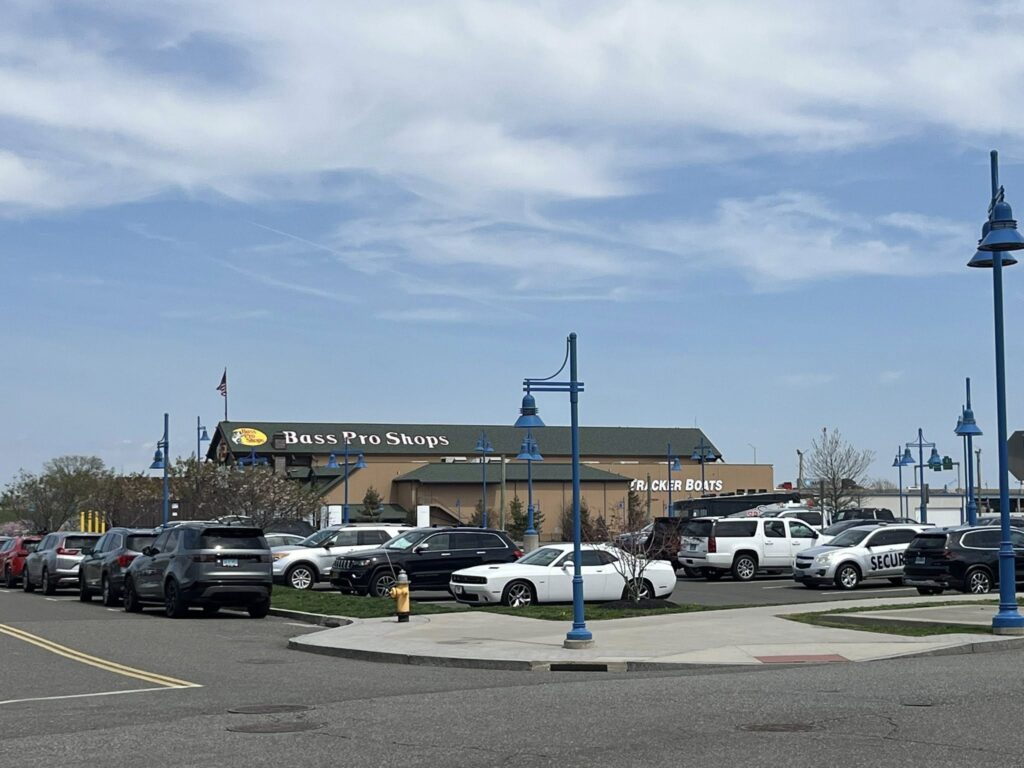
The project’s marketing leans into this practicality. While it may never match Newport’s social cachet, Steelpointe is positioning itself as the reliable, forward-looking option for superyacht owners who value efficiency, modern infrastructure and easy access to both New York’s financial and cultural offerings and New England’s cruising grounds. Events such as the Steelpointe Yacht & Charter Show are designed to build visibility, while the integrated retail and dining (Bass Pro Shops, Boca Oyster Bar) add lifestyle appeal that pure marina facilities often lack.
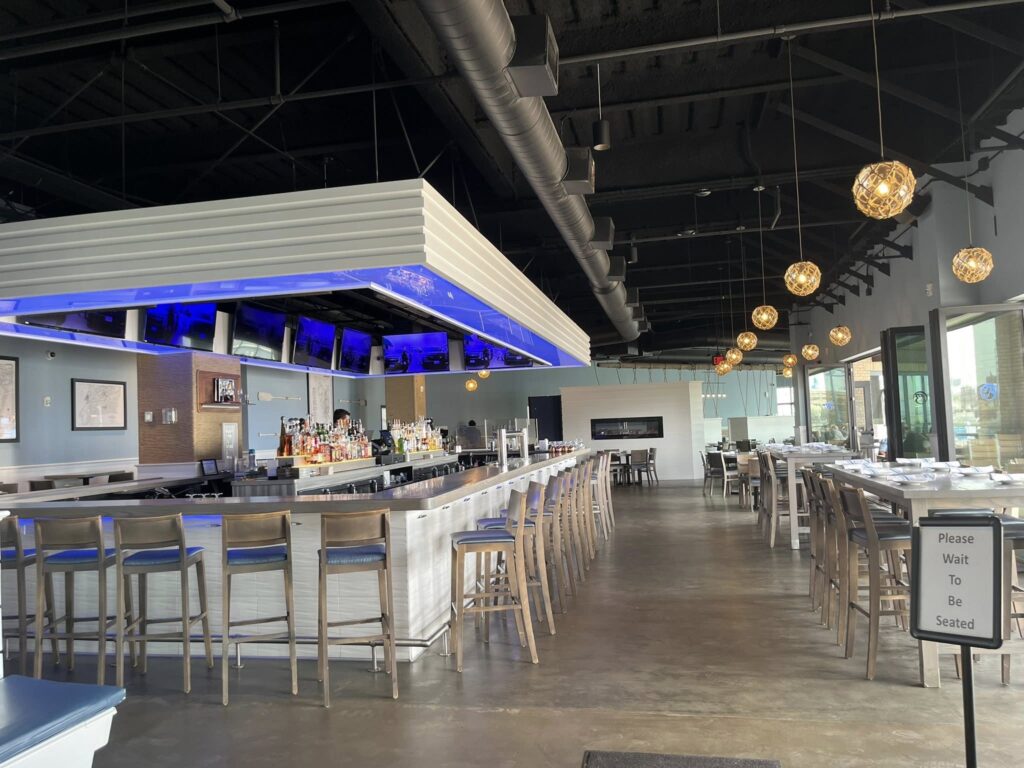
For superyacht owners, especially those who are time-sensitive or traveling with family, the combination of deep-water access, on-site refit capability and proximity to major airports and highways is compelling. Although yachts based in Dubai or the Gulf are unlikely to route here for major refits — those owners tend to favor Mediterranean or emerging Middle Eastern yards — transient traffic from international itineraries is realistic, particularly during the Northeast summer season.
The concrete floating docks themselves represent a deliberate choice. Similar systems have been installed at Safe Harbor Newport Shipyard and Hyannis Yacht Club, but Steelpointe’s implementation stands out for its scale and integration with a broader mixed-use development. In the Northeast’s often harsh marine environment, concrete offers superior durability and stability compared with traditional wood or aluminum docks. The “snowshoe effect” of the wide pontoons minimizes movement even when large yachts are tied up alongside.
As residential units at The August begin to fill and the Residence Inn by Marriott advances, the marina will increasingly benefit from a true live-work-play environment rather than functioning as an isolated docking facility. This integration is part of the Christophs’ long-term vision: a destination where superyacht crews, residents and visitors interact naturally.
The marina phase has already delivered measurable progress. It is generating revenue, establishing Steelpointe as a working harbor and proving that the family’s patient approach can produce tangible results. The next test will be whether this infrastructure can anchor the broader residential and commercial build-out — and whether Steelpointe can evolve from a promising marina into a recognized Northeast superyacht and lifestyle destination.
7 Years Ago
Residential and Commercial Momentum: The August and Beyond
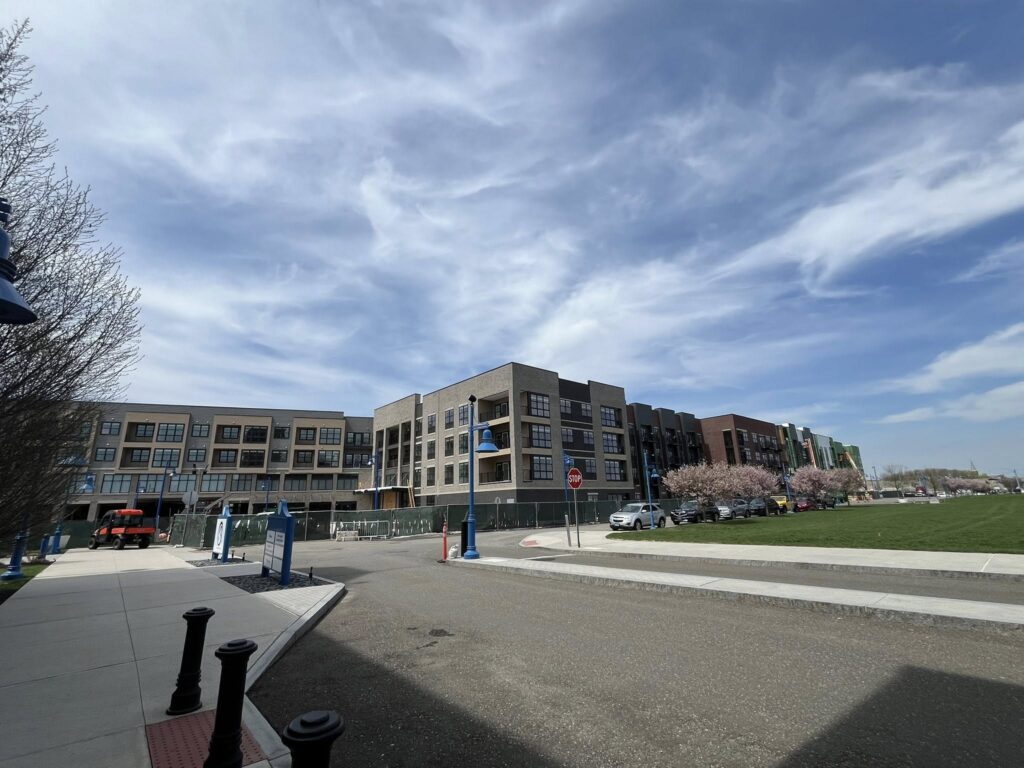
While the marina provides the most immediate proof of progress, the real test of Steelpointe Harbor’s long-term viability lies on land. The August, the first major residential phase, is now leasing and scheduled to welcome its first residents on June 17, 2026. Developed in partnership with Flaherty & Collins Properties, the 420-unit building marks the shift from infrastructure to a true live-work-play community.
The August offers a range of units designed to appeal to both higher-income professionals drawn to waterfront living and local workers priced out of many Fairfield County communities. Studios start at approximately $1,965 per month, while larger three-bedroom penthouses can reach $9,120 or more. Roughly 20 percent of the apartments — about 160 units — are set aside as workforce housing under Connecticut’s Build for Connecticut program, aimed at the “missing middle”: teachers, nurses, police officers and other essential workers who earn too much for traditional affordable housing but struggle with market-rate rents in the region.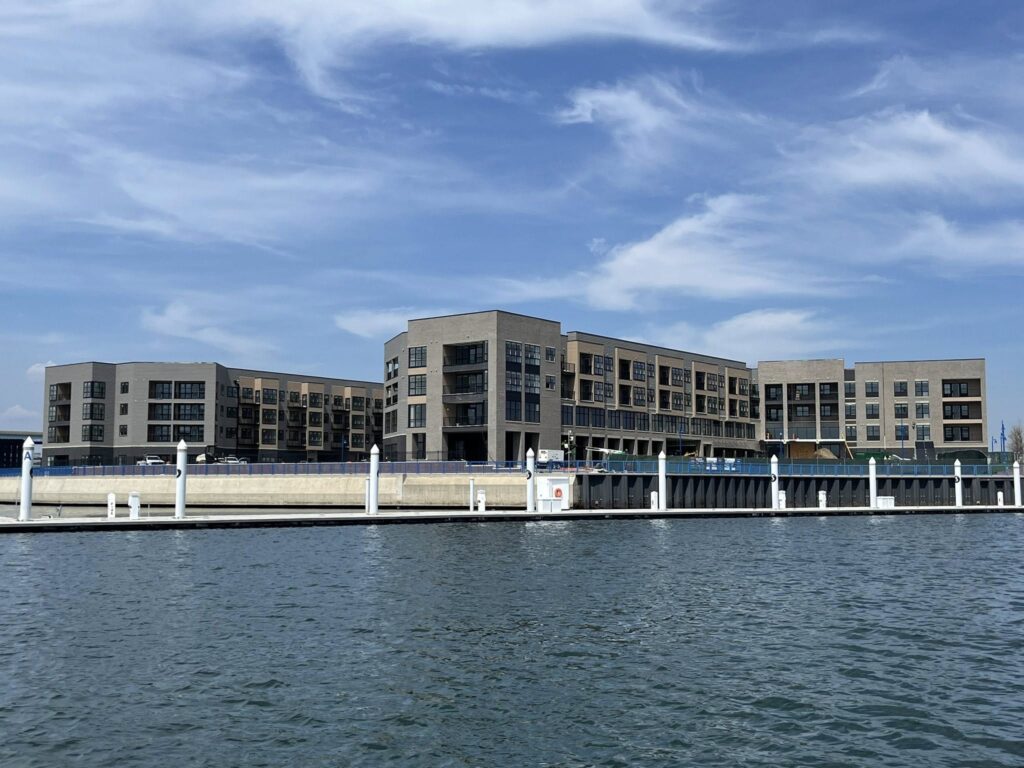
Amenities reflect the project’s waterfront positioning. Residents will have access to a saltwater pool with Long Island Sound views, an indoor-outdoor fitness center, a co-working lounge, a private pet spa and pickleball courts. Electric-vehicle charging stations and modern finishes underscore the blend of luxury and practicality. Leasing activity has been steady, according to project representatives, suggesting demand for housing that combines urban access with direct waterfront proximity.
A short distance away, construction continues on a 142-room Residence Inn by Marriott, with completion targeted for early 2027. The hotel will serve both leisure travelers and business visitors drawn to the marina and the broader Bridgeport area. On the retail side, anchors such as Bass Pro Shops Outdoor World, Starbucks, Chipotle and T-Mobile are already open and generating daily foot traffic. Boca Oyster Bar and Lighthouse restaurant provide waterfront dining options that serve both marina users and local residents.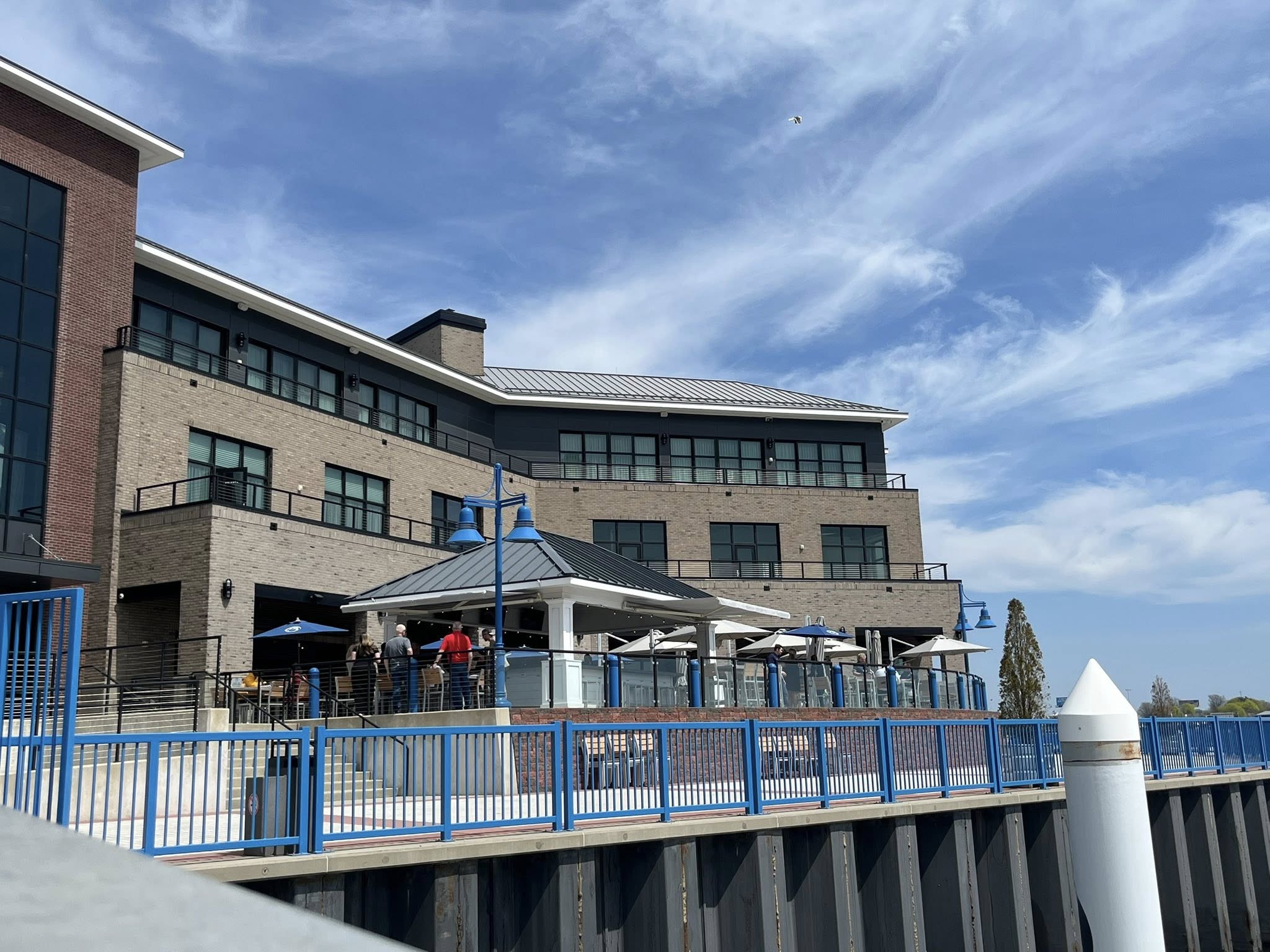
This mix of uses is deliberate. The Christophs have long argued that a successful waterfront development cannot rely on any single component. The marina brings transient visitors and maritime activity, the apartments create a resident base, the hotel adds overnight demand, and retail and restaurants supply daily vibrancy. Christoph Jr. has described the vision as creating a place where people can “dine, shop, get your boat worked on, as well as go see a first-class show.”
Early economic signals are encouraging. The project is already one of Bridgeport’s largest taxpayers, contributing millions in annual revenue. Construction and service jobs have multiplied, and as occupancy at The August grows, the ripple effects are expected to expand into hospitality, retail and marina-related employment. RCI executives project that the full build-out — potentially 1,000 to 1,500 residential units across multiple phases — could support thousands of additional positions over the coming decade.
Mayor Joe Ganim has repeatedly highlighted the partnership between RCI and Flaherty & Collins as a model for the city. “I thank the Christophs for their continued investment in Bridgeport,” he said at a recent event. For a city that has struggled to attract large-scale private development, Steelpointe represents tangible momentum.
Still, the residential phase brings new challenges. Bridgeport’s overall housing market remains constrained, and some local observers question whether the workforce units will truly serve East Side families or primarily attract commuters from surrounding towns. The Christophs and their partners have responded by emphasizing local marketing efforts and community engagement. The goal, they say, is to create housing options that retain and attract working households rather than simply importing wealth from elsewhere.
As The August moves toward occupancy and the hotel advances, Steelpointe is transitioning from a construction site dominated by cranes and heavy equipment to a functioning waterfront neighborhood. The next few years will reveal whether the residential component can match the marina’s early success and help sustain the broader master plan.
For the Christophs, this phase represents validation of their patient strategy. After nearly two decades focused on remediation and infrastructure, they are finally seeing residents and visitors begin to populate the site they have long envisioned as a vibrant extension of Bridgeport’s waterfront.
5 Months Ago
Economic Impact, Community Realities and Regional Ripples
Steelpointe Harbor is already delivering measurable economic returns. The project ranks among Bridgeport’s largest taxpayers, contributing millions of dollars annually in property taxes and related revenue. Construction activity has generated hundreds of jobs, while the operational marina, retail tenants and restaurants support ongoing employment in hospitality, maritime services and retail. As The August begins welcoming residents in June 2026 and the Residence Inn by Marriott opens in 2027, those numbers are expected to grow significantly.
RCI executives project that the full build-out — potentially 1,000 to 1,500 residential units across multiple phases, expanded retail and office space, and increased hotel capacity — could support thousands of additional jobs over the next decade. The economic multiplier effect extends beyond the peninsula. Visitors arriving by superyacht or car spend at local restaurants and shops, while the marina and shipyard create demand for skilled trades such as mechanics, painters, electricians and fabricators. Bass Pro Shops and other retail anchors are already drawing day-trippers from surrounding Fairfield County towns and even New York City, 60 miles away.
Mayor Joe Ganim has framed Steelpointe as a cornerstone of Bridgeport’s revival. “This is one of the most significant private investments the city has seen in a generation,” he has said publicly. For a city long plagued by population loss and fiscal strain, the project offers a rare example of large-scale private capital flowing into the East Side without heavy reliance on public subsidies.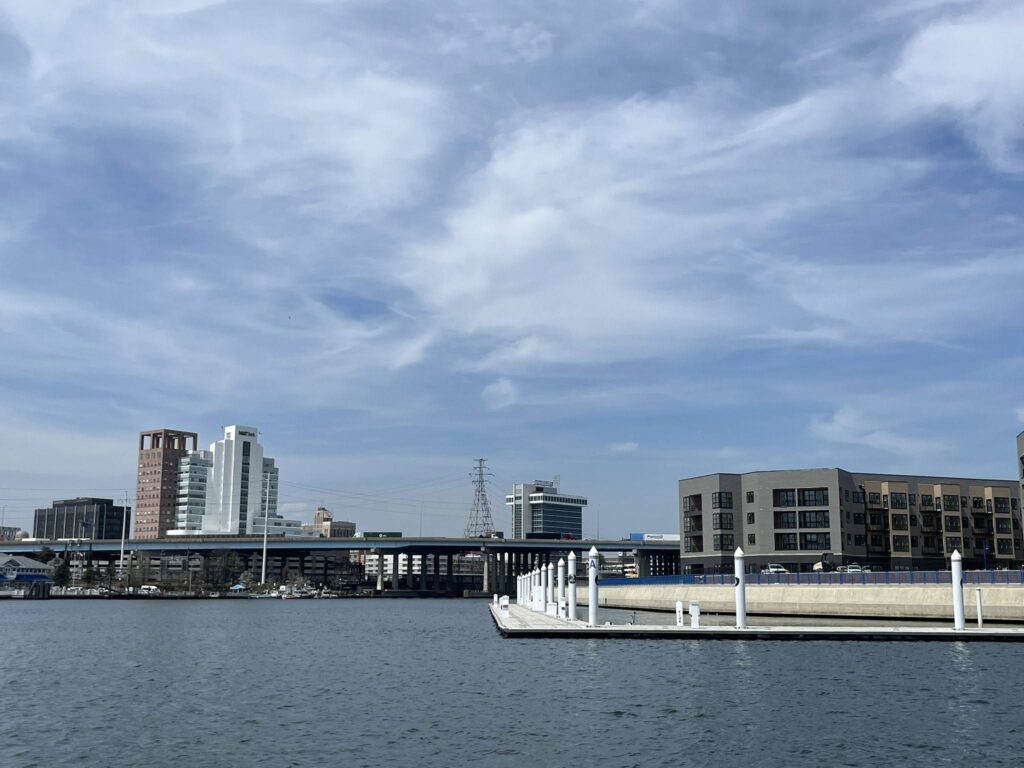
The development also attempts to address Connecticut’s persistent “missing middle” housing shortage. By setting aside roughly 20 percent of The August’s 420 units for workforce housing under the state’s Build for Connecticut program, the project aims to provide options for teachers, nurses, first responders and other middle-income workers who are often priced out of market-rate apartments in Fairfield County. This mixed-income approach is intended to create a more stable, economically diverse community rather than an exclusive enclave for high earners.
Yet the economic gains come with real community tensions. Some longtime East Side residents worry that rising property values and new development could accelerate gentrification, displacing families who have lived in the neighborhood for generations. Concerns about whether local hiring commitments will translate into meaningful opportunities for Bridgeport residents have surfaced at community meetings. Christoph Jr. has responded by highlighting partnerships with local training programs and efforts to source workers from the city itself. “We are creating opportunity and growth right here in Bridgeport,” he has said in public forums.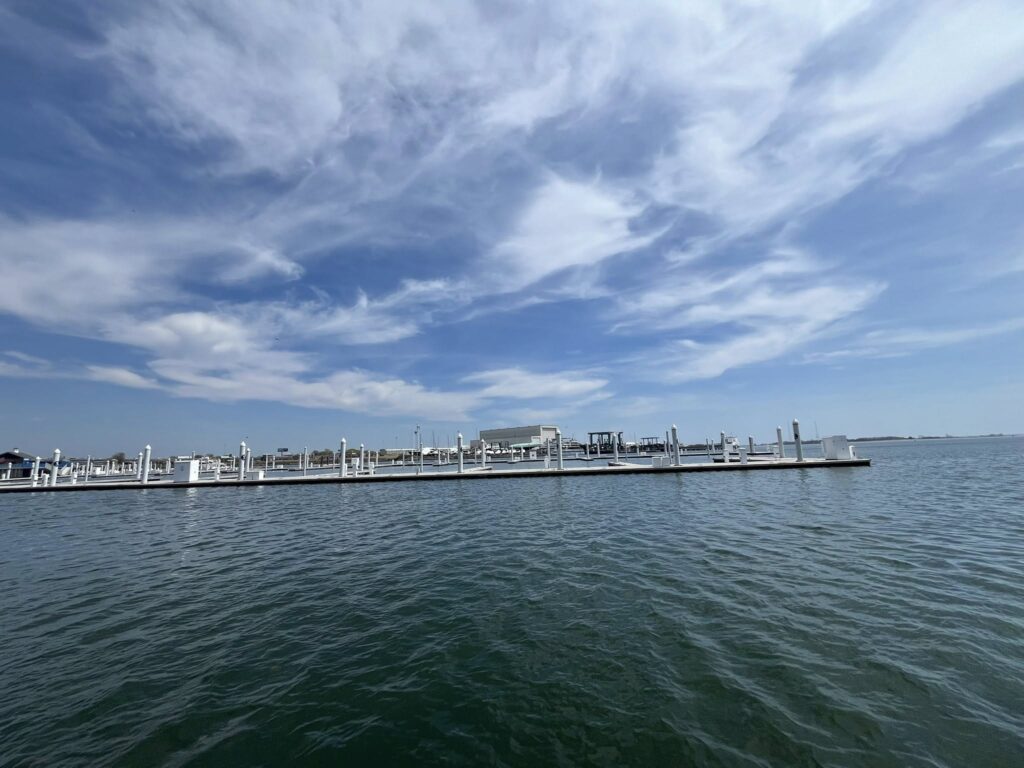
The project’s regional ripples extend beyond Bridgeport. Fairfield County, one of the wealthiest areas in the United States, still faces housing affordability challenges and uneven economic development. Steelpointe offers a model of private-sector-led waterfront revitalization that could be studied by other Connecticut towns with underused industrial waterfronts. Its proximity to New York City also positions it as a potential spillover benefit for the broader tri-state economy — a convenient superyacht and leisure destination that draws visitors who might otherwise bypass the area.
Nearby redevelopment possibilities add further potential. Plans for the former Shoreline Star site, just up the street, could introduce sports, entertainment or additional mixed-use elements that complement Steelpointe’s marina and residential offerings. If realized, these synergies could amplify the district’s draw and economic impact across eastern Bridgeport.
For now, the project remains in transition. The August’s leasing success will be an important early indicator of residential demand, while the hotel’s performance will test the area’s ability to attract overnight visitors. Tax revenue is rising, but sustained job creation and broad-based community benefits will take years to fully materialize. The Christophs’ phased strategy — completing infrastructure first, then layering residential and commercial uses — is designed to manage these risks, but market shifts, interest rates or changes in state housing policy could still affect the timeline.
What is clear is that Steelpointe has already changed the conversation about Bridgeport’s waterfront. Once dismissed as a post-industrial relic, the East Side now has a high-profile private development with national visibility. Whether that momentum can translate into lasting, inclusive economic growth remains the central question for the next decade.
A Blueprint for Other Cities? Lessons and Outlook
As Steelpointe Harbor moves from construction site to functioning waterfront district, it is beginning to attract attention beyond Bridgeport. Economic development officials in other post-industrial cities along the Northeast corridor and Great Lakes are watching to see whether the Christophs’ long-term, privately financed model can succeed where many publicly subsidized waterfront projects have struggled.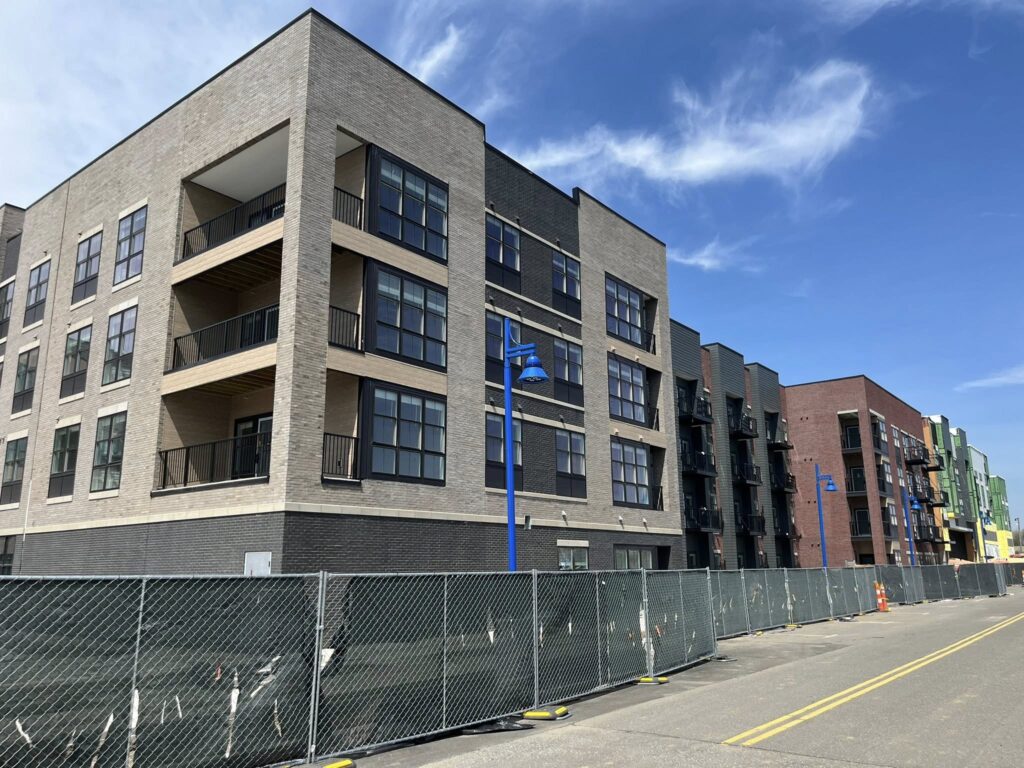
The lessons so far are straightforward but not simple. First, patience matters. The Christophs have spent more than 18 years on the project, self-financing significant portions while methodically addressing environmental remediation, infrastructure and market conditions. That long-horizon approach contrasts sharply with developments that rush to build and then face financing gaps or changing demand. Second, waterfront expertise counts. The family’s decades of boating experience — from the Great Lakes to Miami Beach — informed practical decisions such as the choice of stable concrete floating docks, the depth of the harbor channel and the integration of a full-service shipyard.
Third, mixed-use integration appears more resilient than single-purpose projects. By combining a superyacht-capable marina with residential housing (including workforce units), retail and hotel space, Steelpointe aims to create multiple revenue streams and daily activity rather than relying solely on seasonal boating traffic. Finally, public access and community engagement are not afterthoughts. The harbor walk has reconnected residents to Long Island Sound, and the inclusion of Build for Connecticut workforce housing attempts to address concerns about gentrification.
Still, significant risks remain. Bridgeport continues to face higher-than-average poverty and crime rates that can deter some investors and residents. Periodic maintenance dredging of the harbor channel depends on federal priorities and funding. Market conditions for luxury and workforce housing can shift, and the project must still prove that residential leasing at The August and hotel performance will meet expectations. Christoph Jr. has acknowledged these realities, noting that some delays stemmed from “convincing investors to take a chance on Bridgeport” and dealing with poor soil conditions.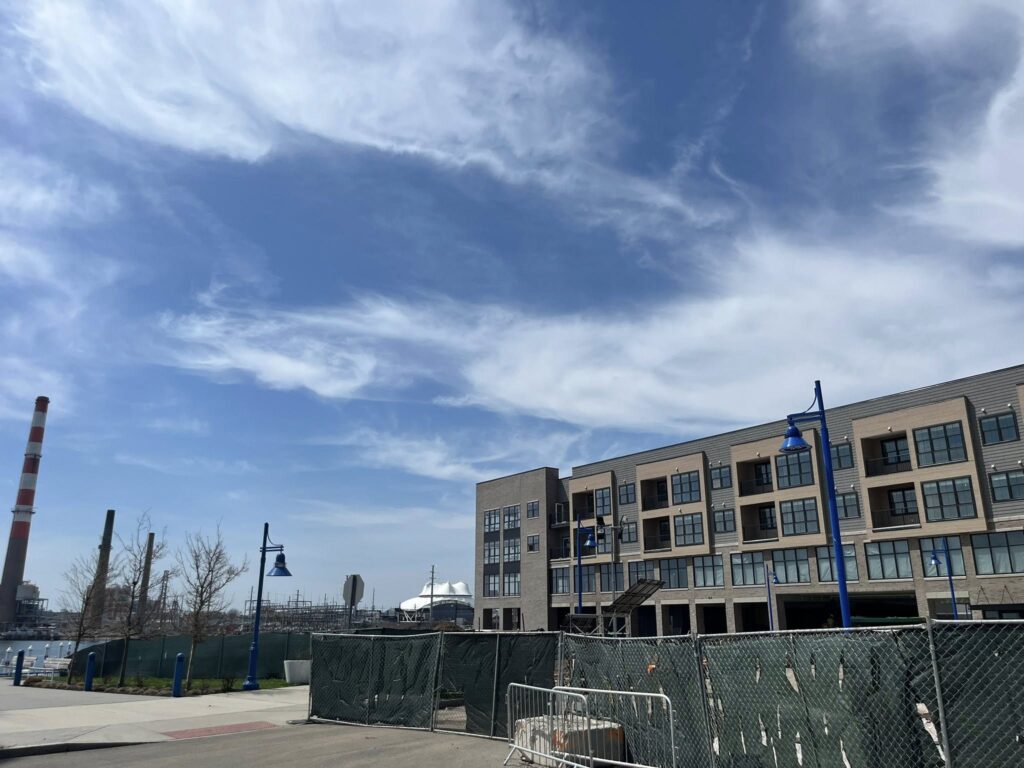
Looking ahead, the Christophs envision a fully realized district within the next 10 to 20 years. Additional residential phases could bring the total to 1,000–1,500 units. Expanded retail and office space, more public amenities and continued growth of the marina and shipyard are all part of the master plan. If successful, Steelpointe would stand as a rare example of a privately led transformation of a former power-plant site into a vibrant, mixed-income waterfront community with superyacht capabilities.
For other cities with aging industrial waterfronts — whether in Connecticut, along the Hudson River, or on the Great Lakes — the project offers a potential template. It suggests that brownfield remediation paired with patient capital, boater-first design and phased development can produce results without requiring massive public subsidies. It also highlights the value of genuine maritime expertise in an era when many waterfront projects prioritize residential towers over working harbors.
The Christoph family’s bet is far from complete. The next several years will be critical as The August fills with residents, the Residence Inn opens and broader phases advance. Success would mean more than a profitable development; it would demonstrate that private vision, grounded in practical waterfront knowledge, can help revive struggling cities in ways that purely financial or heavily subsidized efforts often cannot.
For Bridgeport, Steelpointe already represents a visible shift — from a landscape dominated by the remnants of heavy industry to one with superyachts at the dock, new residents moving in and public space reclaimed for the community. Whether that shift becomes a broader renaissance depends on execution in the years ahead. For now, the project stands as one of the more ambitious and closely watched private waterfront initiatives in the Northeast.