
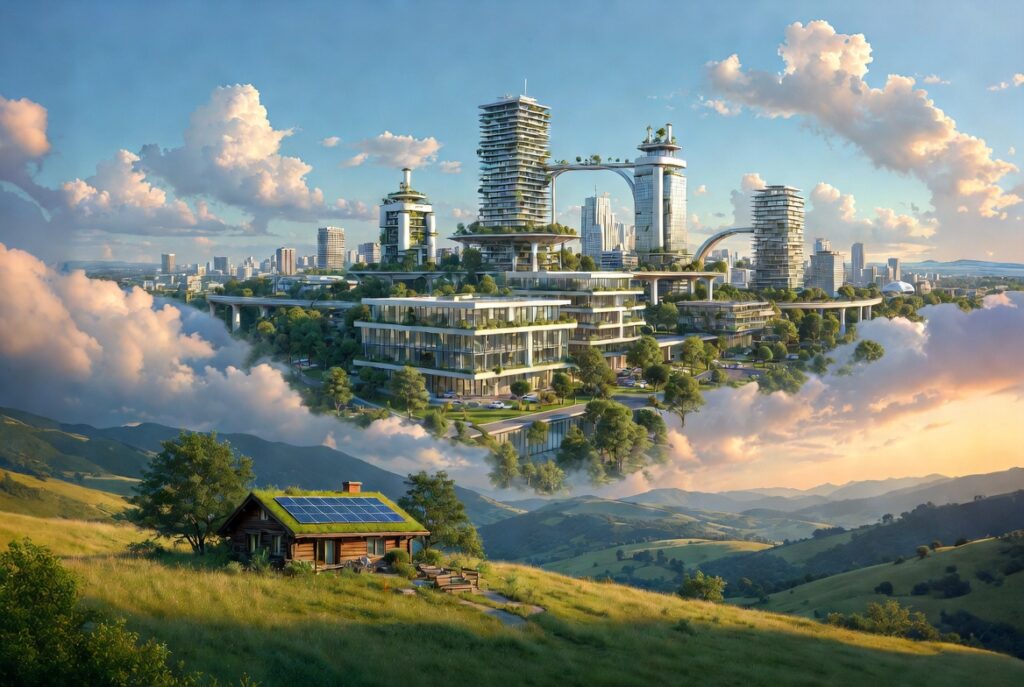
The Birth of Green Building
The modern green building movement traces its roots to the energy crises of the 1970s. The OPEC oil embargo exposed the vulnerability of buildings that wasted enormous amounts of energy. Architects, engineers, and environmentalists began experimenting with passive solar design, better insulation, natural ventilation, and early renewable technologies.
By the early 1990s, the conversation became more structured. In 1993, the U.S. Green Building Council (USGBC) was founded. A few years later, in 1998, the organization launched LEED (Leadership in Energy and Environmental Design) — the first widely adopted rating system for green buildings. LEED gave the industry a common language and measurable standards for energy efficiency, water conservation, materials, indoor air quality, and site sustainability.
Early adopters were often governments, universities, and environmentally conscious corporations. Green building remained a premium choice — more expensive, more complicated, and limited to high-profile projects. Most mainstream builders stuck to minimum code requirements.
Green Building: From Niche Movement to Global Standard — And What Comes Next
In the fall of 2007, NBC Connecticut’s Ryan Hanrahan interviewed builder Steve Schappert for a “Going Green” segment. When asked about the future of sustainable homes, Schappert was direct: the market for these homes would eventually become the entire housing market.
Watch the clip here:
That prediction captured a turning point. Green building was no longer just an idealistic fringe — it was on the verge of becoming the default way we design and construct our world.
The Present: Green Is Now the Baseline (2026)
Nineteen years after that NBC interview, the transformation is largely complete.
The global green building market is valued at roughly $650–700 billion in 2026 and continues growing at 8–10% per year. Projections show it reaching $950 billion to $1.5 trillion by 2030–2035. What began as a niche has become mainstream:
- Energy-efficient HVAC, high-performance building envelopes, low-VOC materials, and water-saving systems are standard in quality construction across much of the developed world.
- LEED and similar certifications (WELL, Passive House, Fitwel) are common requirements for institutional investors, corporate tenants, and government projects.
- Building codes in many jurisdictions have incorporated former “green” standards as minimum requirements.
- Buyers and tenants increasingly expect — and pay premiums for — lower operating costs, better indoor air quality, and verifiable sustainability.
Green building succeeded not by remaining separate, but by embedding itself into standard practice. The industry didn’t need a permanent “green” label. It simply raised the floor for everyone.
The Future: The Next 20–30 Years (2026–2055)
The coming decades will test and reshape green building in ways we could not have imagined in 2007. Three major forces will define this era: climate adaptation, technological integration (especially AI), and energy abundance through nuclear and renewables.
1. Climate Adaptation & Resilience
By 2040–2050, buildings will need to withstand more extreme weather — intense heat waves, storms, flooding, and wildfires. Green building will evolve from primarily energy-focused to resilient, adaptive, and regenerative.
Expect widespread adoption of:
- Passive survivability designs (buildings that stay habitable during prolonged grid outages)
- Nature-based solutions (green roofs, permeable surfaces, urban forests)
- Circular economy principles (design for disassembly, reuse of materials)
- Climate-specific regional standards rather than one-size-fits-all approaches
2. AI, Data Centers, and the Energy Challenge
AI-driven data centers represent the biggest new test. Global data center electricity demand is projected to more than double by 2030 (reaching ~945 TWh), with some forecasts even higher. A single large AI campus can consume as much power as a medium-sized city.
This surge creates both risk and opportunity. If data centers rely heavily on fossil fuels or strain local grids, they could offset two decades of efficiency gains. However, the response is already shifting toward solutions that align with green principles:
- Nuclear revival — Small modular reactors (SMRs), restarted plants (like Three Mile Island deals), and on-site power generation are gaining traction to provide clean, 24/7 baseload power.
- Ultra-efficient design — Data centers optimized with AI-driven controls, waste heat recovery for district heating, advanced cooling, and water recycling.
- Integrated green standards — New coalitions like the Greening AI Data Centers Coalition are developing benchmarks for truly sustainable digital infrastructure.
The buildings of 2040–2050 will likely treat energy abundance (from nuclear + renewables) and radical efficiency as complementary goals rather than trade-offs.
3. Technology and Performance-Driven Design
AI and digital tools will transform how we design, build, and operate buildings:
- Generative AI for rapid optimization of form, orientation, and materials
- Real-time performance monitoring and predictive maintenance
- Digital twins that simulate buildings decades into the future
- Smart materials that adapt to conditions (self-healing concrete, dynamic glass, phase-change materials)
By 2050, many buildings may be net-positive — generating more energy than they consume over their lifetime — while contributing to biodiversity, carbon sequestration, and community resilience.
The Road Ahead
Green building has completed its first major chapter: moving from niche to norm. The next chapter is more complex. It requires scaling sustainable principles to meet exploding energy demand from AI, adapting to a changing climate, and integrating powerful new technologies without losing focus on human health and ecological impact.
The core insight from the early movement remains valid: better buildings deliver better long-term economics, health outcomes, and environmental results. The difference now is scale and urgency. Success over the next 20–30 years will depend on collaboration across design, construction, energy, and technology sectors — and on treating high-performance, resilient, low-carbon buildings as non-negotiable infrastructure for a thriving civilization.
The green building journey didn’t end when it became mainstream. It simply entered its most consequential phase.
Schappert believes the market for these homes will be the whole housing market in 10 years.
