
The Inheritance
The envelope arrived on a Tuesday in late October, postmarked from the lawyer’s office in Torrington. Inside was a single key on a faded red ribbon and a note in my grandmother’s shaky hand: “The house is yours now. Let it tell you its stories.”
I hadn’t stepped foot in the old Connecticut farmhouse in seven years. After my grandmother moved to assisted living, I kept meaning to visit, but life in the city had a way of swallowing good intentions. Now, at thirty-eight, I was the reluctant owner of a place I barely remembered.
The driveway was overgrown with goldenrod and black-eyed Susans. The white clapboard siding had softened to a gentle gray, and the red barn door leaned slightly, as if tired from holding itself upright for 112 years. I turned the key and pushed open the heavy front door.
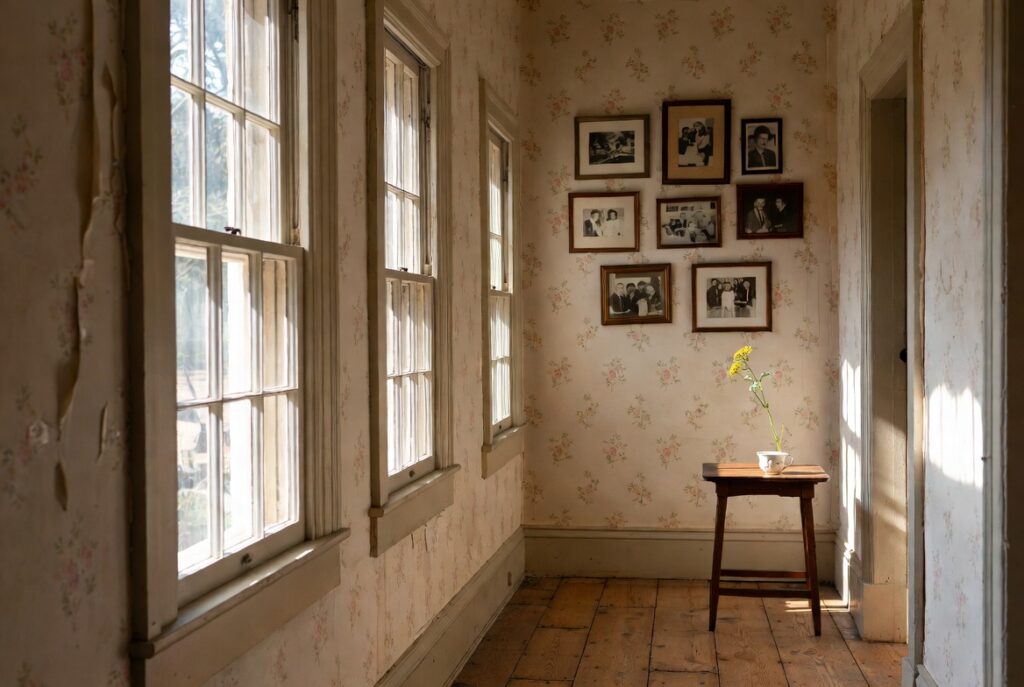
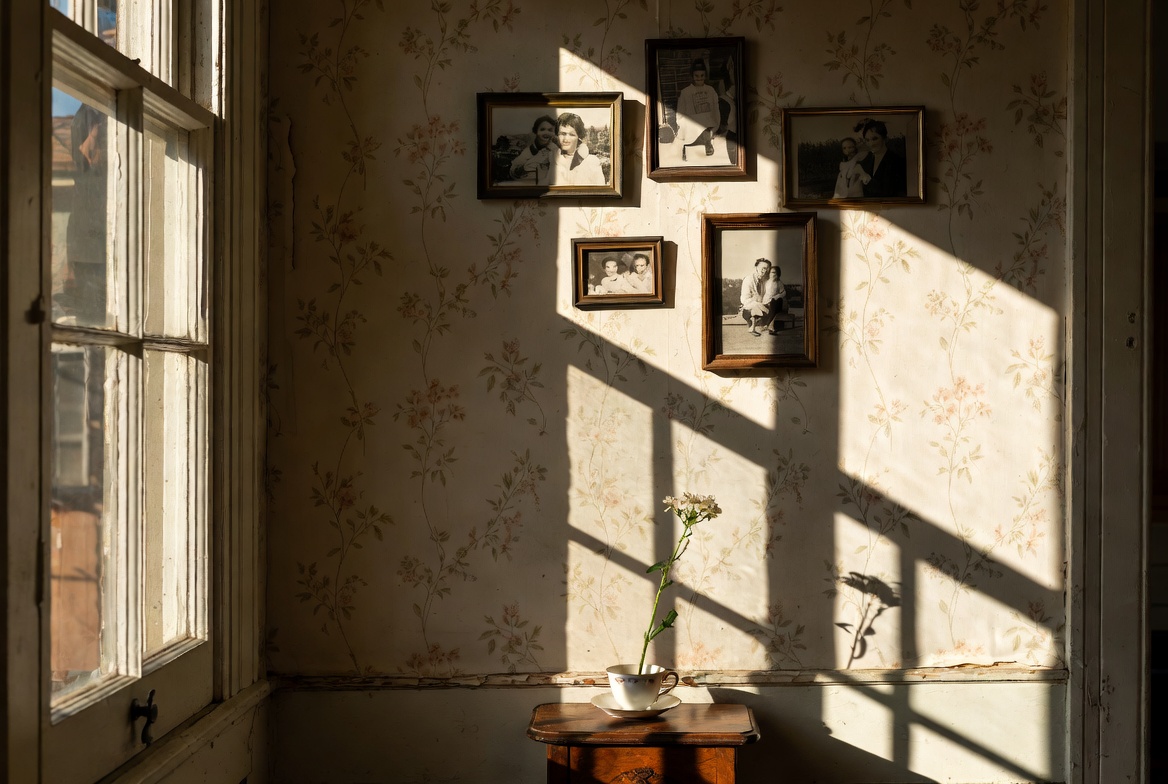
The smell hit me first — that unmistakable blend of old wood, lavender sachets, and something indefinably alive. Sunlight poured through the wavy antique glass windows, painting shifting patterns across the wide pine floorboards. Every surface carried marks of life: a faint pencil line on the doorframe marking my father’s height at age twelve, a water stain on the ceiling from the great blizzard of ’78, and the faint floral wallpaper in the hallway that had been there since my mother was a little girl.
I set my bag down in the kitchen and noticed the old teacup on the windowsill — the one with the hairline crack that Grandma refused to throw away. “It still holds water,” she would always say. In that moment, the house didn’t feel like an inheritance. It felt like a witness.
“The most valuable art in this house was never purchased. It was lived.”
Layers Upon Layers
Over the next few weeks I began the slow process of sorting. I expected to find antiques and old furniture. What I didn’t expect was to uncover an entire museum of memory.
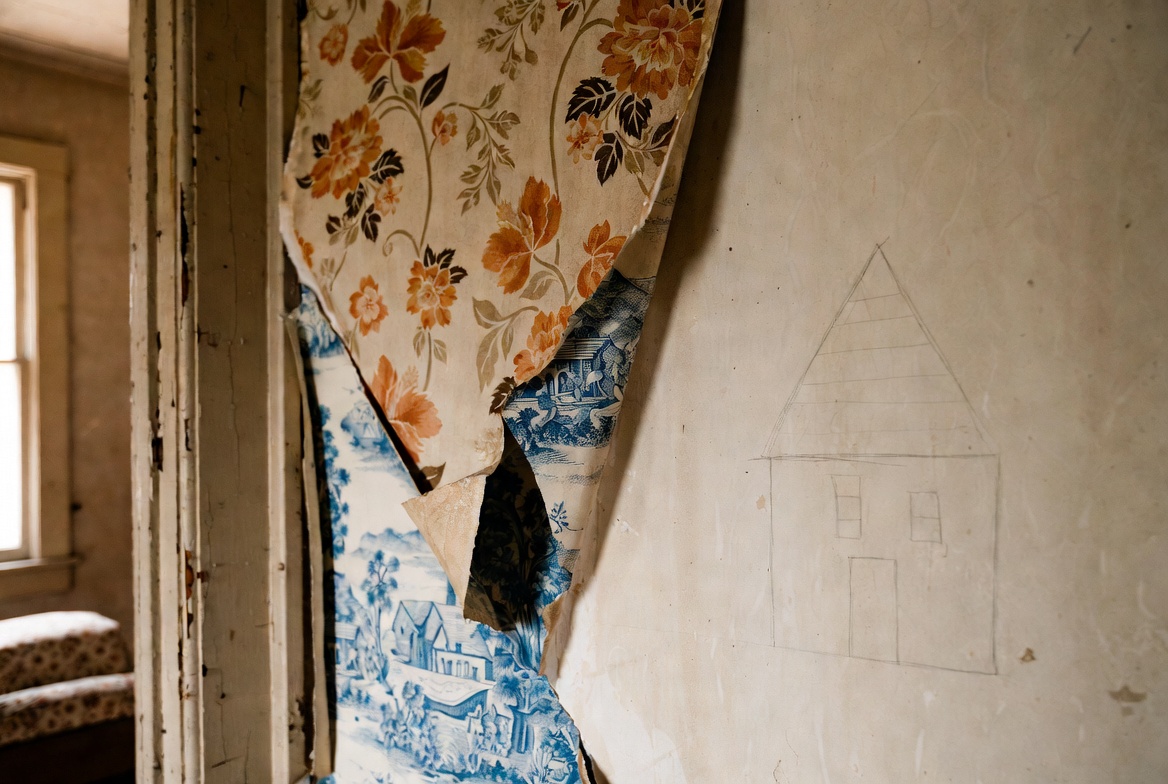
Behind the living room sofa I found a pencil drawing on the wall — a crude horse drawn by my uncle when he was six. In the pantry, tiny notches on the doorframe tracked the growth of three generations of children. In the attic, I discovered boxes of my grandmother’s watercolors — delicate studies of the same apple tree outside the kitchen window, painted across fifty years.
Each layer revealed another. The 1970s avocado-green carpet in the upstairs bedroom hid pristine 1920s oak floors. The 1980s floral wallpaper in the guest room covered delicate blue-and-white toile from the 1940s. Every renovation, every update, had simply added another chapter rather than erasing the one before it.
I began photographing everything. Not for Instagram, but for myself. The chipped porcelain doorknobs. The worn spot on the banister where generations of hands had rested. The faint scent of pipe tobacco that still lingered in my grandfather’s study even though he’d been gone for twenty-three years.
One evening I sat on the kitchen floor surrounded by old photo albums and cried. Not from sadness exactly, but from the overwhelming realization that this house had been quietly keeping score of our family’s entire story while I was busy living mine somewhere else.
“Homes don’t just age. They remember.”
The Conversation Begins
I started talking to the house.
At first it felt ridiculous. Then it felt necessary. I would walk from room to room describing what I was doing — “I’m making coffee in your kitchen, Grandma” — as if the walls could hear me. And in a way, they could.
I decided to keep the cracked teacup on the windowsill. I left the pencil marks on the doorframes untouched. Instead of hiring painters, I bought soft brushes and began gently cleaning decades of dust from the woodwork, revealing the warm honey tones beneath.
Friends from the city came to visit and were visibly uncomfortable with the “dated” interior. “You could flip this place for a fortune if you modernize it,” one suggested. I smiled and said nothing. They didn’t understand that the patina wasn’t a flaw — it was the entire point.
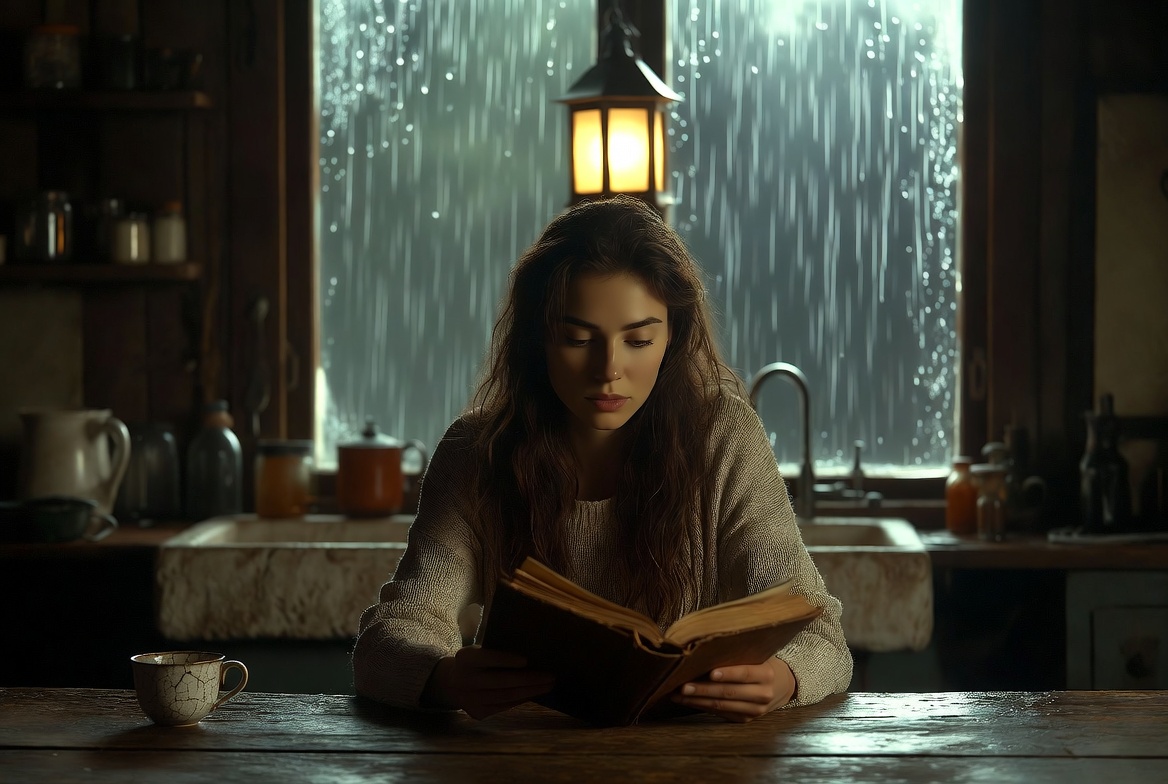
One rainy afternoon I found my grandmother’s last journal entry, written three months before she passed. In her elegant script she had written: “I hope whoever lives here next will love the house more than the idea of what it could be.”
I finally understood what she meant.
Becoming the Steward
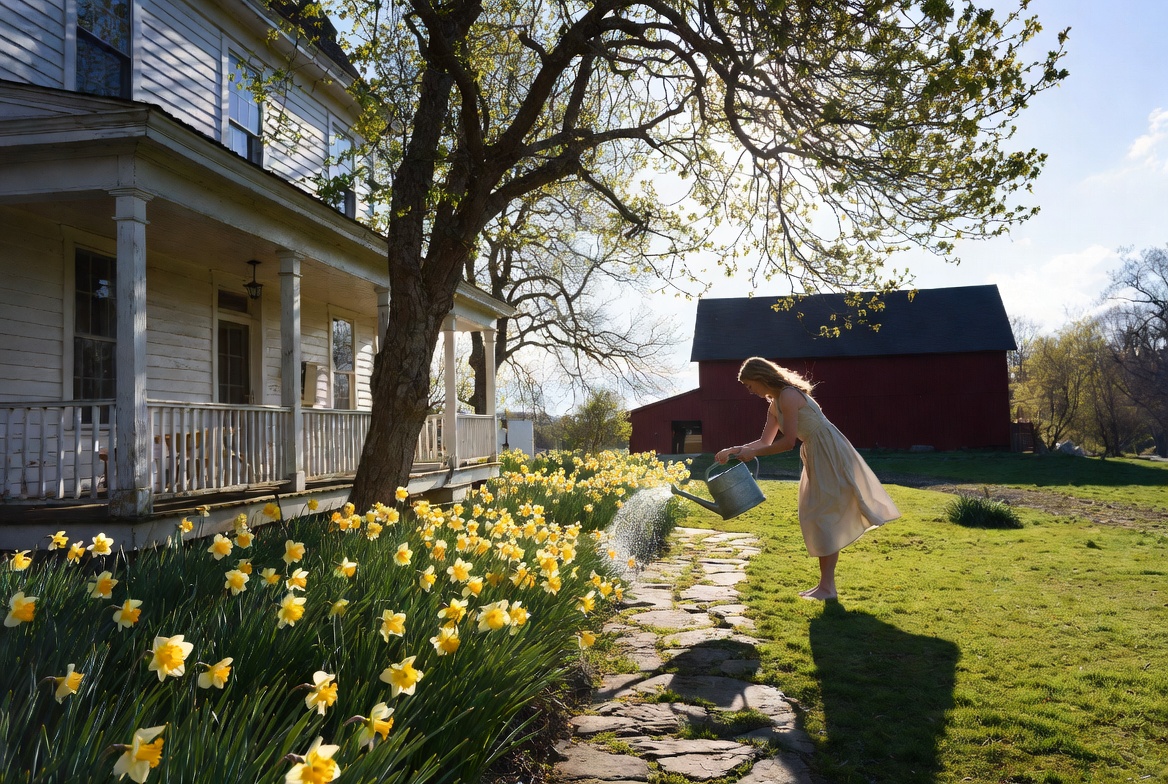
Spring arrived, and with it came a new rhythm. I planted the same variety of daffodils my grandmother always grew along the front walk. I learned to cook in her cast-iron skillet. I framed and hung several of her watercolors alongside my own modest collection of contemporary pieces.
The house began teaching me. It taught me patience — old houses move at their own pace. It taught me reverence — not everything needs to be updated or optimized. And most importantly, it taught me that the truest form of art is the one created collectively over time by the people who loved it.
I no longer saw myself as the new owner. I was simply the current steward in a long line that stretched back more than a century. My job wasn’t to make the house mine. My job was to add my chapter with care and then pass it on, richer than I found it.
Neighbors began stopping by with casseroles and stories. “Your grandmother taught me how to can tomatoes in that very kitchen.” “My father helped build that barn in 1953.” The house wasn’t just connecting me to my own family — it was weaving me into the larger tapestry of the community.
The Living Artwork
Today the house looks remarkably similar to how it did when I first arrived. The changes are subtle: a new reading chair by the window, fresh herbs growing on the kitchen sill, one of my abstract paintings now hanging beside my grandmother’s watercolor of the same view.
But the real transformation happened inside me.
I used to think art was something you bought and hung on walls. Now I understand that the greatest artworks are the ones you live inside — the ones that slowly, patiently, layer themselves with memory, laughter, heartbreak, and love.
The cracked teacup still sits on the windowsill. The pencil marks remain on the doorframes. And every morning when the light streams through those wavy glass panes, I feel the full weight and beauty of what it means to be part of something much larger than myself.
The farmhouse didn’t need me to save it. I needed it to remind me what home truly is.
“The patina of memory is the most beautiful finish any home can wear.”
Reflection: The Structural Blueprint of Belonging
“The Patina of Memory” is a beautifully rendered narrative that functions as an architectural blueprint for the soul. At its core, the story explores the profound transition from ownership to stewardship, a philosophy that resonates deeply with anyone who understands that a building is never just a collection of materials—it is a living vessel for human experience.
The Architecture of the Soul
The narrative masterfully uses the physical elements of a 112-year-old Connecticut farmhouse to map the emotional landscape of the protagonist.
-
The Physical vs. The Emotional: The overgrown goldenrod, the leaning red barn door, and the wavy antique glass are not treated as defects to be “flipped” or modernized, but as the structural lines of a family’s collective history.
-
The Materiality of Time: The layers of wallpaper—moving backward from 1980s floral to 1940s toile—and the 1920s oak floors hidden beneath 1970s avocado carpet act as literal archeological strata. Every renovation left a chapter intact rather than erasing the baseline, mirroring the way memory accumulates within us.
The Philosophy of Stewardship
The emotional turning point hinges on the grandmother’s journal entry:
“I hope whoever lives here next will love the house more than the idea of what it could be.”
This line strikes at the very heart of modern design tension. In a culture obsessed with optimizing, updating, and erasing the past for immediate equity, the protagonist chooses a rarer, more patient path. They recognize that the house’s “tolerances”—its cracks, its faded paint, its settled foundations—are precisely where its value lies. Keeping the cracked teacup on the windowsill because “it still holds water” becomes a quiet, radical act of preservation.
Concluding Thoughts: The Ultimate Finish
By the story’s end, the farmhouse ceases to be a piece of real estate and becomes a partner in dialogue. The protagonist evolves from a reluctant heir from the city into a true steward, weaving their own chapter (manifested in the abstract painting hanging beside the grandmother’s traditional watercolors) into the existing tapestry of the structure and the surrounding community.
“The Patina of Memory” reminds us that the truest homes are not built overnight; they are grown. The most beautiful finish a building can ever wear cannot be bought in a paint can—it must be lived.
