Peruvian Homes: Layers of History, Textiles, and Timeless Craft
Peruvian homes showcase rich history and artistic tradition through textiles, ceramics, and handcrafted decor. Art plays a key role in creating interiors that feel layered, cultural, and full of visual interest. This vibrant yet soulful aesthetic draws from one of the world’s oldest continuous civilizations — from ancient Inca, Nazca, and Moche legacies to Spanish colonial grandeur and contemporary reinterpretations. Peru’s dramatic geography, spanning coastal deserts, soaring Andes, and Amazon rainforest, shapes homes that are both resilient and expressive, celebrating mistura (cultural mixing) while remaining deeply rooted in place.
Historical Foundations of Peruvian Domestic Design
Peruvian architecture and interiors reflect millennia of adaptation. Pre-Columbian societies mastered adobe, stone, and thatch, creating sophisticated structures like Machu Picchu with precise stonework and seismic-resistant techniques. The Inca emphasized communal living, agricultural terraces, and symbolic motifs drawn from nature — condors, pumas, and geometric patterns representing Pachamama (Mother Earth).
Spanish colonization (16th century onward) introduced Baroque churches, tiled roofs, and central courtyards, blending with indigenous methods in mestizo style. Colonial casonas in Lima and Cusco featured thick adobe walls for thermal comfort, ornate wooden balconies (miradores), and lush internal patios. Independence and 20th-century modernism brought new influences, yet local materials and craft traditions endured. Today, architects revive vernacular techniques while addressing sustainability and seismic challenges.

Regional Variations Across Peru
Lima and the Coast: Coastal homes balance modernity with colonial roots. Miraflores and Barranco apartments mix clean lines with handcrafted details. High ceilings, large windows, and verandas capture Pacific breezes. Interiors often feature white or soft neutral walls contrasted with bold textiles and contemporary art.
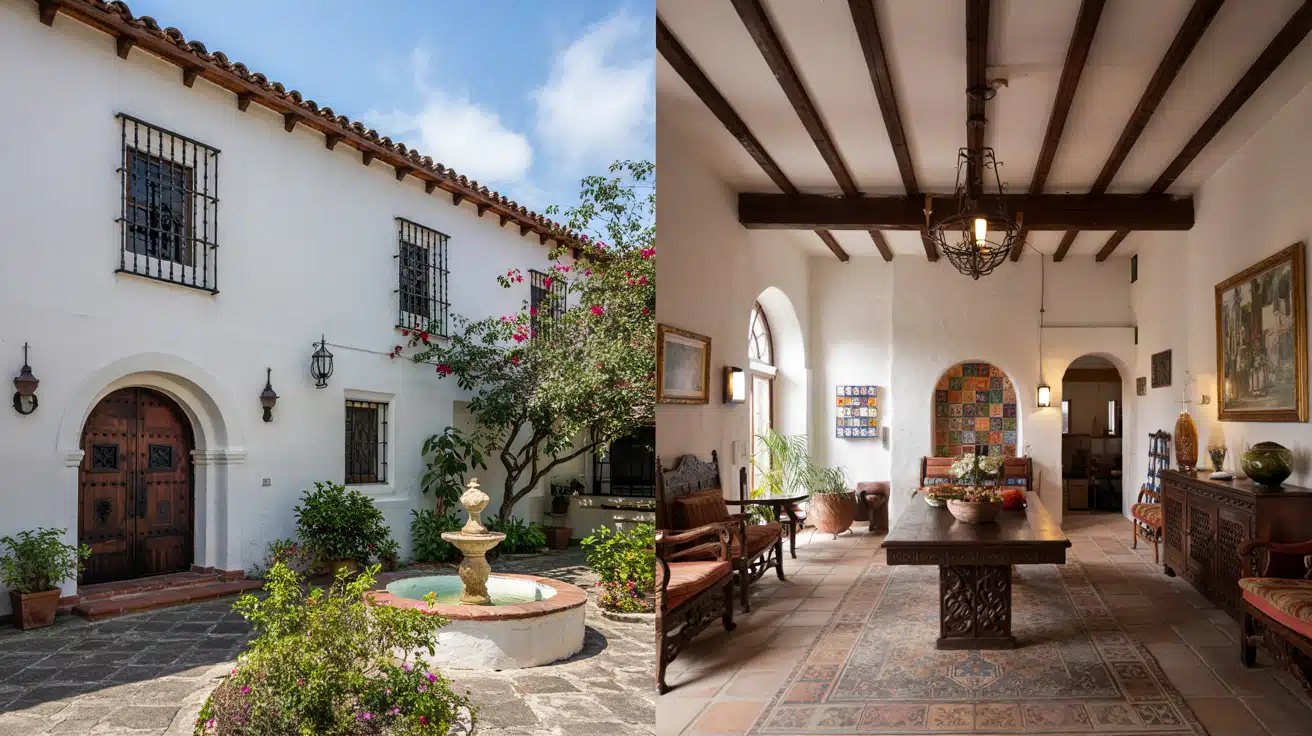
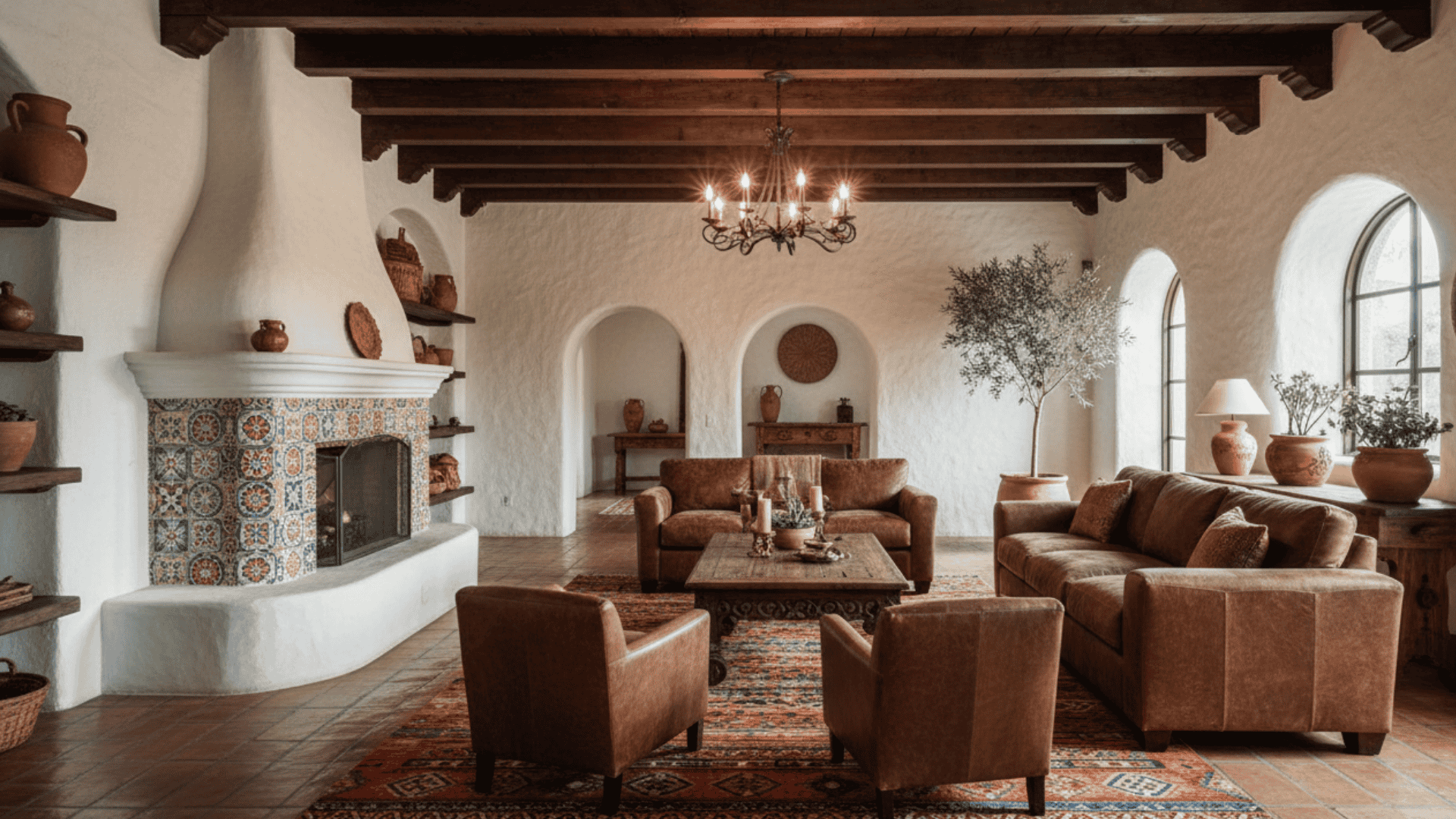
Cusco and the Andes (Sierra): In the former Inca capital, homes honor layered history. Colonial houses built atop Inca stone foundations feature thick walls, wooden beams, and courtyards. Interiors burst with color through Andean textiles — aguayos, frazadas, and alpaca throws in rich reds, indigos, and earth tones. Cusco homes feel warm and cocoon-like, with fireplaces, woven rugs, and views of dramatic mountains.

Sacred Valley and Rural Highlands: Farmhouses and haciendas use adobe, stone, and thatch. Open plans and large verandas connect to agricultural life. Handcrafted ceramics from nearby villages and intricate weavings dominate, creating earthy, textured spaces that feel timeless.
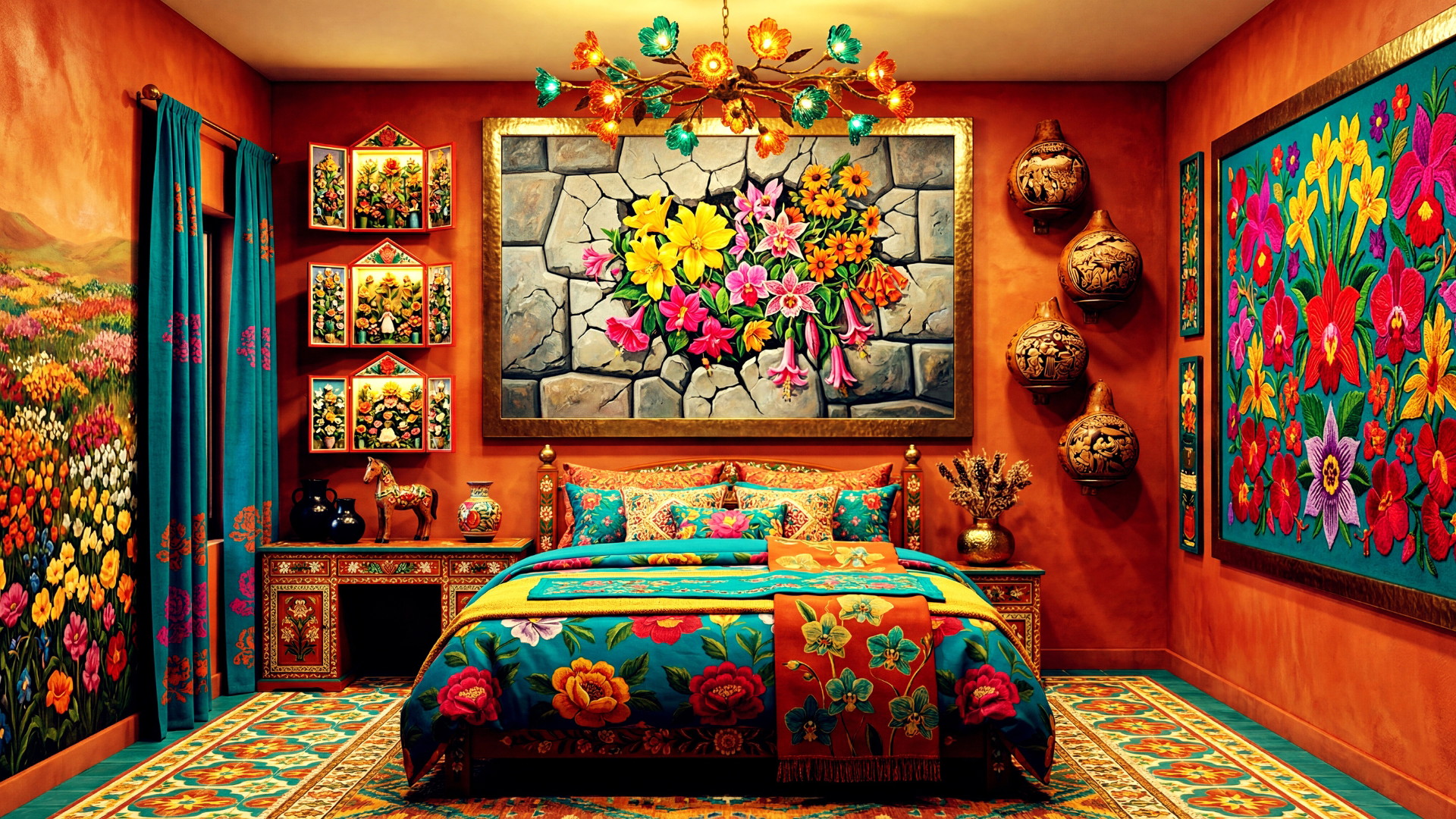
Amazon (Selva): In Iquitos or Madre de Dios, homes adapt to humidity and biodiversity with elevated wooden structures, screened verandas, and thatched roofs. Interiors incorporate Shipibo-Conibo geometric patterns, feather art, and natural fibers, emphasizing lightness and connection to the rainforest.

Materials and Handcrafted Tradition
Peruvian homes celebrate tactile authenticity:
- Adobe, Stone & Brick — Thermal regulation and earthquake resistance.
- Wood — Cedar and other hardwoods for beams, doors, and furniture.
- Textiles — Central to the style. Alpaca, vicuña, and cotton weavings from Cusco, Puno, and Arequipa feature complex motifs encoding history, cosmology, and identity.
- Ceramics — Black pottery from Chulucanas, vibrant pieces from Ica, and pre-Columbian-inspired works.
- Silver & Other Crafts — Filigree jewelry, carved gourds (mates burilados), and stonework.
These elements are not mere decoration but living traditions. Many families collaborate with artisans, commissioning custom pieces that carry personal and communal stories.
Art as Cultural Narrative
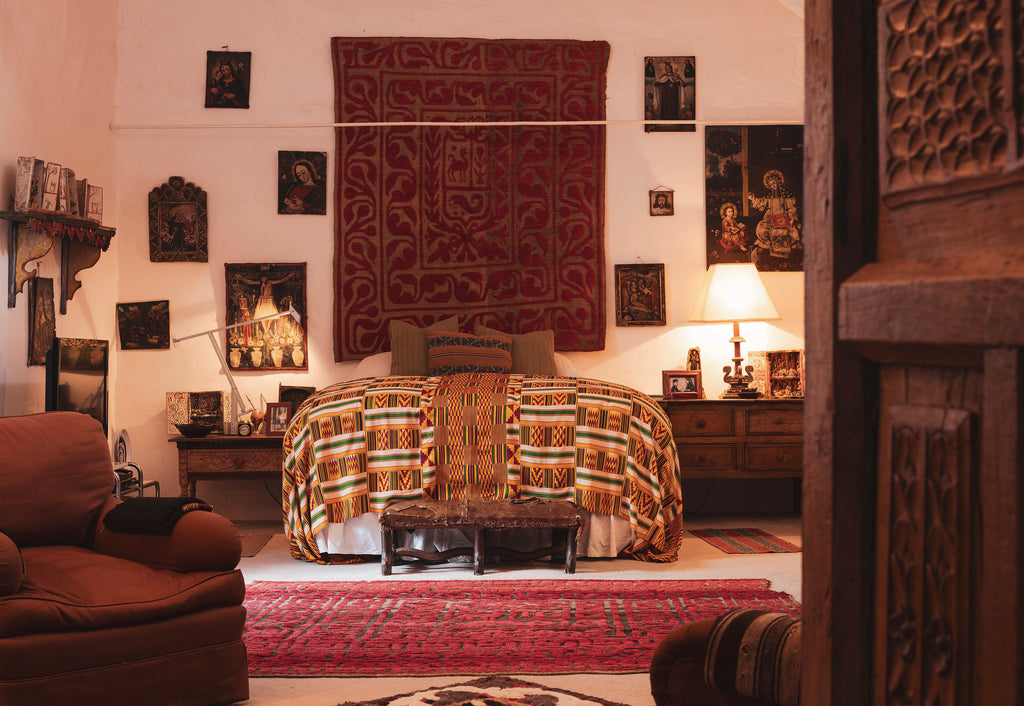
Art transforms Peruvian homes into visual tapestries. Large-scale weavings serve as wall hangings or bed covers. Contemporary artists reinterpret Inca motifs in paintings, sculptures, and installations. Colonial religious art — Cuzqueño School paintings — often shares space with indigenous symbols, reflecting syncretism.
Collections of pre-Columbian artifacts (where legally permitted), family heirlooms, and travel souvenirs create depth. Plants like orchids and ferns, plus abundant natural light, enhance the layered, lively atmosphere. Lighting mixes modern fixtures with traditional lanterns for warm evenings.
Influential Designers and Contemporary Vision
Peru produces globally recognized talent. Architects like Luis Longhi, Barclay & Crousse, and Rafael Freyre fuse landscape, local materials, and modernism. Firms such as Estudio A0 and Llama Urban Design emphasize sustainability and cultural continuity. Interior designers draw on textile heritage, blending it with minimalist or eclectic contemporary aesthetics.
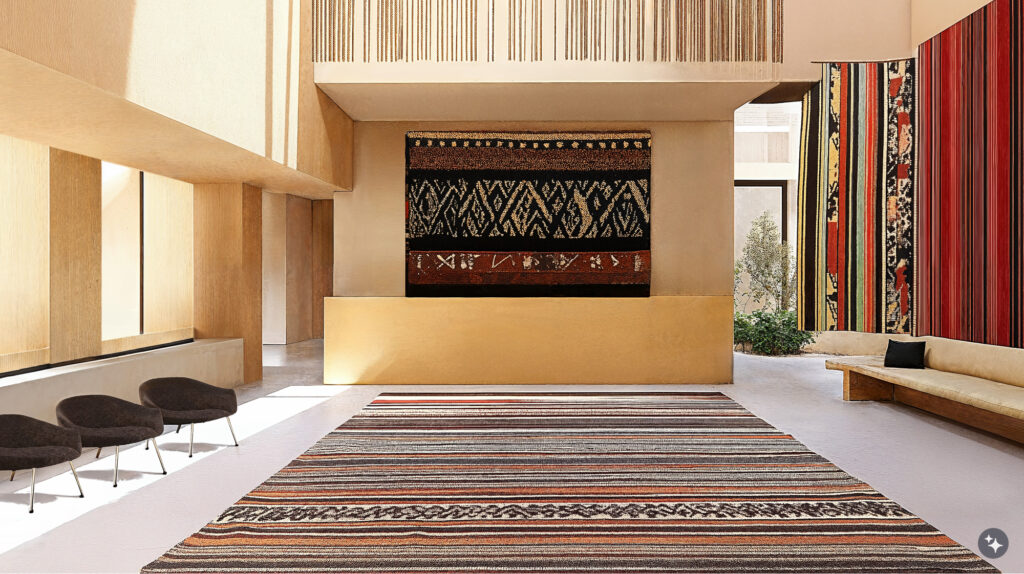
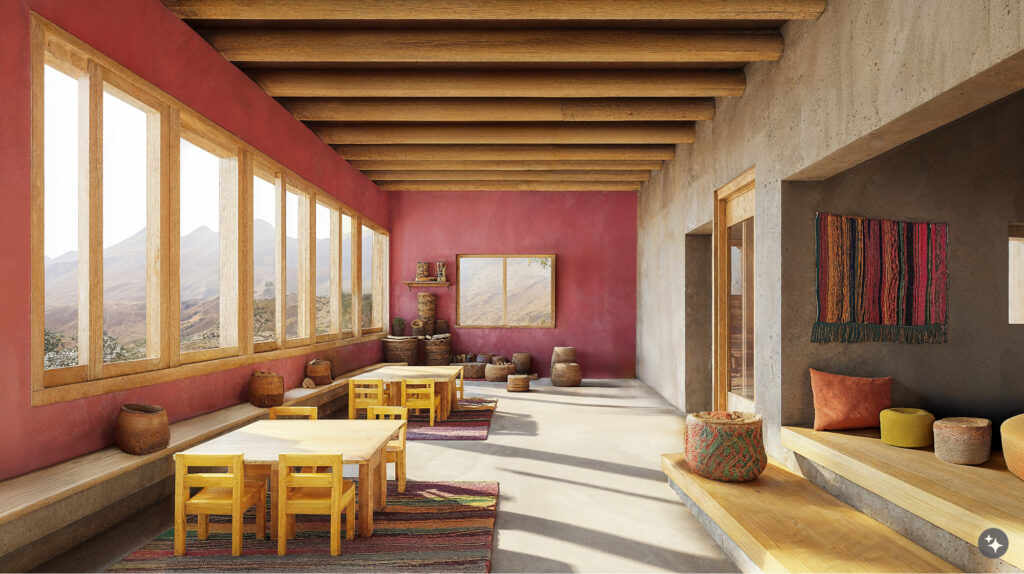
Projects like courtyard homes in Lima or brick-vaulted Andean retreats demonstrate how tradition fuels innovation.
Creating a Peruvian-Inspired Home
Channel this richness anywhere:
- Foundation — Neutral or warm earth-tone walls with high ceilings.
- Textiles — Layer bold patterns: stripes, geometrics, florals. Use throws, cushions, rugs, and wall hangings.
- Art & Objects — Feature large weavings, ceramics, paintings, and sculptures.
- Furniture — Mix colonial-style wood with modern minimalism and handcrafted pieces.
- Courtyard Spirit — Create indoor-outdoor flow with plants, a small patio, or large windows.
- Details — Wooden beams, terracotta accents, abundant greenery, and warm lighting.
- Color — Rich jewel tones (turquoise, terracotta, indigo) against neutrals.
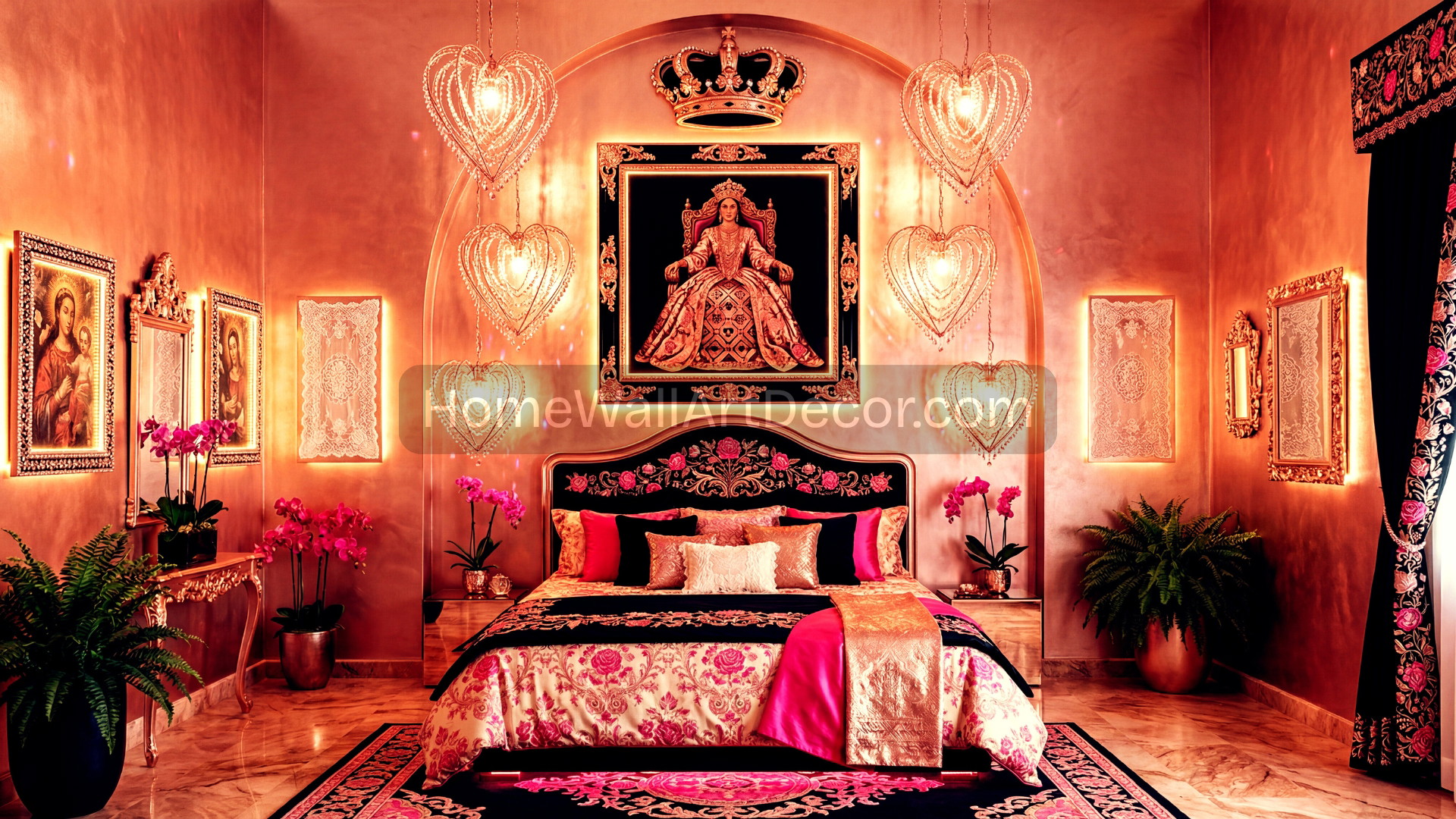
Kitchens showcase open shelving with pottery and vibrant tableware. Bedrooms feel luxurious with layered bedding and canopies. Living areas invite gathering through comfortable, eclectic arrangements.
Why Peruvian Style Endures
Peruvian homes offer a masterclass in cultural resilience and sensory richness. They honor ancient techniques while adapting to modern life, support artisan economies, and foster connection to nature and heritage. In a homogenized world, they celebrate specificity — the stories woven into every textile, the history embedded in stone walls, the joy of color and craft.

These interiors feel alive because they are: layered with memory, warmed by human touch, and open to the beauty of Peru’s extraordinary landscapes and cultures. From a sunlit colonial casona in Lima’s historic center overflowing with textiles to a modern Andean home embracing mountain vistas or an Amazon retreat woven into the jungle, Peruvian houses embody alegría cultural — cultural joy expressed through thoughtful, artistic living.