Djibouti Homes: Crossroads Minimalism, Desert Resilience, and Indian Ocean Elegance
Djibouti’s home and art culture reflects its position at the crossroads of Africa and the Middle East. Minimal interiors, natural materials, and subtle decorative elements mirror the desert and coastal environment, while art often explores identity, movement, and trade routes. This refined, understated aesthetic emerges from a small but strategically vital nation at the entrance to the Red Sea, where the Horn of Africa meets the Arabian Peninsula. With Afar and Somali (Issa) peoples forming the majority, alongside Arab, French, and Ethiopian influences, Djiboutian homes embody haram (respectful harmony) with harsh climate, nomadic heritage, and cosmopolitan port culture. From the modern capital to volcanic plateaus and coastal fishing villages, these interiors prioritize coolness, simplicity, and quiet beauty shaped by centuries of trade, migration, and adaptation.
Historical and Cultural Foundations
Djibouti’s domestic traditions are shaped by ancient caravan routes and maritime trade. Afar nomads developed portable, resilient shelters using woven mats, animal skins, and acacia wood frames — easily dismantled and carried across the desert. Somali Issa clans built more permanent aqal or rectangular mud-and-thatch homes with shaded courtyards. Arab and Persian traders introduced coral-stone construction and Islamic architectural elements, especially in coastal areas like Tadjoura and Obock.
French colonial rule (late 19th century onward) established Djibouti as a strategic port, bringing Creole villas with verandas, wrought-iron details, and pastel colors. Independence in 1977 reinforced national identity while maintaining strong ties to both African roots and the Arab world. Today, Djiboutian homes blend traditional minimalism with contemporary sustainability — thick walls for thermal mass, passive cooling, solar power, and local materials — creating spaces that feel both timeless and forward-looking.
Regional Variations
Djibouti City and the South: The capital features modern apartments, diplomatic villas, and restored colonial homes. Interiors are exceptionally light and airy with high ceilings, large windows, and pale walls to reflect intense sunlight. Minimal furnishings, woven mats, and subtle textiles create calm, sophisticated spaces. Rooftop terraces and courtyards offer relief from the heat and stunning views of the Gulf of Tadjoura.
Tadjoura and Northern Coastal Areas: Historic whitewashed coral-stone houses with intricately carved wooden doors reflect Arab-Swahili influence. Interiors emphasize natural ventilation with mashrabiya-style screens and woven palm mats. Soft whites, sandy beiges, and ocean blues dominate, enhanced by silver jewelry and incense burners.
Afar Regions (Lake Assal and Danakil Depression): Nomadic and semi-nomadic Afar communities use traditional tukul or portable tents made from woven mats and acacia frames. When settled, homes use salt blocks and volcanic stone. Interiors are extremely minimal, focusing on function, shade, and portability, with leather containers and simple woven items.
Plateau and Western Highlands: More temperate areas feature stone and mud-brick homes with thicker walls. Interiors feel grounded and protective, using earth tones, woven baskets, and handcrafted wooden furniture suited to cooler nights.
Southern and Border Areas: Closer to Somali and Ethiopian influences, homes blend rectangular forms with colorful textiles and beaded elements, creating warmer, more patterned interiors.
Materials and Desert-Coastal Craftsmanship
Djiboutian homes are defined by climate-responsive, locally available materials:
- Stone and Coral: Coral blocks and volcanic stone for durable, cooling walls.
- Thatch and Woven Mats: Palm, doum palm, and grasses for roofing, screens, and flooring.
- Wood: Acacia and local hardwoods for structural frames and carved doors featuring geometric Islamic motifs.
- Leather and Fiber: Goat and camel leather for containers, seating, and wall hangings; woven sisal and wool for mats and baskets.
- Plaster and Lime Wash: Bright white finishes to reflect sunlight and reduce heat absorption.
- Silver and Beadwork: Traditional Afar and Somali jewelry displayed as both adornment and wealth.
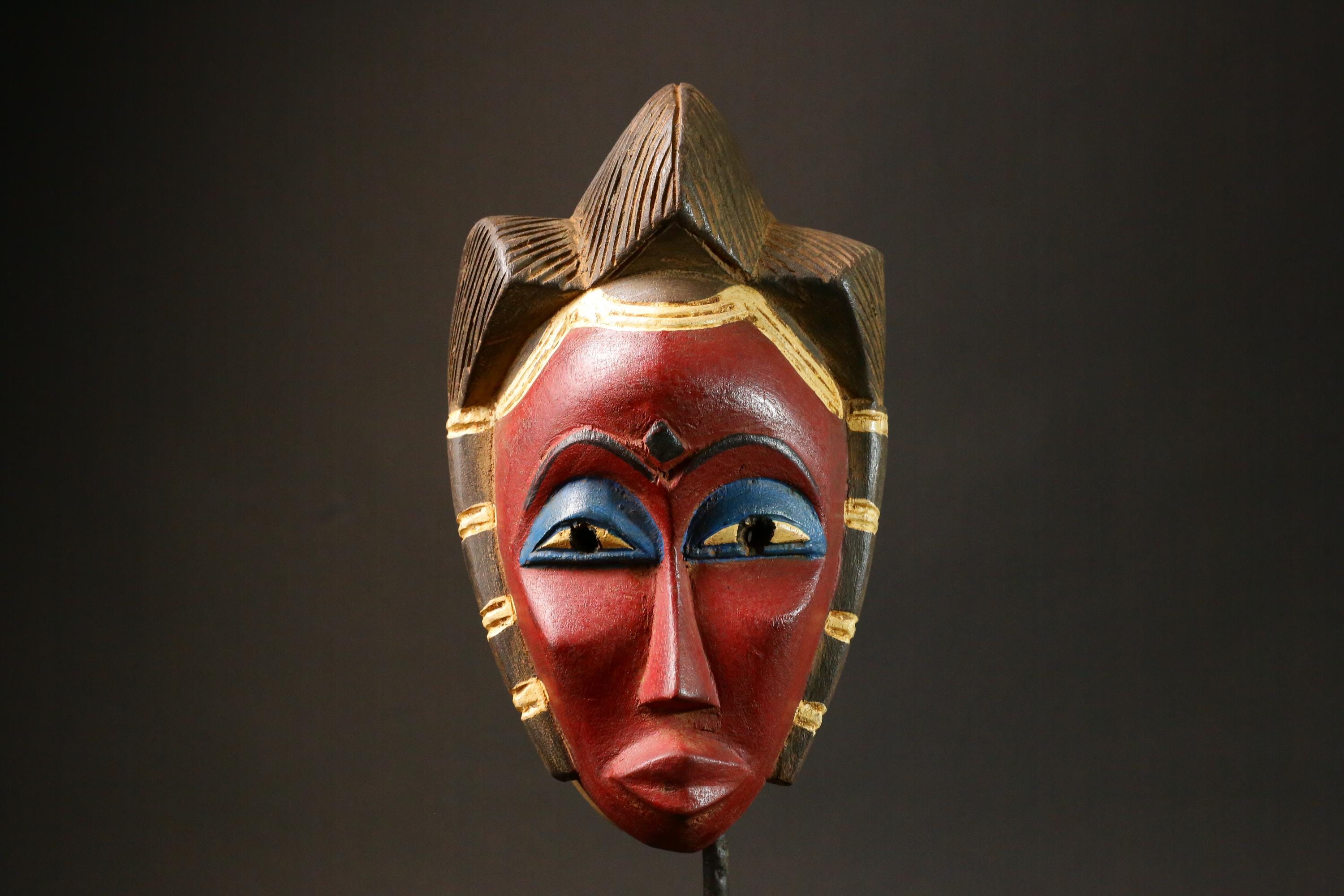
Sustainability is instinctive — materials are renewable, portable where needed, and perfectly adapted to extreme temperatures and scarce resources.
Art, Identity, and Trade Route Narratives
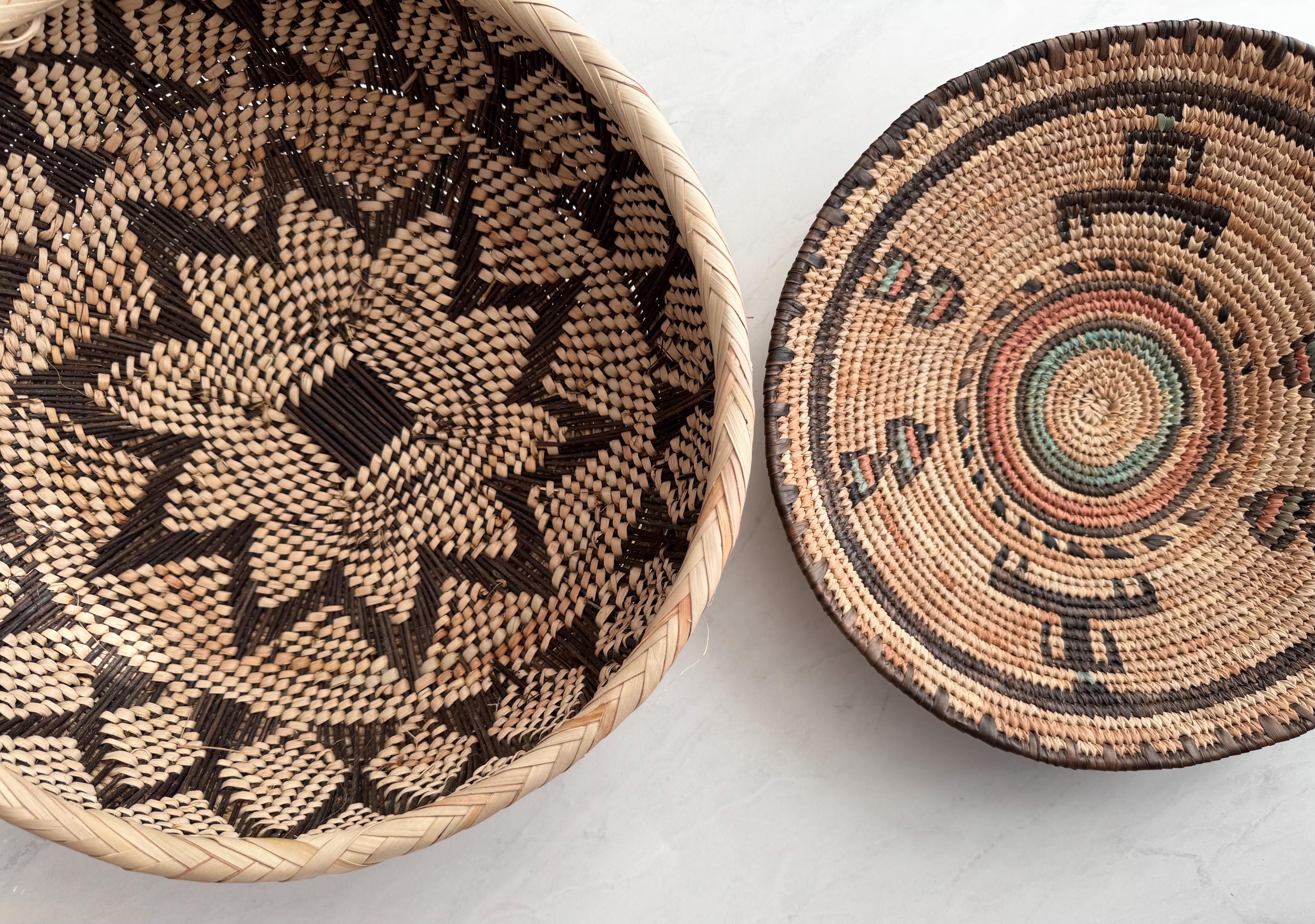
Art in Djiboutian homes is subtle yet meaningful. Carved wooden doors and panels feature geometric patterns, calligraphy, and symbolic motifs drawn from Islamic and African traditions. Woven baskets and mats display intricate designs that encode clan identity or protective blessings. Contemporary Djiboutian artists explore themes of migration, the Red Sea as a cultural bridge, and the tension between tradition and modernity through painting, photography, and mixed media.
Homes often include a small prayer corner with incense, silver objects, and family heirlooms. The overall effect is calm and contemplative, with natural light and sea breezes creating gentle movement across surfaces. Art here is never loud — it whispers stories of ancient trade routes, nomadic journeys, and cultural resilience.
Influential Designers and Contemporary Vision
Djibouti’s emerging design community draws strength from its strategic geography. Architects and interior designers fuse traditional coral-stone techniques with minimalist contemporary forms and passive cooling strategies. Projects often feature light, open spaces enriched by handcrafted details and sustainable materials. Many collaborate with Afar and Somali artisans, creating furniture and décor that celebrate Djiboutian identity while appealing to international audiences. The result is refined, climate-conscious design that feels both rooted in place and connected to the wider world.
Creating a Djibouti-Inspired Home
Achieve this serene, crossroads elegance anywhere:
- Palette — Crisp whites, sandy beiges, soft grays, and muted terracotta with subtle blue or gold accents.
- Natural Materials — Exposed stone or textured plaster, woven mats, and wooden elements.
- Carved Details — Feature one or two statement carved doors, panels, or simple stools.
- Textiles — Layer lightweight woven fabrics and leather for softness and pattern.
- Minimal Furnishings — Low seating, multifunctional pieces, and open layouts.
- Lighting & Air — Maximize natural light with sheer curtains or woven screens; use warm, soft ambient lighting.
- Symbolic Touches — Silver objects, incense burners, woven baskets, and meaningful collections.
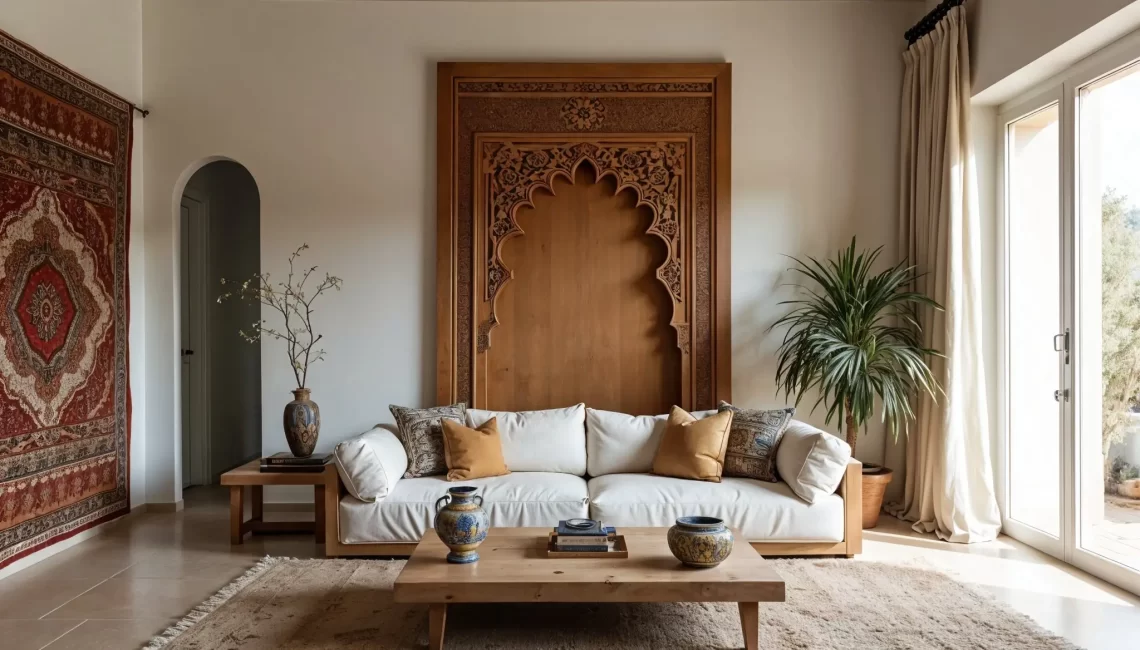
Kitchens emphasize simplicity and functionality with open shelving and natural materials. Bedrooms feel cool and cocooning with light fabrics and minimal décor. Living areas invite quiet conversation and reflection through balanced, airy arrangements.
Why Djiboutian Style Resonates
Djiboutian homes offer a masterclass in graceful adaptation. They prove that minimalism can be rich with meaning, that harsh environments can inspire elegant solutions, and that cultural crossroads produce unique beauty. In these spaces, every material serves a purpose, every detail tells a story, and every home becomes a quiet celebration of resilience and connection.
From a whitewashed coral villa in Tadjoura where carved doors frame the sea, to an Afar tent pitched beneath volcanic mountains, or a light-filled Abidjan apartment where woven mats and silver accents bridge continents, Djiboutian interiors embody the spirit of the Horn — understated, resilient, and profoundly hospitable.
