Angola Earth, Soul, and Sculptural Living
Angolan homes are expressions of resilience, ancestry, and vibrant creativity. In a country shaped by over 100 ethnic groups, rich natural resources, and a complex history, domestic spaces have become powerful canvases where tradition and modernity meet.
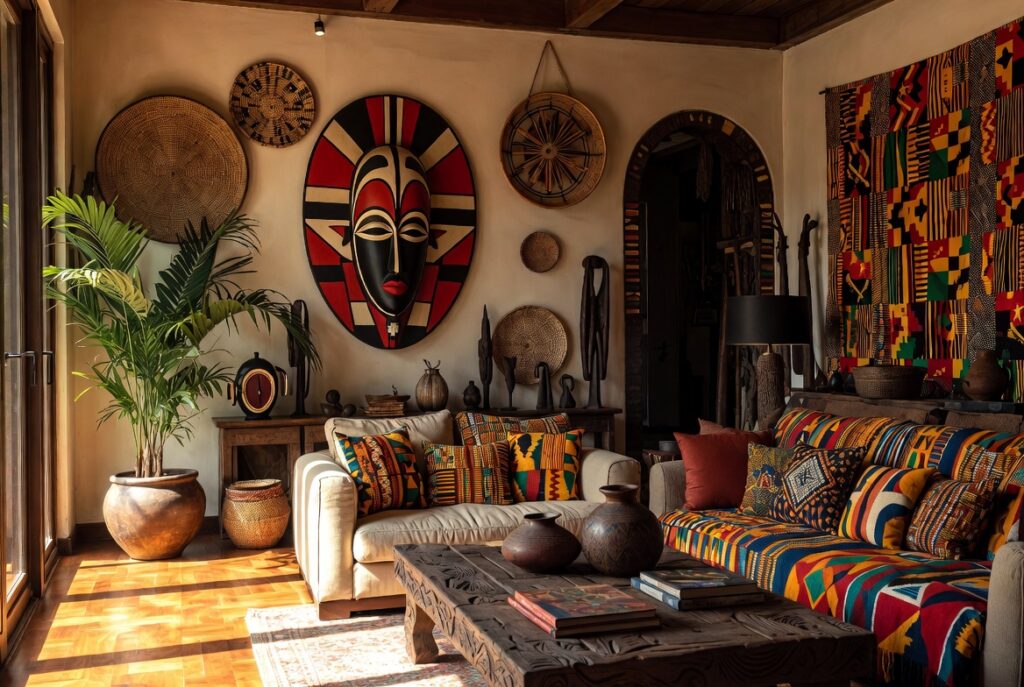
“Casa Museu by Mama Africa – A vibrant living home celebrating Angolan art, music, and youth culture.”
From the bustling coastal capital of Luanda to the misty highlands and vast interior provinces, Angolan interiors feel grounded yet alive — blending sculptural forms, earthy textures, and meaningful symbolism.
A Living Design Heritage
Angolan domestic architecture draws deeply from indigenous building knowledge. Local materials — hardwood, adobe, thatch, and stone — were chosen not only for practicality but for their ability to regulate temperature and connect inhabitants to the land.
Portuguese colonial influence added elements like verandas, tiled roofs, and courtyards, especially in Luanda and Benguela. After independence in 1975, a new generation of architects began reinterpreting these traditions, creating a distinctly contemporary Angolan style that honors the past while addressing modern life.
Regional Character
Luanda & the Coast Urban homes and apartments often feature clean lines, generous balconies, and open layouts that embrace ocean views. Neutral walls act as backdrops for bold African textiles, contemporary art, and hand-carved wooden pieces. Color comes through vibrant capulanas, baskets, and sculptural furniture.
Central Highlands In provinces like Huambo and Bié, homes tend to be more solid and protective. Thick adobe walls, exposed wooden beams, and generous gathering spaces reflect Ovimbundu traditions. Interiors feel warm and rooted, with heavy use of woven mats, pottery, and symbolic carvings.
Northern & Southern Regions Bakongo wood-carving traditions bring dramatic sculptural elements to doorways and furniture. In the south, pastoral influences from Himba and Mucubal communities appear through leather, beadwork, and elevated structures designed for natural ventilation.
Materials & Craftsmanship
Angolan design celebrates honest, tactile materials:
- Hardwoods (ebony, mahogany) for structural elements and sculpture
- Earth & adobe for thermal comfort and organic texture
- Handwoven textiles & raffia for softness and cultural meaning
- Terracotta, ceramics, and basketry for everyday beauty
Today’s designers increasingly blend these traditional materials with sustainable and recycled elements, creating homes that feel both timeless and forward-thinking.
Art in the Angolan Home
In Angola, art is rarely just decoration — it is lived culture. Masks, power figures, sona drawings, and ancestral symbols frequently appear as focal points. Contemporary Angolan artists are gaining international recognition, and their works increasingly find homes alongside traditional pieces, creating rich visual dialogues between past and present.
Capturing the Angolan Spirit
You don’t need to live in Angola to bring its aesthetic home:
- Use a warm, earthy color palette (terracottas, ochres, deep browns, and soft neutrals)
- Feature one or two strong sculptural wooden pieces
- Layer natural textiles and woven baskets
- Prioritize open, social spaces that invite gathering
- Let light, plants, and honest materials do most of the talking
Angolan homes remind us that beauty can be both deeply rooted and joyfully expressive — a powerful combination of heritage, creativity, and everyday living.
