
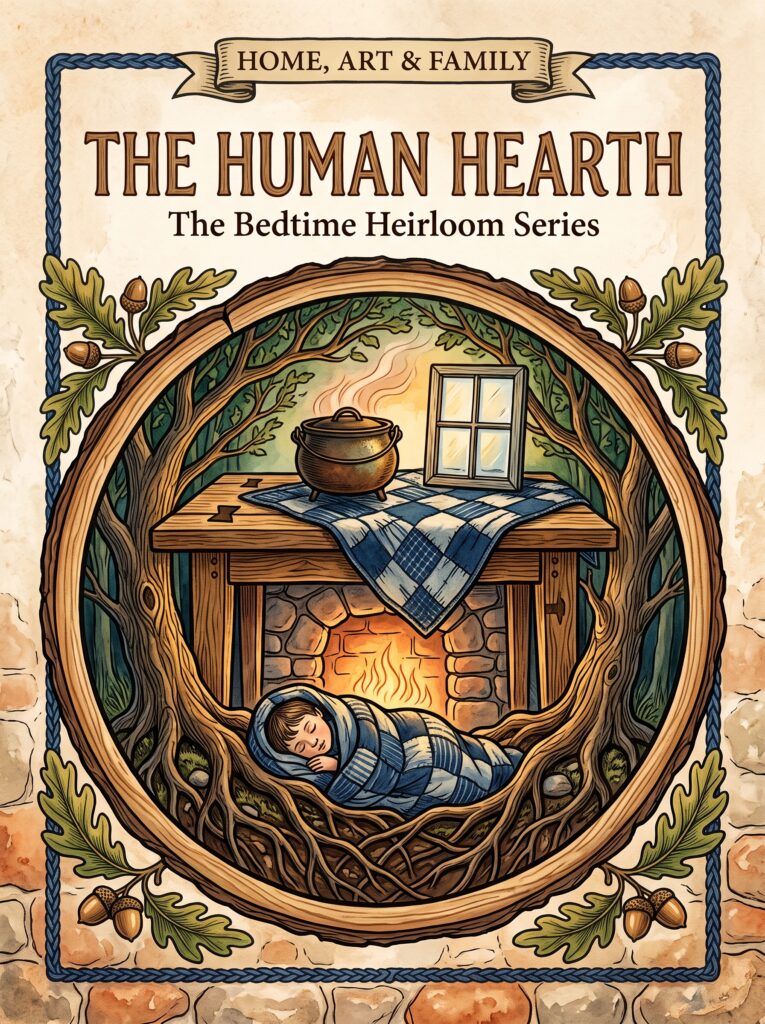
THE HUMAN HEARTH
Ten Fables of Matter, Craft & Belonging
TABLE OF CONTENTS
Chapter Story Title Core Pillar & Craft Focus Page
I. The Table That Remembered the Rain Home • Forestry, White Oak & Family Memory 2
II. The Brick That Wanted to Touch the Sky Home • Masonry, Louis Kahn & Structural Gravity 17
III. The Boy Who Painted with Mud and Moonbeams Art • Mineral Pigments, Charcoal & Materiality 33
IV. The Hearth That Kept the Secret of Fire Home • Fieldstone, Thermal Mass & Circadian Rest 49
V. The Room with the Quiet Clock Family • Horology, Rhythm & Shared Silence 65
VI. The Velveteen Hearth: Why Old Pots Sing Art • Cast Iron, Patina & Wabi-Sabi Imperfection 81
VII. The Window That Waited for Dawn Home • Blown Glass, Optics & Living Daylight 97
VIII. The Girl Who Mended the Winter Quilt Art • Indigo Dye, Textile Repair & Ancestry 113
IX. The Gate That Stayed Unlatched Family • Blacksmithing, Ironwork & Hospitality 129
X. The House That Closed Its Eyes Family • Architecture, Complete Sanctuary & Rest 145
THE HUMAN HEARTH The Bedtime Heirloom Series
To the Grown Hands Who Hold This Story:
Before a house becomes a home, it begins as quiet, raw material waiting to meet human life. Long before a table gathers a family for supper, it listened to two centuries of mountain wind. Before a brick hearth holds a winter fire, it was clay resting deep in a riverbed.
In an age of endless screens, rapid noise, and rushed bedtimes, The Human Hearth was created as an intentional evening sanctuary. This collection is being released chapter by chapter—one new story arriving each week—documenting the living journey of traditional craftsmanship, architecture, and family memory.
Each weekly signature explores the quiet dignity of materials that age with us:
- Ancient white oak and traditional bronze-plane joinery
- Thermal mass brickwork and honest masonry
- Indigo-dyed quilts stitched for winter nights
- Hand-blown glass capturing the morning sun
- Seasoned cast iron bearing the patina of daily feasts
Once the ten-part chronicle is complete, the entire series will be permanently bound into a timeless keepsake volume—hand-stitched in rich leather, pressed onto heavyweight archival hemp paper, and paired with fine-art archival photographic plates designed to be passed down through generations.
Read these words slowly. Let the whispering rhythm of the maker’s plane, the warmth of the beeswax, and the crackle of the hearth settle into the room.
Within every honest beam, every softened curve, and every scar of lived life, our homes keep watch over our sleep—holding our belonging long after the lights go down.
THE TABLE THAT REMEMBERED THE RAIN
The Living Forest & The Great Wind
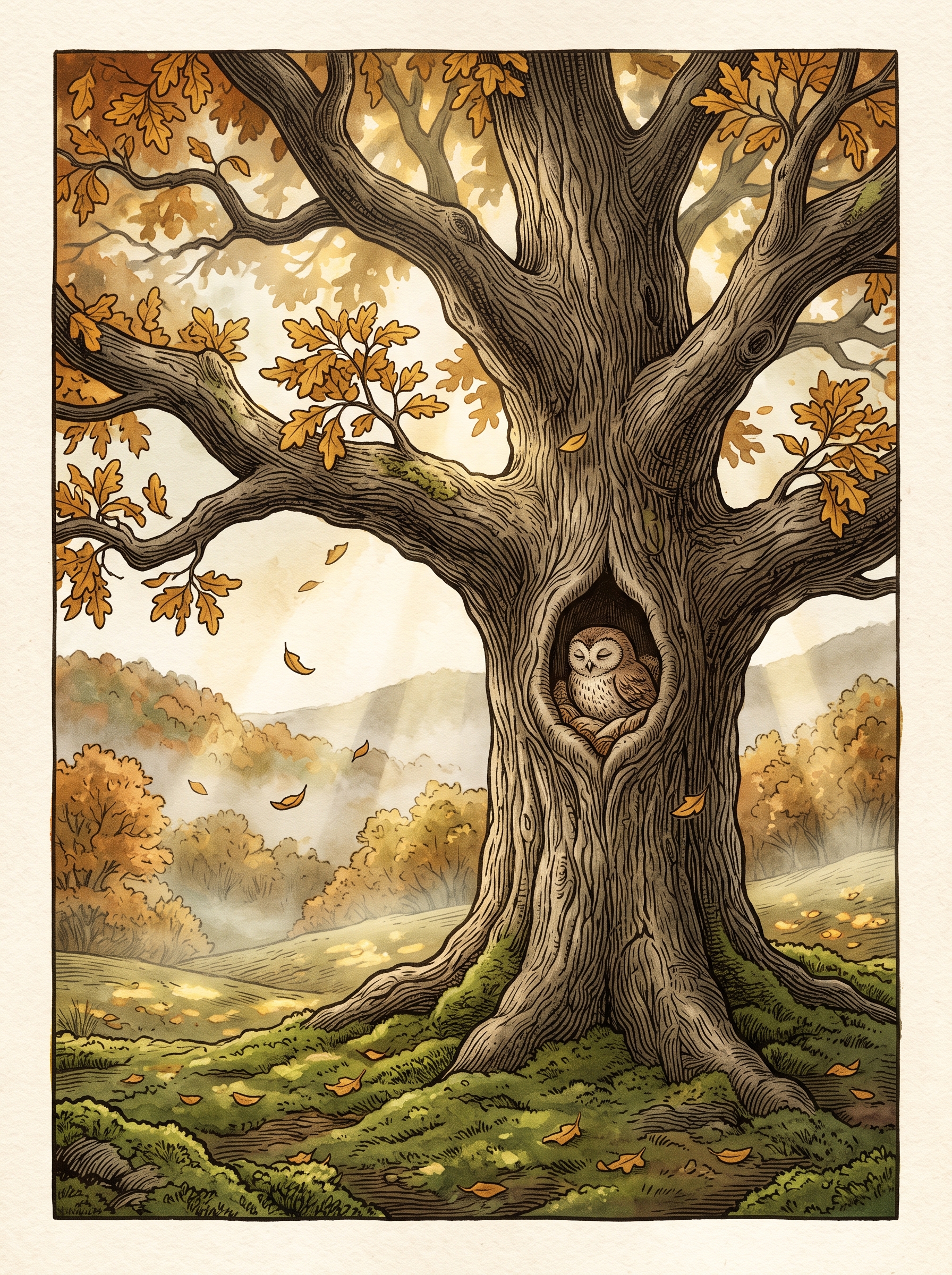
Deep in the quiet hollow of the Litchfield hills, an ancient white oak listened to the sky.
For two hundred summers, it held the wind in its broad green fingers. It drank cool spring meltwater from the rocky soil, shielded sleepy owls from the winter snow, and grew slow, dense rings in the dark beneath its bark.
It never hurried. It knew that to grow something strong enough to stand against a mountain gale, you must take your time.
When a golden autumn wind finally swept over the ridge, the old giant gave a heavy, peaceful sigh, bowed gently to the mossy earth, and fell asleep.
It did not end. It was only waiting for a pair of human hands.
 The Sawyer & Four Seasons of Breath
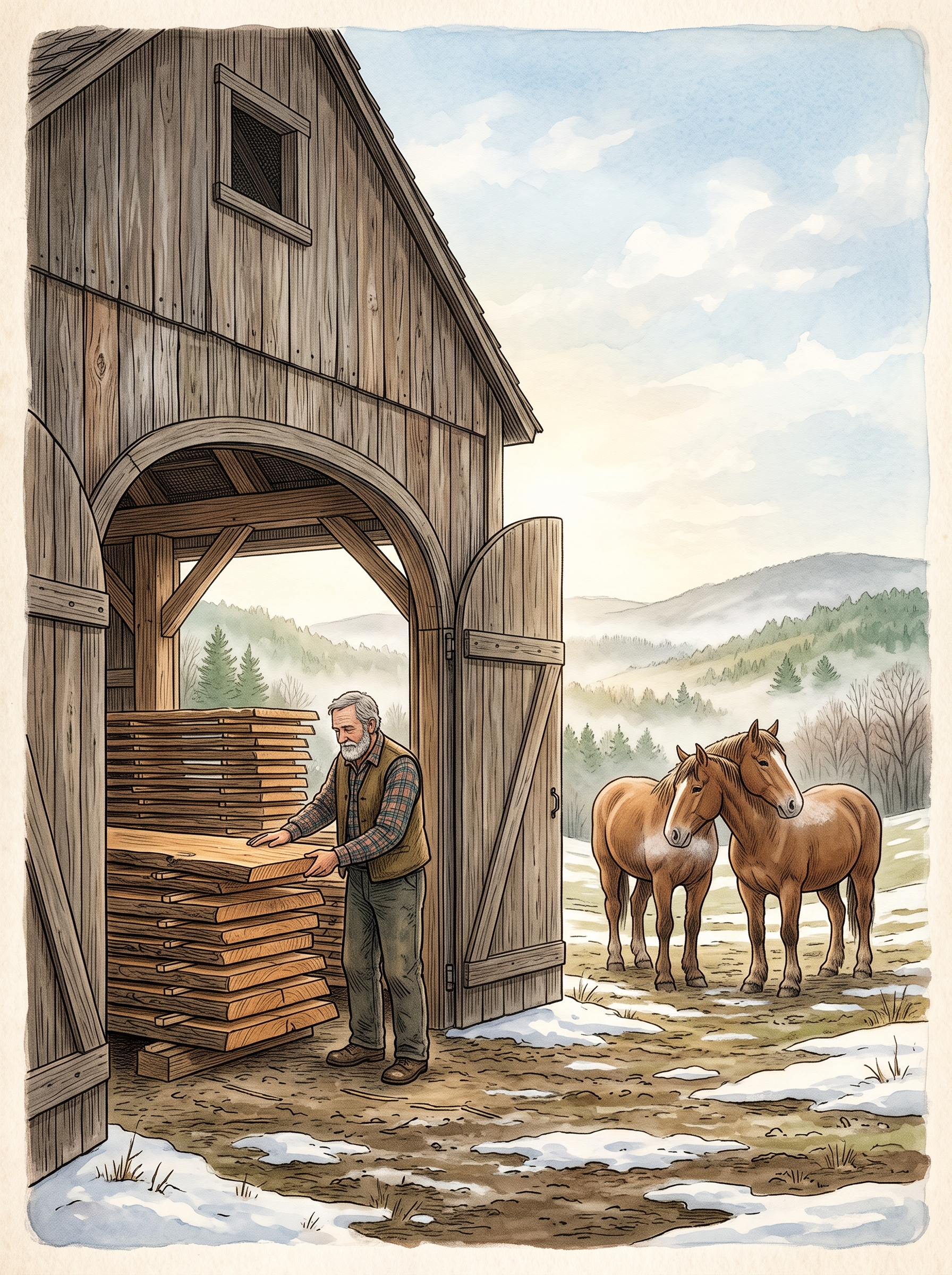
When the frost softened in early spring, a gentle sawyer arrived with two great draft horses.
Together, they eased the fallen giant out of the moss and brought it down to the mill. There, a wide steel blade hummed a slow, steady song, slicing the trunk into thick, honest slabs.
He did not bake the green wood in a roaring furnace to rush its drying. Instead, he carried the heavy oak boards into an open post-and-beam shed, stacking them with sweet pine sticks between each layer so the mountain air could move freely.
For two full turns of the calendar, the oak rested. It inhaled the frozen silences of winter, the rain-scented mists of April, and the golden warmth of August afternoons.
Layer by layer, its heart grew quiet, steady, and ready to hold a home.
The Bronze Plane & The Butterfly Key
In the belly of the workshop, the sweet smell of camellia oil and cured timber settles thick into the rafters. The slabs have finished their long sleep, resting in deep balance, but inside the dense heartwood, the memory of mountain rain is still coiled tight.
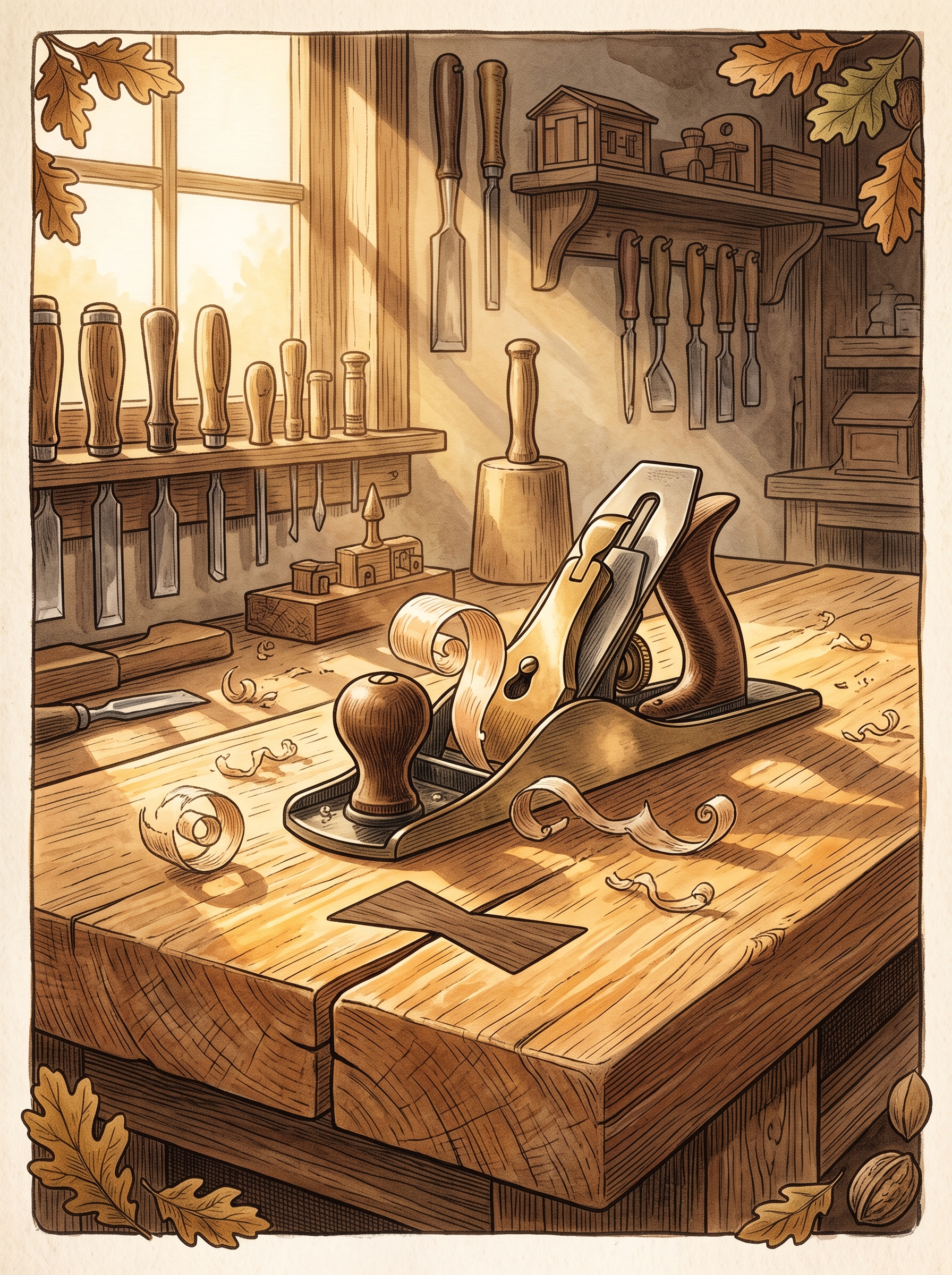
Enter the hand plane: cast from solid bronze, dead-flat, and heavier than a quiet thought.
When the freshly honed steel meets the rough grain, it does not tear. It sings a soft, whispering hiss—shhh-wip, shhh-wip—a lullaby for the awake. With every long pass across the board, a single ribbon of wood curls upward like paper, thin enough to see a candle’s flame through it. Underneath, the true face of the white oak awakens: shimmering tiger-stripes and golden rings that charted two hundred years of winter frosts.
Nothing in this wood is forced. Wood moves; wood breathes. If you pin it down rigid with cold iron, it will fight until it cracks. So the maker speaks the language of joinery—the ancient conversation of wood holding wood.
Where the oak trunk opened a natural drying check, the maker carves a shallow pocket and gently taps in a butterfly key of dark walnut. It is a stitch across an honest scar, holding the grain together like a locked embrace. Underneath, interlocking joints are carved with tiny gaps no thicker than a human hair, giving the oak room to inhale when the humid river air rolls in, and exhale when the winter hearth roars.
No nails. No veneer. Just the quiet truth of wood holding wood.
As the sun dips low, the maker lays the bronze plane gently on its side. Bare fingertips brush across the seamless wood, finding only silk—waiting for the oil, waiting for the feast, waiting for the small elbows that will one day lean upon its shoulders.
The Golden Oil & The Beeswax Shield
The joinery is set, the walnut keys are tapped flush, and now the raw oak is thirsty.
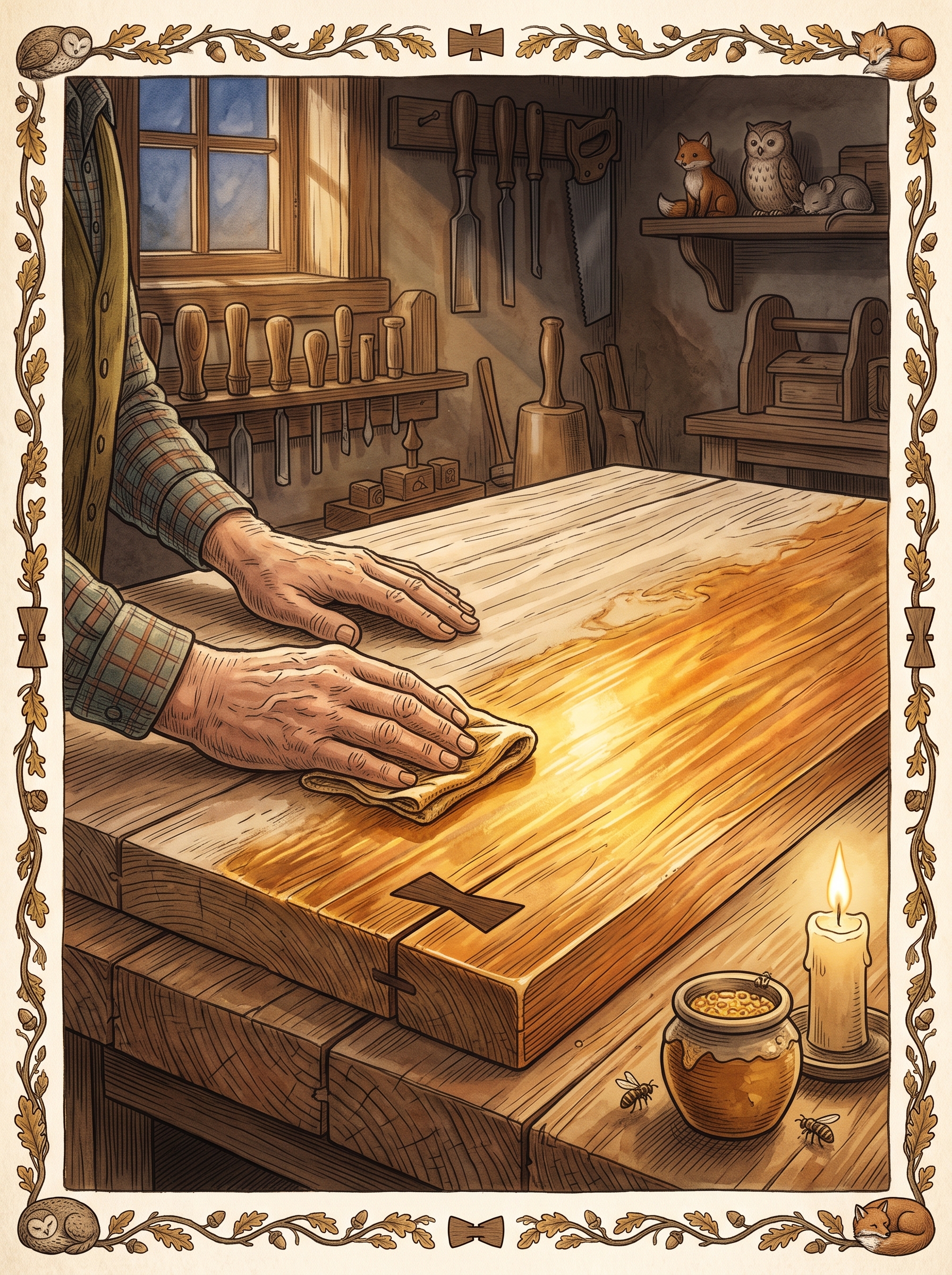
The finish does not come from a plastic spray that suffocates the wood. It begins with golden oil pressed from the seeds of the tung tree, blended with local beeswax harvested from the hillside hives.
When the warm amber mixture first touches the dry white oak, the wood takes a deep, dramatic breath. The pale straw color ignites into liquid gold, rich honey shadows, and shimmering flecks of copper light.
The maker folds a soft cotton cloth and works the oil deep into the thirsty pores. It is quiet, soothing labor. Small, swirling circles turn into long, steady sweeps that follow the path of the grain from end to end.
The friction warms the wax beneath their hands, filling the dusk with a rich, sleepy perfume: sweet honey, warm earth, toasted nuts, and clean rain.
There are no shortcuts to a living finish. Layer over layer, day after day, the oil sinks deep inside the fibers. It becomes a supple shield—one that repels water, breathes through the changing seasons, and welcomes the touch of bare skin.
By the time the final coat is buffed to a quiet, satiny sheen, every harsh edge has been softened by hand into a gentle, curving wave.
The oak does not shine with a blinding glare; it glows from within, holding the soft, low light of the evening. It is finished with its time in the dust of the shop, fully prepared to take its place at the center of a home.
Across the Threshold & The Heavy Thud
Four sets of boots crunch across the morning gravel.
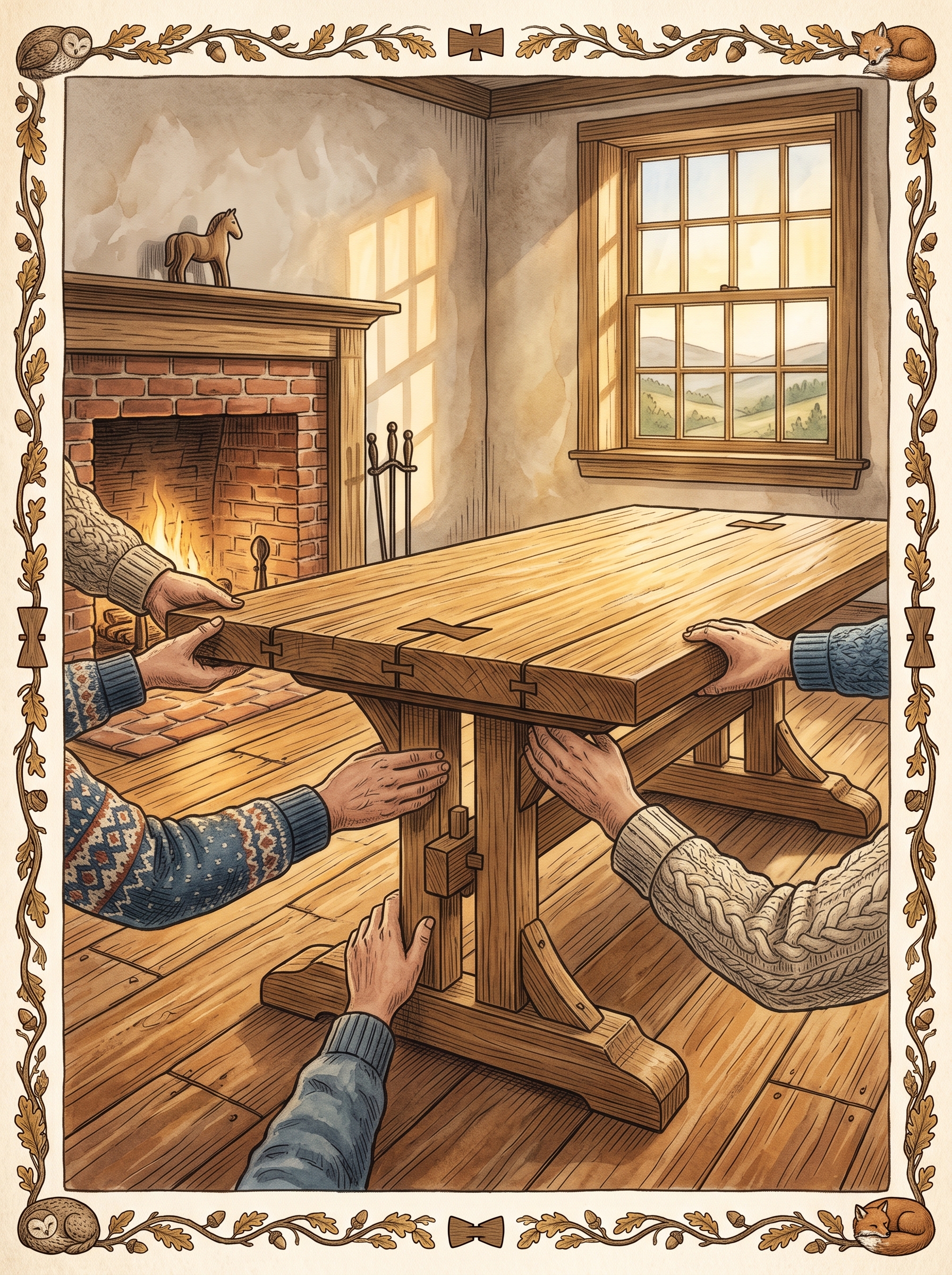
Moving two hundred years of mountain oak is not a job for machines; it requires strong shoulders, steady palms, and a shared breath. The tabletop alone weighs as much as a smooth river boulder, dense with age and rich oil. Four grown hands grip the underside, count to three in a low murmur, and lift.
The weight is honest. It settles into the muscles of the back, a reminder of two centuries spent anchoring a hillside against the winter wind.
Up the stone front steps, through the wide front door, the table crosses the threshold. It enters the room where it will live—a quiet space of white plaster walls, wide pine floors, and an open brick hearth waiting for its anchor.
When the heavy trestle legs meet the wood floor, the whole house lets out a peaceful sigh. The timber settles with a deep, muffled thud that vibrates right into the foundation below.
All at once, the room comes alive around the oak. The low afternoon sun stretches across the wide surface, catching the dark rhythm of the walnut keys and the subtle ripples left by the bronze plane.
The air in the room softens, sweetened by the scent of beeswax and sun-warmed grain. The chairs are pulled in close to stand guard around the perimeter. The hearth is swept, the table is resting in place, and the empty room has finally become a home.
The First Feast & The Spilled Cider
The maiden feast begins with the scrape of chair legs against pine.
The white cloth stays tucked away inside the cupboard. This wood was never meant to hide behind linen; it was built to meet life face to face.
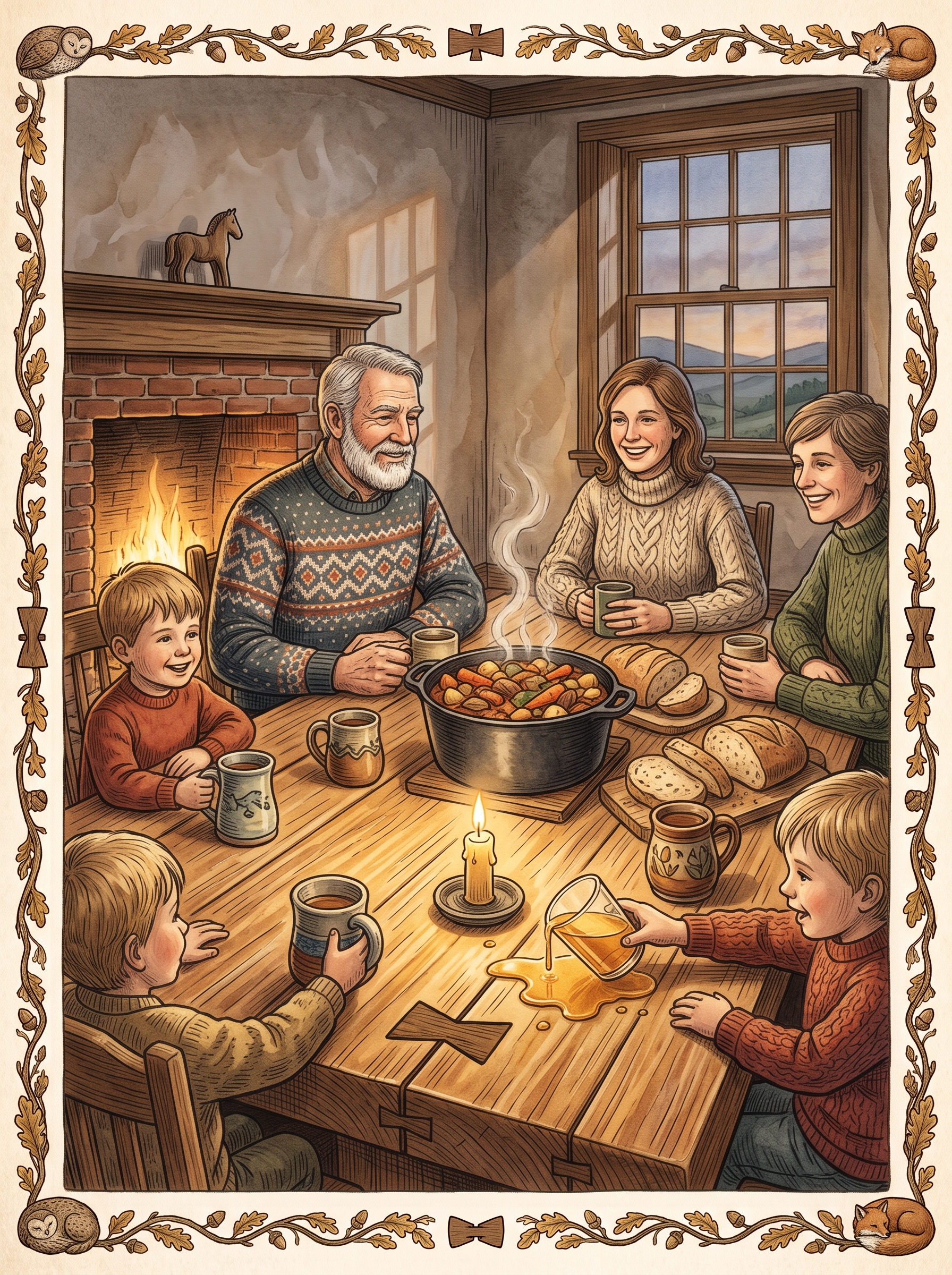
A heavy cast-iron pot lands dead-center with a solid clink, sending up a fragrant cloud of fresh rosemary, warm bread, and sweet roasted squash. Heavy ceramic bowls settle around the edge. Hands reach, sleeves brush the oiled grain, and family laughter fills the space between the rafters.
Then comes the real christening. A small hand reaches across the table for the butter, tipping over a cup of red apple cider.
There is no gasp of worry, no angry words. The cider pools across the golden wood, beads up safely against the beeswax shield, and is wiped dry with a simple linen towel. A warm drop of tallow drips from a low-burning candle, leaving a pale, fragrant coin against the oak. A butter knife slips from a plate, pressing a tiny crescent moon into the soft grain.
These are not mistakes. They are the first signatures in the home’s family book.
The oak welcomes the heat of steaming bowls and the weight of sleepy elbows. Underneath, bare toes find the bottom stretcher rail, resting heels against the smooth joinery. The tree once held the weight of nesting owls and mountain storms; now, it holds something far softer: the warmth of shared bread, the rhythm of stories, and the quiet comfort of belonging.
The Spelling Test & The Living Patina
Time does not rush across solid white oak; it sinks deep into the wood’s quiet marrow.
Years roll through the house like gentle seasons. Twenty winters of roaring hearth fires shrink the timber; twenty humid summer rains swell the grain. The hidden joints slide softly in their pockets, breathing with the porch air, never cracking, never giving an inch of true ground.
Under the shifting light of four thousand mornings, the golden straw of the sapwood mellows into deep amber, burnt sugar, and rich honey.
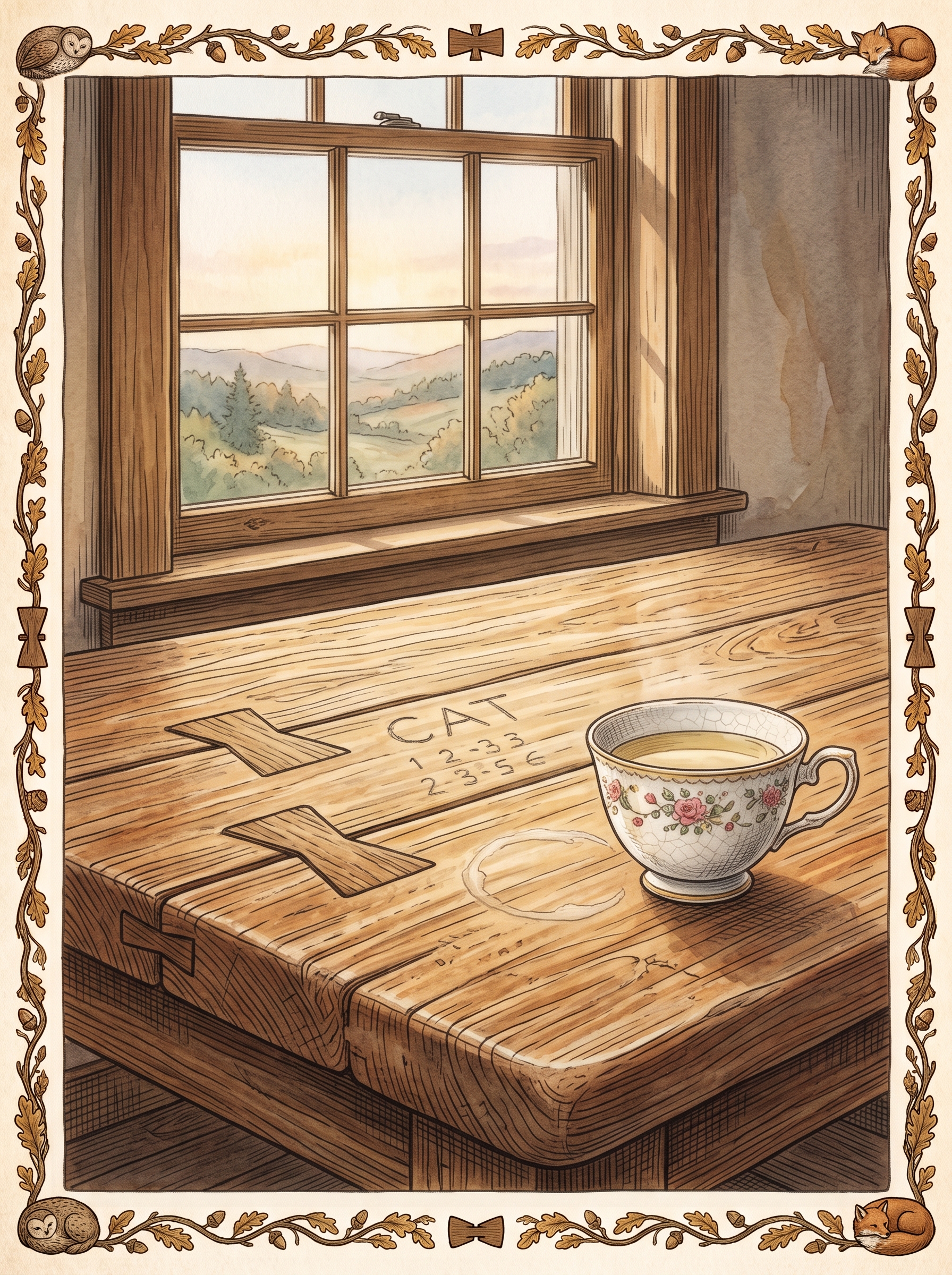
Every chapter of the family’s life leaves its invisible mark. In the corner by the eastern window, there is a faint ring of pencil indents where a child pressed hard on a fourth-grade spelling test. Near the center, a pale circle marks the place where a grandmother set down her warm porcelain tea cup every sunrise to watch the morning birds in the yard.
The edges of the tabletop, once squared and sharp, have been softened like river stone by resting arms, sleepy chins, and hands held together in quiet thanks.
In a store, they call this patina. In a home, it is simply called memory.
A cold table of metal and glass stays clean by keeping life away. But the mountain oak is a keeper of stories. It welcomes every dropped crumb, every brush of fingertips, and every quiet laugh, holding the weight of a whole family without ever growing weary.
The Silver Moon & The Quiet Hearth
Night settles over the Litchfield hills.
The hearth fire dies down to a bed of glowing red embers, casting long, sleepy shadows across the wide pine floor. Upstairs, the floorboards give one last soft creak as the heavy quilts are pulled up to resting chins, and the house drifts into quiet darkness.
Downstairs, the table remains.
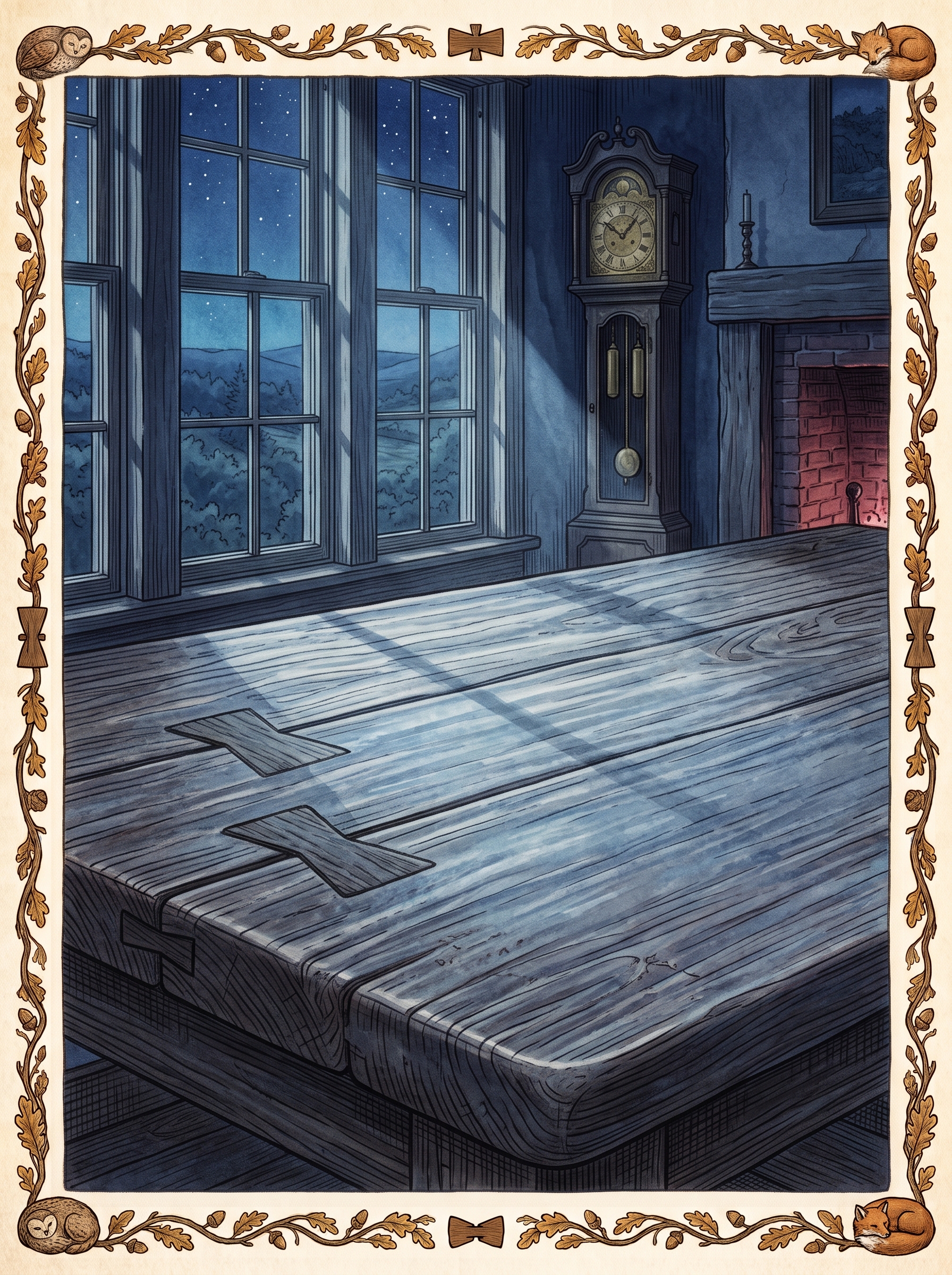
Through the tall sash windows, the midnight moon spills a cool, silver wash across the oiled white oak. The golden grain catches the pale light and glimmers softly in the blue dark, glowing like water rippling over river stones.
There are no voices now, no scraping chairs, no clinking ceramic bowls. There is only the low, steady tick of the grandfather clock and the deep, peaceful presence of two centuries of mountain wood.
Underneath its smooth, amber skin, the heartwood keeps its quiet watch. It remembers the fierce autumn winds that rocked its branches long before the house was built. It remembers the whisper of the bronze plane, the warmth of the bees’ wax, and the thousand soft touches of human hands that have polished its corners smooth.
The house rests on its stone foundation. The cold night air presses against the glass, but inside, the hearth stays warm.
Anchored to the floor, holding the home in total, restful peace, the great oak table breathes out the sweet scent of honey and mountain rain—and sleeps until the morning light.
